

Key Takeaways
- A technology executive is a capital allocator with technology as the medium. Not a senior engineer with a bigger title.
- CTO/CIO/CTAIO/CDO split is real but porous. Most sub-$1B companies collapse two or three roles into one person; above that, they separate.
- Median public-company CTO base sits $350K–$600K. Total comp reaches $1.5M–$3M at AI-pillar and infrastructure-pillar firms.
- Five recruiter firms run most of the market. Spencer Stuart, Heidrick & Struggles, Korn Ferry, Russell Reynolds, Egon Zehnder.
- The promotion fails at the portfolio-decision step. The leader who solved problems by writing better code now has to solve problems by funding or killing other people's code.
The first time I sat in a room where a board chair wanted a number that the engineering org couldn't give him, I understood the difference between a senior engineering leader and a technology executive. The number existed. Somewhere in the system, we had it. But the way I'd been trained, as someone who shipped code well and then ran teams that shipped code well, had not prepared me to compress that number into the half-sentence the room needed. The engineering version was a 40-line answer with caveats. The executive version was four words. The transition between the two is the job.
Most of what people write about technology executives is either compensation benchmarking or generic leadership content with a CTO label stuck on the front. Neither is wrong, exactly, but neither covers the actual mechanism: what the role allocates, what it decides, and where the people sitting in it fail. This page is the hub for a cluster that goes deeper. The recruiter market, the AI-era variants (AI CIO, AI CTO), the formal programs that claim to train you for the seat (CTO programs), and what the market actually pays (technology executive salary). This piece is the frame.
What a Technology Executive Actually Is
Start with the boundary. A technology executive is the person at the executive committee table whose accountability includes the company's technology bet: the portfolio, the org, the long-run capability. That accountability shape is what makes the role an executive role rather than a senior leadership role. A senior VP of Engineering with 800 engineers reporting up is a senior leader; whether they are an executive depends on whether they own the decision about which 800 engineers, working on what, funded at what level, against which strategic alternative.
Most companies recognize this distinction by where the leader sits in the org chart. The CTO who reports to the CEO, sits on the exec committee, and presents to the board four times a year is an executive. The senior VP of Engineering who reports to a CTO and runs the org day-to-day is a leader. Some companies muddy this. A "CTO" title given to a senior leader without exec-committee membership is common, and usually a tell that the company hasn't fully sorted out who owns the technology bet at the top. The work is bigger than the title; the title is a signal about the work.
The four most common shapes of the role in 2026:
- CTO. Owns product and platform technology, the engineering org, and the build-versus-buy posture. Common shape at product-driven companies, SaaS, and tech-native enterprises.
- CIO. Owns enterprise IT, operational systems, and the infrastructure underneath the company's running business. Common at regulated industries, mature enterprises, and any company where IT is more cost center than product differentiator.
- CTAIO / CAIO. Newer shape. Owns the AI portfolio at the C-level, sometimes as a peer to CTO, sometimes as an expansion of CTO. See the CTAIO service page for how the seat is structured in practice.
- CDO. Owns data platform, governance, and increasingly data-product economics. Splits from CIO above roughly $5B revenue at most companies.
Below $1B revenue, most companies collapse two or three of these roles into one person. I have spent most of my career running combined CTO/CIO mandates, at Sweetgreen as CIO, at Huge as President, Technology Strategy, at adidas leading global platform engineering, because the headcount and meeting load did not yet justify the split. Above $5B, the roles separate because no one person can attend the right meetings or hire at the right rate across both domains. The split is driven by span-of-control reality, not by org-design principle.
The Three Jobs Inside the Role
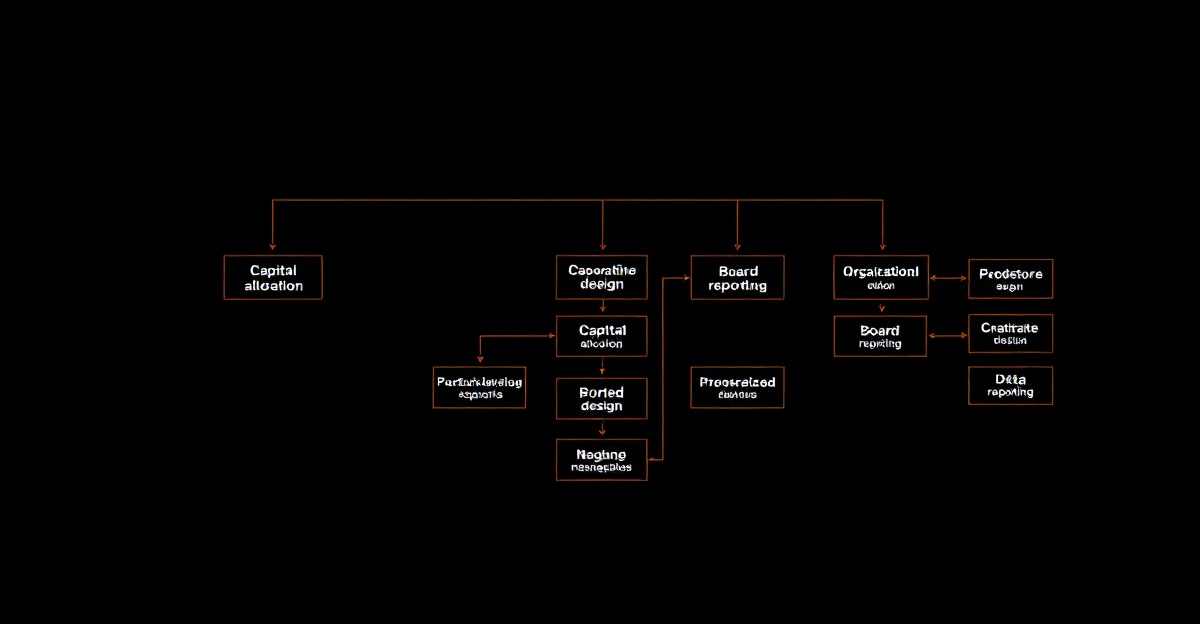
The honest description of the job is three concurrent workstreams. Most executives are obviously better at one or two than the third, and the gap is what the board notices.
Capital allocation
Roughly 40 percent of the calendar. This is the work of deciding which platform bets get funded, which get killed, what the next 12 to 24 months of spend looks like, and how to defend it to the CFO and the board. It includes the quiet decisions: which team to fund a quarter longer than the metric would justify because the leader is rebuilding trust after a bad first quarter; which vendor relationship to walk away from because the dependency cost has crossed the line. Capital allocation is the workstream the senior engineering leader has never run. The promotion fails at this step more often than at any other.
Org design and bench
Another 40 percent. Hiring and replacing the leadership bench. Restructuring teams around the work the company actually does rather than the work it did when the org chart was drawn. Building the rotation of stretch assignments, succession candidates, and external hires that keeps the org's leadership capacity ahead of the company's needs. Most of this is invisible until it's late. The org-design problem the executive should have solved 18 months ago becomes the operating problem the executive is solving in crisis today.
Stakeholder partnership
The remaining 20 percent that shapes the other 80. Weekly one-on-ones with the CEO. Twice-monthly conversations with the CFO and the CPO. Quarterly board updates. Vendor reviews with the top three or four strategic partners. The recurring exec-committee meeting where the technology executive is one voice among six or seven and has to defend the function's strategy in the language of the room. This is where the engineering leader most often struggles to register-shift: the technical voice that earned the promotion is now the voice that has to be compressed into the board's vocabulary.
"The senior engineering leader earns the role by being right about technology. The technology executive earns it by being right about which technology bets to fund. Those are different skills, and the second one is almost never rehearsed before the promotion."
The Market for the Role
The compensation market for technology executives separates into three tiers, with surprisingly clean discontinuities between them.
Fortune 500 and large public companies
Median CTO base compensation sits in the $350K–$600K range, with the largest-cap CTO seats running higher. Cash bonuses run 30–60 percent of base. Equity dominates total compensation: annual grants typically $500K–$2M for established CTOs, and refresh grants in the multi-million-dollar range at AI-pillar and infrastructure-pillar firms. Total compensation of $1.5M–$3M is common at top-tier firms; the long tail goes higher at companies where the CTO is a named risk factor in the 10-K. Sources: Equilar executive compensation studies and the published proxy filings of any S&P 500 company that names the CTO as a Section 16 officer.
Mid-market and PE-backed
Base typically $250K–$450K. Cash bonus 20–40 percent of base. Equity component depends heavily on whether the company is PE-backed (where management equity rolls into MIP plans tied to exit value) or VC-backed (where standard option grants apply). PE-backed CTO comp at sponsor-held portfolio companies often includes success-fee structures tied to specific value-creation milestones or exit waterfall participation. Sources: Heidrick & Struggles' annual Route to the Top and Spencer Stuart's published research remain the most reliable public benchmarks.
Fractional and advisory
Fractional CTO engagements typically run $15K–$40K per month for one to two days per week of senior time. Advisor retainers as low as $5K per month for quarterly reviews with call-down access. Per-day rates from $2,500 to $7,500. Three or four concurrent engagements can clear seven figures annually, though the income shape is less stable than full-time. See the fractional CTO service page for the engagement structures that work.
See the technology executive salary page for public-company, mid-market, and PE-backed ranges in 2026.
The Recruiter Market
The retained executive search market for technology roles is concentrated. At Fortune 500 scale, five firms handle most placements: Spencer Stuart, Heidrick & Struggles, Korn Ferry, Russell Reynolds, and Egon Zehnder. These five have established technology-officer practices, dedicated technology research teams, and the relationships with sitting CTOs that produce credible candidate slates within a 60–120 day search window.
Below Fortune 500, the market opens up. Riviera Partners, Daversa Partners, ZRG, True, and a long tail of specialists work the mid-market and growth-stage CTO search (True skews more PE/VC than pure mid-market). PE-aligned shops, often founded by ex-operators who built the portfolio-CTO model themselves, handle the placements where sponsor expectations shape the candidate profile. Most companies above 5,000 employees retain one of the big five; mid-market companies usually run two or three boutique searches in parallel and let the best slate win.
Sub-Series-C startups typically use a sponsor-affiliated recruiter rather than paying for a retained search. Retained-search fees are usually 30–33 percent of the candidate's first-year cash compensation — which lands somewhere between roughly $150K on a mid-market hire and $300K+ on a Fortune 500 placement — and that economics doesn't make sense until the company has at least one round of capital and a clear runway for the executive hire.
Deeper treatment, including how the candidate-side experience actually works and the questions that separate a good search from a bad one, lives on the technology executive search page and the tech headhunters playbook.
From Senior Engineering Leader to Technology Executive
The promotion from VP Engineering to CTO is the transition where I see the most predictable failures. The promoted leader had been excellent at running engineering — shipped reliable systems, hired well, ran a healthy org. The board hired them assuming the next role was the same job with more zeros. It isn't.
Three specific muscles separate the executive from the senior leader. Building them takes 18–36 months of deliberate work, and most leaders who fail in the first executive role fail because nobody told them which muscles to build.
Portfolio discipline
The willingness to fund the second-best idea over the favorite idea because the second-best idea has a clearer return. The willingness to kill projects that the team is emotionally invested in because the portfolio numbers no longer justify them. This is the muscle that engineering leaders almost never rehearse — the engineering role is about making the chosen thing succeed, not about choosing it. Most failed first-time CTOs got stuck here. They could run anything they were given but couldn't decide what to give themselves.
Register-shift
The ability to compress a 50-slide technical reality into a three-bullet update that a non-technical board chair can act on. The board doesn't want the engineering version; it wants the consequence. The CFO doesn't want the architecture; she wants the spend trajectory. The CEO doesn't want the technical-debt explanation; he wants to know whether you'll make the date. The technology executive who can't register-shift is the one whose board updates run long, whose CFO meetings produce more questions than answers, and whose CEO eventually stops including them in the strategic conversations that matter.
Resource decisions on incomplete information
The senior engineering leader has the luxury of asking for more data before deciding. The technology executive frequently does not. The board is in the room now. The hire-or-don't-hire decision is due today. The vendor contract is at the table this week. The job becomes about making consequential resource decisions with 60 percent of the information you'd want, in the time available, and being right often enough that the cumulative record holds up. This is the part that no senior engineering role meaningfully rehearses. The leaders who develop the habit before the promotion succeed; the ones who try to develop it after the promotion usually run out of runway.
For leaders mid-transition, structured outside support is often what shortens the runway. The technology executive coach page covers the engagement shape; the CTO vs CIO and CAIO vs CTO vs CDAO guides cover the title-by-title territory in more depth than this hub can.
The AI-Era Variants
The cleanest split in the technology executive function over the last three years is the AI-pillar variant of the CTO and CIO roles. AI infrastructure, vendor contracts, governance, and product economics have grown into mandates that don't fit cleanly under the traditional CTO or CIO scope. Some companies have created a Chief AI Officer or CTAIO to own the AI portfolio explicitly; others have expanded the CTO or CIO mandate to absorb it; a few have split the AI mandate between CTO (product AI) and CIO (operational AI) without a single accountable executive, usually with predictable results.
Two spokes off this hub treat the variants directly:
- AI CIO — running IT when the infrastructure is all intelligent. Data governance, AI vendor contracts, shadow-AI risk, internal LLM deployment.
- AI CTO — what the role looks like when AI is the core product. Build-buy tradeoffs, model strategy, team structure around AI-native systems.
For the role-comparison view across CTO, CAIO, and CDAO, see CAIO vs CTO vs CDAO. For the practitioner playbook on the AI strategy executive function, see AI Strategy Executive.
Compensation Negotiation for Technology Executives
Most of the compensation conversation that matters happens after the base salary is settled. Base is the number the recruiter quotes first, and the number both sides spend the least time on, because at this tier the spread between offers is rarely the difference between a yes and a no. The real negotiation is on the components that compound, the components that protect downside on a bad ending, and the components that determine whether the seat actually lets the executive run the function.
Equity refresh, not the initial grant. The signing grant is what gets headlined in the offer letter. The refresh schedule is what determines whether the executive is still incentive-aligned in year three. A four-year cliff with no annual refresh is a structure that quietly devalues the seat starting in month thirteen. The cleaner shape is an annual refresh equal to 25 to 50 percent of the initial grant, with the refresh language written into the offer rather than left to discretion. At a sponsor-backed company, the equivalent ask is the MIP allocation and the vesting acceleration on a change of control.
Severance and the change-of-control trigger. The standard public-company shape is twelve to eighteen months of base plus target bonus on a no-cause or good-reason termination, with single-trigger or double-trigger acceleration of unvested equity on a change of control. Mid-market and PE-backed roles usually start lower (six to twelve months) and need to be negotiated up. The number that matters more than the headline figure is the definition of good-reason termination, which is what protects the executive when the new CEO arrives and quietly hollows out the role. Get reduction-of-scope language into that definition explicitly.
Scope, reporting line, and exec-committee membership. Often more negotiable than compensation, and worth more over the arc of the role. A CTO who reports to the CEO is in a different job than a CTO who reports to the COO. A technology executive who sits on the operating committee but not the executive committee is in a different job than one who sits on both. The board observer seat, the participation in CEO succession conversations, and the authority to hire and fire the direct reports without CEO veto are the structural terms that determine whether the executive can actually do the work. If the company will not negotiate on compensation, this is where the next conversation should go.
Board exposure and the path to a board seat. For executives in the second half of their career, the board-exposure component is often the highest-yielding piece of the package. Time on the company's board, observer rights, and the explicit endorsement to take an outside board seat during the role are the terms that compound into the next chapter. These are almost never offered by default and almost always available when asked.
The negotiation pattern that fails most often is the one that treats the offer as a fixed object. Retained-search firms expect candidates at this tier to come back with two or three structural asks beyond base. The candidates who do not are leaving real value on the table. The candidates who lead with base and bonus and never raise scope, severance, or refresh usually arrive in the seat with less leverage than they could have had.
How AI Is Reshaping the Seat in 2026
The technology executive seat I would have described in 2022 is not the seat that gets staffed in 2026. Three shifts have happened in roughly twenty-four months, and the boards that are still hiring against the old job specification are getting tenures that end at eighteen months.
AI is now a board-agenda item, not a CTO-agenda item. Three years ago the board wanted a quarterly update on the cloud migration and the security posture. Now the board wants a standing item on the AI portfolio, the model-risk position, the regulatory exposure, and the competitive AI roadmap. The technology executive is the person who has to brief that item in language a non-technical board chair can act on. Executives who delegated the AI strategy to a head of ML two years ago are discovering that the head of ML is not invited to the board meeting and the executive cannot answer the questions.
The capital-allocation portfolio has doubled in line items. AI infrastructure, model licensing, vendor evaluation, evaluation tooling, governance, internal LLM deployment, agentic systems, and the bench of people who can do this work are all live spend categories that did not exist in the operating plan three years ago. The CTO who could previously run a $50M technology budget through five domains now runs the same money through ten or twelve, with the new line items growing faster than the old ones. The portfolio-discipline muscle described earlier on this page is the part of the seat that has gotten harder, not easier.
The CTO/CIO/CAIO split is migrating downmarket. The split used to appear around $5B revenue. In 2026 I am seeing companies in the $500M to $1B range create a Chief AI Officer or CTAIO seat that did not exist on their org chart eighteen months ago. The driver is regulatory in Europe (the EU AI Act creates a named-accountability problem that does not have a clean home under either the CTO or the CIO) and competitive in the US (boards want a single executive accountable for the AI bet rather than a steering committee). I am running fractional CAIO engagements at companies that would have rejected the role as premature in 2024.
The talent market has bifurcated. The technology executives who can credibly speak to AI as a portfolio (build versus buy, vendor selection, model governance, evaluation, organizational design) are commanding premiums of 20 to 40 percent over the equivalent traditional CTO comp at the same scale. The executives who cannot, and who are positioning themselves on the same playbook that worked in 2020, are seeing search timelines stretch from sixty days to a hundred and twenty. The gap is widening rather than closing, because the boards are getting more sophisticated about what they are buying.
The seat has not changed in essence. It is still capital allocation, org design, and board partnership. The medium is changing faster than at any point in the last decade, and the executives who treat AI as a topic to be delegated rather than a portfolio to be owned are the ones whose tenures are shortening.
Summary
The technology executive is a capital allocator and org designer with technology as the medium. The title sits above the engineering leader in the org chart, but the change in accountability is what makes the role an executive role: the portfolio decision, the long-arc org bet, the board-level partnership. The market for the role is concentrated. Five recruiter firms handle most of it; four common title shapes describe most of the seats; three workstreams fill most of the calendar. The transition from senior engineering leader to technology executive fails most often at the portfolio-decision step, where the muscle was never built.
If you are vetting whether to make the move, or vetting whether to hire someone for the seat, the rest of this cluster goes deeper. If you want a conversation about a specific situation, book an expert call.
Two adjacent clusters expand the seat. AI strategy consulting is the consulting work executives often buy before they hire for the seat (or instead of hiring for it). Fractional CTO / CIO / Chief AI Officer is the part-time variant of the same seat for companies that are not yet ready to commit full-time.
Frequently Asked Questions
What is a tech executive called?
The most common titles are Chief Technology Officer (CTO), Chief Information Officer (CIO), and the newer Chief Technology and AI Officer (CTAIO) or Chief AI Officer (CAIO). Some companies separate Chief Data Officer (CDO) from CIO. Below the C-level but functioning as technology executives, you find SVP Engineering, SVP Technology, and Head of Platform — the title matters less than whether the person sits on the executive committee and is accountable for technology P&L. In private equity and late-stage growth, Chief Product and Technology Officer (CPTO) collapses product and engineering under one executive when the cost of cross-org friction outweighs the value of separate leadership.
What does a technology executive actually do day to day?
Three workstreams that rotate. Capital allocation: deciding which platform bets get funded, which get killed, what the next 12-month spend looks like, and how to defend that to the CFO and the board. Org design: hiring and replacing the leadership bench, restructuring teams around the work the company actually does, and the quiet politics of moving headcount between domains. Stakeholder partnership: weekly or twice-weekly conversations with the CEO, CFO, CPO, COO, and the board chair, plus quarterly board updates, vendor reviews, and the recurring exec-committee meetings. The actual technology decisions get delegated to the bench; the executive is judged on whether the bench made them well.
Do tech executives make a lot of money?
At public-company scale in the US, yes, by most reasonable definitions. Median CTO base sits around $350K–$600K, cash bonuses add another 30–60 percent of base, and equity grants typically dominate total compensation — annual grants of $500K–$2M+ for established CTOs, multi-million-dollar refresh grants at AI-pillar and infrastructure-pillar companies, per executive search market data through 2025. At private mid-market scale ($100M–$1B revenue), base typically runs $250K–$450K with smaller equity. Fractional CTOs at $300/hour or $15K–$40K monthly retainers can clear seven figures with three to four concurrent engagements, though the income shape is less stable.
What's the difference between a technology executive and a senior engineering leader?
A senior engineering leader — VP Engineering, Director of Engineering, Head of Platform — is judged on engineering throughput, system reliability, hiring and retention within their function, and execution against the roadmap they were handed. A technology executive is judged on whether the roadmap was the right one. The executive is accountable for the portfolio decision: which capabilities to build versus buy, which bets to fund versus kill, which team to grow versus shrink. The skills overlap but the accountability is fundamentally different. Most senior engineering leaders who get promoted to CTO fail in the first 12 months not because they couldn't run the engineering org — they ran it well — but because they had no portfolio-allocation muscle and never built one.
Who hires technology executives — what's the recruiter market?
The executive search market for technology roles concentrates in five firms at the Fortune 500 level: Spencer Stuart, Heidrick & Struggles, Korn Ferry, Russell Reynolds, and Egon Zehnder. Below Fortune 500, a long tail of specialist firms handles mid-market searches — True, Riviera Partners, Daversa Partners, and ZRG sit in this tier, along with PE-aligned shops that work the portfolio-CTO market. Most companies above 5,000 employees retain one of the big five. Mid-market companies usually run two or three searches in parallel across boutique firms. Sub-Series-C startups typically use a sponsor-affiliated recruiter rather than a paid retained search.
When do CTO, CIO, and CTAIO split versus collapse into one role?
Below $500M revenue, one person usually wears two or three of these hats. The fractional or full-time CTO who runs both product engineering and enterprise IT is a familiar shape at mid-market scale. Around $1B revenue, most companies split CTO (product technology) from CIO (enterprise IT and operations). Above $5B, the CTAIO or CAIO begins to appear as a distinct seat, especially at companies where AI is a board-level priority. The split is driven by span-of-control reality rather than principle: when one person can no longer attend the right meetings or hire at the right rate across both domains, the company splits the role and reassigns reporting lines.
What's the typical tenure of a technology executive?
Median CTO tenure at US public companies runs roughly 3–5 years, shorter than the CEO seat and broadly comparable to other C-suite functions, per executive search reports. First-time CTOs at high-growth companies often see compressed tenures of 18–30 months when the operating model breaks at a scaling point the leader wasn't prepared for. Transformation CTOs hired for a defined 2–4 year arc typically depart at handoff rather than fail. The most stable tenures appear in regulated industries (financial services, healthcare, defense) where the technology executive function is less subject to growth-stage operating-model changes.
What does a technology executive need that an engineering leader doesn't?
Three muscles that engineering leaders rarely build before the promotion. A portfolio-allocation discipline: the willingness to fund the second-best idea over the favorite idea because the second-best idea has a clearer return. A board-fluent register: the ability to compress a 50-slide technical reality into a three-bullet update that a non-technical board chair can act on. And the comfort with making consequential resource decisions on incomplete information — which is the part of the job that no senior engineering role meaningfully rehearses. The leaders who develop these before the promotion succeed in role; the ones who try to develop them after the promotion usually run out of runway.
what is a technology executive
A technology executive sits on the executive committee, accountable for the company's technology bet: the portfolio, the org, and long-run capability. They are a capital allocator working through the medium of technology, not a senior engineer with a bigger title. The role is defined by ownership of decisions about which work gets funded, killed, or staffed, alongside board partnership, rather than by headcount or title alone. Common shapes include CTO, CIO, CTAIO/CAIO, and CDO, often combined below $1B revenue and split above $5B.
Need Expert Technology Guidance?
20+ years leading technology transformations. Get a technology executive's perspective on your biggest challenges.
