

Key Takeaways
- The AI CIO is rarely a new C-level seat. It is the existing CIO with four new workstreams: vendor management, governance, shadow-AI risk, internal LLM deployment.
- Shadow AI is the highest-impact near-term risk. Employees pasting company data into consumer LLM accounts the company has no contract with.
- AI vendor contracts are not SaaS contracts. Data residency, training-data clauses, model deprecation, indemnification, audit logging all need CIO-grade review before signature.
- For most enterprises, the right answer is a hyperscaler service with a thin wrapper layer. Azure OpenAI, Bedrock, Vertex AI, governed through an internal API gateway.
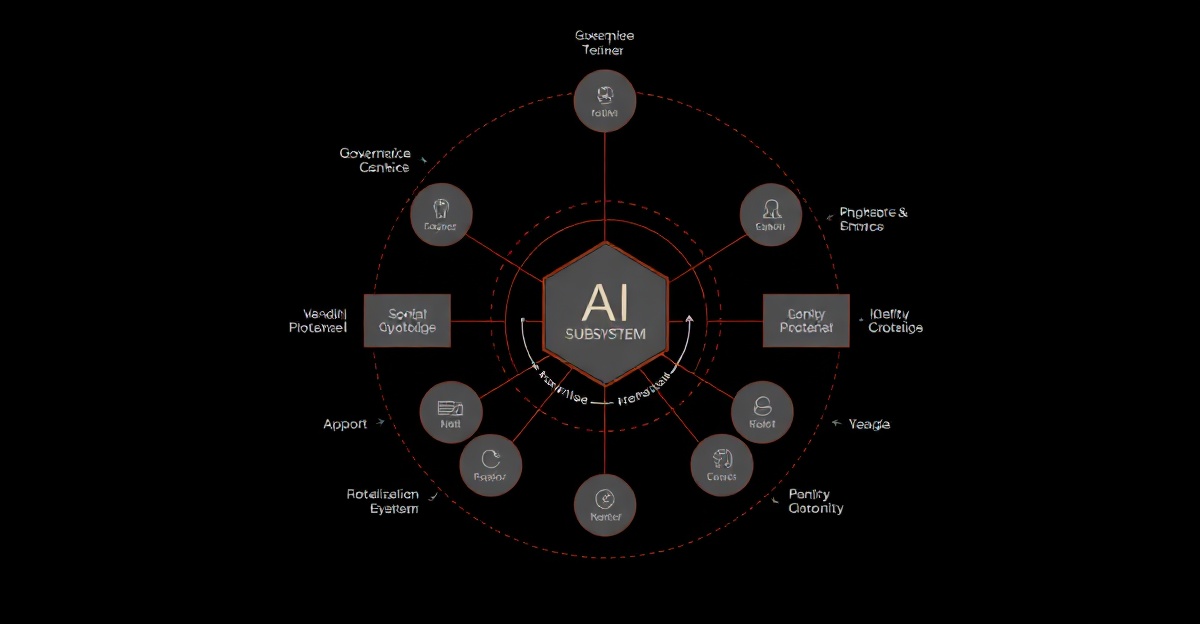
- The integration with existing IT systems is the work. Identity, SIEM, on-call, finance, audit — if AI gets its own everything, the CIO loses the estate.
When I was CIO at Sweetgreen, AI wasn't yet the scope-changer for the role. Forecasting models existed, recommendation systems existed, the chatbot pilot was running in customer support. None of it had become the kind of estate-defining decision that occupies the calendar of an enterprise CIO today. A few years later, many CIOs I talk to are in the middle of absorbing AI into the IT mandate. The shape of the absorption is broadly consistent in larger enterprises: four new workstreams attached to an already-full role, no title change in many cases, and a quiet rewriting of what the CIO function actually owns. Not every enterprise has gotten there — some still run a parallel AI Center of Excellence or a separate task force — but the direction of travel is toward heavier CIO involvement.
This page is for the CIO living through that absorption, and for the CEO trying to decide whether the existing CIO can hold the expanded scope or whether the company needs to bring in someone different. It is also for the AI strategy executive who wants to understand what the CIO seat now looks like from inside the chair, because the partnership between AI strategy and AI operations is where most of the real value gets created or destroyed.
The Four New Workstreams
AI vendor and contract management
Five years ago, a CIO managed a handful of strategic vendor relationships: the ERP, the CRM, the productivity suite, the cloud provider, the security platform. The list was long but the structure was familiar. Today, the AI vendor list adds Anthropic, OpenAI, Google, Microsoft (separately from Azure), AWS Bedrock, and a long tail of point-solution vendors that wrap or fine-tune foundation models for specific workflows. Each has its own licensing structure, its own data-residency posture, its own training-data position, and its own pace of model deprecation. The contract review burden on the CIO legal team has roughly doubled in two years at most enterprises I work with.
Enterprise AI governance
The governance workstream is what most CIOs underestimate going in. It includes model approval (which models can be used for what data, by which teams, under what evaluation discipline), risk classification (what's a high-risk use case, what triggers human-in-the-loop requirements, what triggers external audit), incident response (how AI-specific incidents flow through the existing IR process), and retention (what gets logged, for how long, retrievable by whom). The output is a set of policies and runbooks, but the work is mostly cross-functional coordination across legal, security, privacy, compliance, the business units actually deploying AI, and the AI vendors themselves.
Shadow-AI risk
Shadow AI is the most operationally urgent of the four workstreams in 2026. Employees use consumer ChatGPT, Claude, Gemini, and Copilot accounts on company devices, paste company data into the prompts, and the data either leaves the perimeter into a third-party training pipeline (depending on account tier and consent settings) or sits in conversation history accessible to anyone with the credentials. Security vendor reports through 2025 consistently rank this as the fastest-growing AI-related incident category. The remediation pattern that works has three parts: deploy a sanctioned internal LLM tier that's at least as good as the consumer tools, block consumer-tier access from corporate devices and networks at the gateway, and run a steady remediation cadence for the data that has already leaked. The policy memo without the sanctioned alternative is a near-guaranteed failure.
Internal LLM deployment
The fourth workstream is the production deployment of LLMs inside the enterprise. The architectural pattern that has stabilized at most companies in 2026: a hyperscaler service (Azure OpenAI, AWS Bedrock, Google Vertex AI) for the model layer, fronted by an internal API gateway that handles authentication against the corporate identity provider, rate limiting per user and per team, content filtering for outbound prompts and inbound completions, usage tracking for finance reconciliation, and full audit logging for compliance. The gateway is the leverage point. It's where governance is enforced, where shadow-AI alternatives get plumbed in, and where the CIO retains operational control over an estate that would otherwise fragment into hundreds of individual vendor relationships.
"The CIO who treats AI as a separate stack with its own identity, its own observability, its own finance flow, and its own incident response loses control of the estate within a year. Integration is the discipline that keeps the seat."
The Integration with Existing IT
The vendor pitch for enterprise AI tools usually skips the integration work. The slide deck shows the productivity uplift, the time-to-value, the executive testimonial. What the deck doesn't show is the work of plumbing the AI tier into the corporate identity provider, the SIEM, the on-call rotation, the finance approval flow, and the audit trail. Five integration points predict whether an AI deployment lands well or becomes a CIO problem in month nine.
- Identity. Every AI system authenticates against the corporate IdP. No standing vendor-side accounts. SCIM provisioning when the user joins, deprovisioning the minute the user leaves. The AI estate inherits the IdP's authoritative user state instead of forking it.
- Observability. AI system logs land in the same SIEM as every other production system. The same query language, the same retention policy, the same incident routing. Vendor-specific observability dashboards are a supplement, not a substitute.
- Incident response. AI-specific incidents (prompt injection events, data leak alerts, governance policy violations, model degradation) flow through the existing on-call rotation with AI-specific runbooks. No separate AI on-call.
- Finance. AI vendor spend appears in the same finance approval workflow as every other vendor. Per-team and per-use-case allocation visible. The internal API gateway makes this possible by tagging requests at the source.
- Audit. AI systems produce the same audit artifacts as every other production system. Request logs, decision logs, policy enforcement events. SOC 2, ISO 27001, and emerging AI-specific audit frameworks all require this discipline now.
AI CIO vs Chief AI Officer (CAIO)
Companies that have introduced a CAIO or CTAIO seat alongside the CIO consistently ask the same question: what does the CIO still own? The cleanest answer I've seen work in practice is a split between portfolio and operations. The CAIO owns the AI portfolio at the executive committee level: which bets get funded, which get killed, how the company's AI investment shows up as P&L impact, and the long-arc strategy for where AI sits in the company's competitive posture. The AI CIO owns the operational reality of running AI as part of the IT estate: the vendor relationships, the governance enforcement, the shadow-AI remediation, the production systems people actually use.
Below roughly $1B revenue, the split is usually overkill. The same executive (the CIO with an expanded scope, or a CTAIO who has absorbed both) wears both hats, often with a fractional AI strategy advisor on the side for the portfolio thinking. Above $5B, especially at companies where AI is a board-level strategic priority, the split into two C-level seats becomes common. The longer treatment lives at CAIO vs CTO vs CDAO.
What Companies Should Look For When Hiring an AI CIO
The hiring market has not yet stabilized for this role. Many candidates are either traditional CIOs who have led one or two AI initiatives but haven't yet absorbed the full scope, or AI-native leaders without enterprise IT experience. The strongest hires are the CIOs who have spent the last 18 to 24 months actually doing the absorption: running the vendor reviews, writing the governance policies, deploying the internal LLM gateway, remediating the shadow-AI problem, at a company of comparable scale. Three signals separate them from the rest.
First, evidence of operational discipline on the AI estate. Ask for a specific incident response narrative: a shadow-AI data leak, a model degradation that affected a production workflow, an AI vendor relationship that broke and needed to be unwound. Candidates who can describe the incident at runbook-level detail have lived it; the rest haven't yet.
Second, fluency with the vendor contract reality. The contract review burden is large enough now that a CIO who can't name the three clauses that need legal review on every AI vendor contract (data residency, training-data, model deprecation) has not been close enough to the work.
Third, integration instinct. The candidate who describes the AI estate as a separate stack with its own everything is the one who will lose control of it within a year. The candidate who describes the integration with identity, observability, finance, and audit before being asked is the one who keeps the seat.
Related Reading
The technology executive pillar covers the broader role of which the AI CIO is one variant. The sister page on AI CTO treats the parallel evolution of the CTO role when AI is the core product. For the portfolio-level view, see AI Strategy Executive. For the CTAIO service model, see the CTAIO service page. For a conversation about a specific situation in your CIO function, book an expert call.
Companies not yet ready to hire an AI CIO full-time often start with AI strategy consulting or engage a fractional Chief AI Officer first. Both are the lower-commitment way to get the seat-level judgment without the full-time hire.
Frequently Asked Questions
What does an AI CIO actually do that a regular CIO doesn't?
Four workstreams that rarely sat inside the CIO brief in this form a few years ago. First, AI vendor and contract management. Anthropic, OpenAI, Google, Microsoft, AWS, plus the long tail of point-solution AI vendors, each with its own licensing model, data-residency posture, and training-data clause. Second, enterprise AI governance: which models can be used for what data, who reviews new use cases, how evaluation happens before deployment, and how kill criteria are written into runbooks. Third, shadow-AI risk: the discovery and remediation of employees moving company data into consumer LLM accounts without permission. Fourth, internal LLM deployment, whether through Azure OpenAI, Bedrock, Vertex AI, an on-prem inference stack, or a private API gateway that wraps a hyperscaler service. In many enterprises the existing CIO absorbs these responsibilities without a title change.
How is the AI CIO different from a Chief AI Officer (CAIO)?
The CAIO owns the AI portfolio at the executive committee level: which AI bets to fund, which to kill, how the company's AI investment produces P&L impact. The AI CIO owns the operational reality of running AI as part of the enterprise IT estate: vendor contracts, governance enforcement, shadow-AI remediation, the production systems people actually use. The two roles complement each other. At companies large enough to split them, the CAIO sets the portfolio strategy and the AI CIO runs the estate. At companies below roughly $1B revenue, the same person usually wears both hats, or the CIO absorbs the AI CIO scope while a fractional CAIO advises on strategy.
What's the biggest AI-related risk a CIO is managing right now?
Shadow AI. Employees pasting customer data, source code, confidential strategy decks, and regulated PII into consumer ChatGPT, Claude, Gemini, and Copilot accounts that the company has no contractual relationship with. The data leaves the IT estate, lands in a third-party training-data pipeline depending on the account tier and consent settings, and the CIO has no audit trail. This is the most common AI-related incident I see in 2026 CIO conversations, and it is not solved by a policy memo. It is solved by deploying a sanctioned internal LLM tier that's at least as good as the consumer tools, blocking access to the consumer tiers from corporate devices and networks, and running a steady remediation cadence for the employees and the data already leaked. Per Varonis and other security vendor reports through 2025, shadow AI is among the fastest-growing AI-specific incident categories, sitting alongside identity-based attacks at the top of enterprise risk registers.
What does an AI CIO need to know about AI vendor contracts?
Five clauses matter more than the rest. Data-residency: where customer data is processed and stored, and whether processing happens in compliant regions. Training-data: whether the vendor can use your prompts and completions to train future models, and what the consent or opt-out mechanism actually is. Model-deprecation: what notice you get when a model version is sunset, and what migration support is committed. Indemnification: whether the vendor takes liability for IP infringement claims arising from generated content. Audit and logging: what visibility you have into requests, completions, and policy violations for compliance purposes. SaaS-grade contract language doesn't cover most of these by default. CIO legal review on AI vendor contracts is now standard at enterprise scale.
Should an enterprise run its own LLMs or use the hyperscaler services?
For most companies, the answer in 2026 is hyperscaler services with a thin wrapper layer for governance and audit. Azure OpenAI, Bedrock, and Vertex AI deliver the data-residency commitments and the enterprise contract posture that on-prem deployments struggle to match without significant infrastructure investment, and for general-purpose workloads the model quality is competitive enough. The wrapper layer — an internal API gateway that handles authentication, rate limiting, usage tracking, content filtering, and audit logging — is where the CIO adds defensible value. On-prem inference still makes sense for regulated workloads where data cannot leave the perimeter, for cost optimization at very high token volume, for capability requirements not met by hyperscaler offerings, and for enterprises that want to avoid vendor lock-in. Most large enterprises will run a hybrid: hyperscaler for general-purpose, on-prem or private VPC for regulated.
How does the AI CIO handle the integration with existing IT systems?
The integration is the work. AI systems need to authenticate against the corporate identity provider, log into the existing SIEM, route incidents through the existing on-call rotation, appear in the existing finance approval workflow for vendor spend, and produce the same audit artifacts as every other production system. The AI CIO who treats AI as a separate stack with its own identity, its own observability, its own finance flow, and its own incident response loses control of the estate within a year. The integration discipline is what separates the CIO who keeps the AI scope from the CIO who eventually has it taken away.
When does a company actually need a dedicated AI CIO seat versus expanding the existing CIO role?
The split tends to happen when the AI estate is large enough to demand a full-time leader and the existing CIO's bandwidth is already absorbed by traditional IT. Two signals show up consistently. First, AI vendor spend and vendor complexity have reached the point where multiple strategic model relationships need active management. Second, the AI governance burden — model reviews, kill-criteria authoring, audit response — is now a multi-headcount workload that no existing function owns end-to-end. At that point, either the CIO scope expands with a new SVP-level lieutenant who runs the AI portfolio operationally, or the company creates a peer seat (AI CIO, sometimes branded CTAIO) reporting to the same CEO. The C-level branding matters less than whether one accountable executive owns the AI estate.
What's the most common AI CIO mistake?
Underestimating the integration burden and overestimating the vendor sales pitch. The vendor pitch is that the AI tier slots into the estate with minimal effort and produces measurable productivity gains within the quarter. The reality is that authentication integration takes longer than expected, governance review eats the first six months of every use case, and shadow-AI remediation runs in parallel with everything else. The CIO who budgets for the vendor pitch underdelivers. The CIO who budgets for the integration reality (roughly 2–3x the vendor's stated implementation cost in internal time, and roughly 9–12 months to steady-state operations) ships systems that actually work.
Review Log
Editorial changes made after publication.
Updated the article timestamp and removed unsupported market-size thresholds that were presented too definitively for a role category still forming in practice.
Tightened the framing around AI CIO adoption so the article distinguishes broad enterprise direction from claims of near-universal title standardization.
Need Expert Technology Guidance?
20+ years leading technology transformations. Get a technology executive's perspective on your biggest challenges.
