
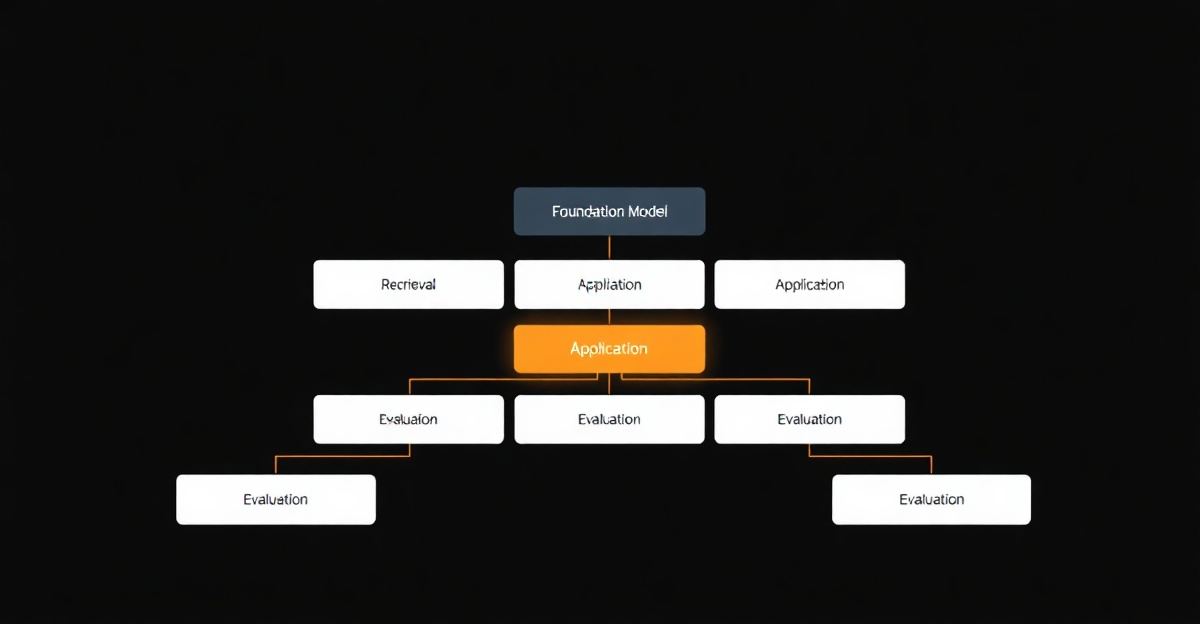

Key Takeaways
- The AI CTO runs a company where AI is the product, not a feature. The role differs sharply from a product CTO whose product happens to use AI for some features.
- Build-vs-buy on foundation models is the technology strategy. Most AI CTOs buy the base model and build differentiation in retrieval, fine-tuning, agents, and product experience.
- Engineering org structure cuts platform / product / research. Service-boundary org design works less well when the model layer cuts across features.
- Evaluation and red-teaming are staffed engineering disciplines. Not launch-only events. The teams that ship reliable AI products have eval pipelines on the same critical path as feature work.
- Inference cost is the new infrastructure cost. Per-feature token economics is a first-class CTO metric, or the company ships demos that lose money at scale.
The CTO whose company built a recommendation engine in 2018 and the CTO whose company is building an AI-native product in 2026 are not running the same job. The 2018 CTO had a service-boundary org chart, a SaaS-economic cost structure, a quarterly evaluation cadence that focused on uptime and feature delivery, and a vendor list dominated by infrastructure providers. The 2026 AI CTO has an engineering org structured around the model-data-evaluation loop, a cost structure dominated by inference economics, an evaluation discipline that runs continuously on the same critical path as the product, and a vendor list dominated by foundation model providers whose roadmaps the CTO has to track at the level of detail a 2018 CTO reserved for the cloud provider.
This page is for the CTO who is mid-transition into the AI-native shape of the role, and for the board or CEO trying to vet whether a candidate has actually built one of these companies before. The companion piece is AI CIO, which treats the parallel evolution at companies where AI lives inside the IT estate rather than at the core of the product.
Build-vs-Buy on the Foundation Model
The defining strategic decision for an AI CTO in 2026 is the posture toward the foundation model layer. The decision has three shapes in practice, and almost every AI-native company below the scale of a foundation model lab lands in the second.
Build your own base model from scratch. Cost remains in the hundreds of millions of dollars for a competitive frontier model, the talent capable of training at the frontier is concentrated in a handful of labs globally (OpenAI, Anthropic, Google DeepMind, plus a small cohort of well-funded challengers), and any base model you train today is six to nine months behind the frontier by the time it ships. This path makes sense for foundation model labs themselves, for regulatory contexts where external dependency is untenable, and for a small set of companies where the model itself is the product rather than a component. For almost every other AI-native company, the math doesn't close.
Buy the base model, build the differentiation above it. The pattern that has stabilized at most AI-native SaaS companies. The CTO selects one or two foundation model providers, treats them as strategic vendors at the level of cloud providers in a traditional SaaS company, and concentrates engineering investment in the retrieval layer, the fine-tuning pipeline, the agent scaffolding, the evaluation discipline, and the product experience. The differentiation lives in what the company does with the model, not in the model itself. This shape is where most AI CTO calendar time goes.
Buy everything, build only the product surface. Right for early-stage AI-native companies still validating product-market fit, where the team capacity is too constrained to invest in the retrieval and evaluation layers, and the immediate question is whether anyone will pay for what the product produces. Most companies that survive validation graduate from this shape to the previous one within 12–18 months.
"At an AI-native company, the technology strategy and the foundation-model vendor strategy are the same conversation. The CTO who treats the model as just another vendor relationship has not yet understood the seat."
Engineering Org Design Around AI-Native Products
The org structure that has stabilized at most AI-native companies in 2026 cleaves into three top-level functions, which is a different shape from the service-boundary cleavage that dominates traditional SaaS engineering orgs.
Model platform team
Owns the model layer end-to-end: the inference infrastructure, the model routing logic, the caching tier, the evaluation pipeline, the observability and telemetry around model behavior in production. The size scales with product complexity rather than with raw company headcount. A leaner cut (5–10 percent of engineering) is the norm at early-stage AI-native companies; companies whose product complexity demands deeper platform investment will run heavier, sometimes 15–25 percent of an org, when the platform leverage is the binding constraint on product velocity.
Product engineering
Organized around vertical use cases or product surfaces that consume the model platform. Each squad owns its corner of the product, integrates with the platform layer, and ships features. The squad structure looks familiar to anyone from a traditional SaaS company, but the deliverables are different. Instead of shipping a service that handles a CRUD workflow, the squad ships an AI-driven workflow that depends on the model platform behaving well across edge cases the squad can't easily test in isolation.
Applied research
Handles fine-tuning, custom model work, the experimentation pipeline, and the deeper technical bets on model behavior. Most AI-native companies have a small applied research function (5–15 people at most companies below 500 total) tightly coupled to the product roadmap rather than running independent research agendas. The role is to translate frontier research into shippable engineering, not to publish papers.
Evaluation and Red-Teaming as First-Class Engineering
The evaluation discipline is the most consistent difference between AI CTOs whose products survive the second year and AI CTOs whose products quietly degrade. Three specific practices show up at the companies that get this right.
Eval suites on the critical path. Maintained with the same engineering rigor as the test suite. A model change that fails eval ships about as often as a code change that fails the test suite, which is to say almost never. The suite covers core capabilities, known failure modes from production incidents, and the long-tail edge cases that have accumulated as the product matured. Coverage grows with product surface area, not with the model layer.
Red-teaming as ongoing operational practice. A dedicated team (sometimes inside the platform org, sometimes a sister org reporting directly to the CTO) runs continuous probing for prompt injection, jailbreaks, hallucination patterns, bias surfaces, and other model failure modes. Cadence is weekly or daily depending on company stage. The red team's findings flow into the eval suite, into the model routing logic, and into the product team's backlog as standard issues.
Online evaluation pipelines. Production model outputs are sampled and compared against reference traces, held-out gold standards, or LLM-as-judge evaluations on a continuous basis. Silent regressions, the case where the product still functions but the quality has degraded in ways no user has yet complained about, are flagged before they accumulate into a churn problem. This is the discipline that separates companies that learn from production data from companies that ship and pray.
The OpenAI Evals framework, Anthropic's published evaluation patterns, and DeepLearning.AI's evaluation courses have all converged on similar disciplines over the last two years; the published patterns are mature enough that there is no excuse for an AI CTO to skip this work.
Inference Economics as a First-Class CTO Metric
At most AI-native companies in 2026, inference cost is the single largest variable cost line, often larger than infrastructure, often comparable to payroll once you account for cost of selling. The AI CTO who doesn't treat this as a first-class metric ships pricing decisions in the dark and quietly bleeds margin as usage grows.
The discipline that matters is per-feature unit economics. For each major product feature, three numbers: tokens consumed per serving (input plus output, including any agent or retrieval scaffolding), gross margin per serving at the current pricing tier, and the projected scaling curve as usage grows. The AI CTOs who hold these numbers in their head for the top ten features make pricing, routing, and architecture decisions that compound. The ones who don't end up explaining a margin compression story to the CFO 18 months in.
A few architectural patterns consistently show up at companies that have gotten the inference economics right. Model routing: using smaller cheaper models for the requests they can handle and reserving frontier models for the requests that demand them. Caching layers for repeated query patterns, for embeddings, for partial completions. Per-tier feature gates that align inference-expensive features to revenue tiers that can absorb the cost. Most companies also wire in LLM-as-judge observability so the routing decisions can be audited rather than trusted. None of these are new in 2026, but the discipline of treating them as core engineering work rather than as optimizations to revisit later is what separates the AI CTOs whose companies survive product-market scaling from the ones whose companies don't.
Related Reading
The technology executive pillar covers the broader role of which the AI CTO is one variant. The sister page on AI CIO treats the parallel evolution at companies where AI lives inside the IT estate. For the portfolio-level view above the engineering org, see AI Strategy Executive. For the role-comparison across CTO, CAIO, and CDAO, see CAIO vs CTO vs CDAO. For a conversation about a specific build-vs-buy or org-structure decision, book an expert call.
The fractional path to AI CTO is real. See fractional Chief AI Officer for the part-time variant of the same seat, or AI strategy consulting for the project-shaped alternative when the work has a defined start and end.
Frequently Asked Questions
What does an AI CTO actually do that a traditional CTO doesn't?
Four workstreams that don't show up in the same way at a traditional product CTO role. First, the build-vs-buy decision on the foundation model itself: which provider, on what licensing, with what fine-tuning posture, with what migration plan when a better model lands six months from now. Second, the engineering org structure that supports an AI-native product, which looks different from the service-boundary org structure that works for traditional SaaS. Third, the evaluation and red-team discipline that sits on the same critical path as feature shipping, because the model layer can degrade silently in ways that traditional service degradation cannot. Fourth, the inference economics: the cost structure of an AI-native product is dominated by tokens consumed rather than by infrastructure rented, and the CTO who doesn't treat this as a first-class metric ships products that lose money at scale.
Should an AI-native company build its own foundation models or use external ones?
In 2026, almost no AI-native company below the scale of a foundation model lab should be training base models from scratch. The cost of pretraining a competitive base model has stayed in the hundreds of millions of dollars range, and the field still moves fast enough that any model you train today is six to nine months behind the frontier by the time you ship. The pattern that works for the vast majority of AI-native companies is buy the base model, build the differentiation in the retrieval layer, the fine-tuning, the agent scaffolding, the evaluation pipeline, and the product experience. The companies that should build their own base models are the ones where the model itself is the product (foundation model labs) or where regulatory requirements make external dependency untenable (some defense, healthcare, financial-services contexts).
How does an AI-native engineering org structure differ from a traditional SaaS org?
Traditional SaaS engineering orgs structure around service boundaries: a checkout team, a billing team, a search team, a notifications team. The boundaries match the architecture and the org chart reinforces it. AI-native products have a different shape because the model layer cuts across product features and the data flywheel matters more than service decomposition. The structure that has stabilized in 2026 at most AI-native companies has three top-level functions: a model platform team that owns the model layer, the inference infrastructure, and the evaluation pipeline; a product engineering function organized around vertical use cases that consumes the platform; and an applied research function that handles fine-tuning, custom model work, and the experimentation pipeline. The exact ratios shift with company stage, but the cleavage between platform, product, and research is consistent across companies that ship reliable AI products.
What's the evaluation and red-teaming discipline an AI CTO needs to build?
Evaluation is the AI-native equivalent of regression testing, except that the test coverage has to be built deliberately and the failure modes are subtler. Three practices separate companies that ship reliable AI products from companies that ship demos. First, eval suites maintained on the same critical path as feature work, with the same quality bar — a model change that fails the eval suite ships about as often as a code change that fails the test suite, which is to say almost never. Second, red-teaming as a regular operational practice rather than a launch-only event: a dedicated team probing for prompt injection, jailbreaks, hallucination patterns, and bias surfaces on a weekly cadence. Third, online evaluation pipelines that compare production model outputs against held-out reference traces, flagging silent degradation before a customer notices.
What does inference economics actually look like for an AI CTO?
Inference cost has become the single largest variable cost line at most AI-native companies, often larger than infrastructure, often comparable to payroll once you account for the cost of selling. The discipline that matters: per-feature unit economics. For each feature, what does it cost in tokens to serve a single user request, what's the gross margin per request, and how does that scale as usage grows. The CTO who doesn't have this number for the top ten features ships pricing decisions in the dark. The CTOs who do tend to converge on a similar pattern: aggressive use of model routing (smaller cheaper models for easier requests, frontier models for the hard ones), caching layers for repeated patterns, and per-tier feature gates that align inference cost to revenue tier.
How is the AI CTO different from the AI strategy executive or CAIO?
The AI CTO is responsible for building the product. The AI strategy executive or Chief AI Officer is responsible for the portfolio strategy at companies where AI is one of multiple bets the company is making rather than the core product itself. At an AI-native company, the AI CTO often subsumes much of the AI strategy executive role because the company's product strategy and its AI strategy are the same conversation. At a traditional enterprise adding AI to an existing product portfolio, the CAIO sets the portfolio strategy and the existing CTO (or AI-CTO-equivalent within the technology org) executes on the engineering side. See AI Strategy Executive for the portfolio-level treatment and CAIO vs CTO vs CDAO for the role-comparison view.
What's the typical compensation for an AI CTO?
Compensation runs higher than a traditional product CTO at comparable company stage, driven by demand concentration. AI-native company CTO compensation in 2026 typically sees base of $400K–$700K at funded Series-B and beyond, total compensation pushing $2M+ at later stages, and equity grants weighted heavily toward the upside when the company is positioned in a hot AI vertical. Foundation model labs and frontier-AI companies pay the highest, with public reporting through 2024–2025 showing total compensation for senior AI technical leaders crossing $5M at the top of the market. The compensation premium narrows as the company matures and the AI label becomes commodified within its product category.
What's the most common AI CTO failure mode?
Underinvesting in evaluation and over-investing in the latest model. The pattern shows up at AI-native companies that ship a product based on the current frontier model, see strong demo metrics, scale to early customers, and then watch the production experience degrade as edge cases accumulate. The team's instinct is to upgrade to the next frontier model when it lands, which produces a six-week sprint of integration and another round of demo-quality outputs without addressing the underlying issue: there was no eval suite catching the silent regressions in the first place. The teams that survive the second year are the ones that built the evaluation discipline alongside the product, not the ones that chased every model upgrade.
Need Expert Technology Guidance?
20+ years leading technology transformations. Get a technology executive's perspective on your biggest challenges.
