
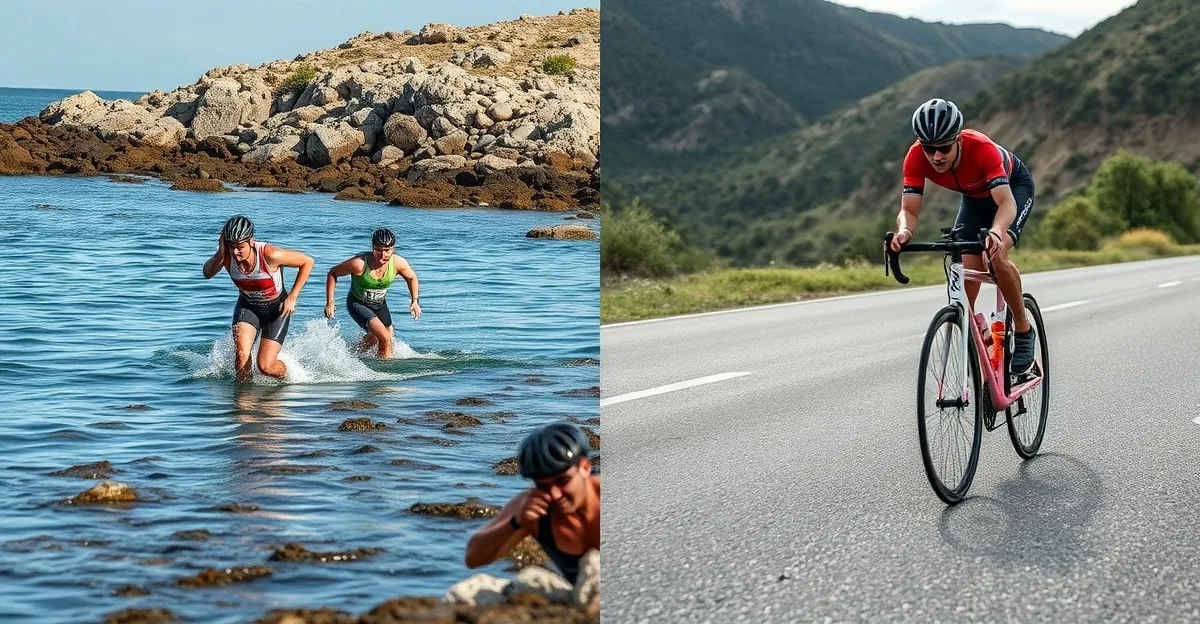
Two Multi-Discipline Sports, Very Different Experiences
Swimrun and triathlon share a love of multi-discipline endurance, but they deliver fundamentally different race experiences. Triathlon is a mature, standardised sport with controlled courses, individual competition, and three distinct disciplines. Swimrun is its wild cousin — raw natural terrain, mandatory teamwork, and two disciplines that blur together without formal transitions.
If you're deciding between the two, or considering adding swimrun to your triathlon background, this comparison covers every meaningful difference.
Format Comparison
| Aspect | Swimrun | Triathlon |
|---|---|---|
| Disciplines | Swimming + Running (alternating) | Swimming + Cycling + Running (sequential) |
| Team vs Solo | Teams of two (tethered, within 10m) | Individual (some relay formats exist) |
| Transitions | None — swim in shoes, run in wetsuit | T1 (swim→bike) and T2 (bike→run) with gear changes |
| Terrain | Natural: open water, rocky trails, forests | Controlled: pools or buoyed courses, paved roads |
| Sections | 8–52 alternating swim/run sections | 3 sequential sections |
| Equipment carried | All gear carried throughout (no bags, no racks) | Gear staged in transition zones |
| Swim gear allowed | Hand paddles + pull buoy (compensate for shoe drag) | No paddles, no pull buoy, no fins in most races |
| Bike | No bike | Road or TT bike (often the most expensive element) |
Distance Comparison
| Category | Swimrun | Triathlon |
|---|---|---|
| Sprint | 5–10 km total | 750m swim + 20km bike + 5km run |
| Standard | 15–30 km total | 1.5km swim + 40km bike + 10km run |
| Long | 30–50 km total | 1.9km swim + 90km bike + 21.1km run (70.3) |
| Ultra | 50–75+ km total (ÖTILLÖ WC) | 3.8km swim + 180km bike + 42.2km run (Ironman) |
The raw distance numbers favour triathlon, but swimrun's difficulty comes from terrain and frequency of transitions rather than pure distance. Swimming in shoes and running on rocky, uneven trails in a wetsuit are significantly slower than their triathlon equivalents on controlled courses.
Gear and Cost
This is where swimrun wins decisively. Triathlon's biggest cost barrier — the bike — does not exist in swimrun.
| Item | Swimrun | Triathlon |
|---|---|---|
| Wetsuit | $200–500 | $150–800 |
| Shoes | $120–180 | $120–250 (run + bike) |
| Bike | $0 | $1,000–10,000+ |
| Accessories | $80–150 | $200–1,000+ |
| Entry-level total | $400–600 | $1,500–3,000+ |
See the Swimrun Gear Guide for detailed equipment recommendations at every budget level.
Training Differences
Triathlon training splits across three disciplines — swim, bike, run — typically requiring 8-15 hours per week for intermediate athletes. The bike component alone consumes 40-50% of training time.
Swimrun training focuses on two disciplines but adds unique demands:
- Brick sessions: Alternating swim and run segments in a single workout (e.g., 400m swim → 2km run → 400m swim → 2km run)
- Gear training: Regular sessions swimming in trail shoes and running in your wetsuit — the feel is very different from each discipline alone
- Team training: Weekly sessions with your partner to practice tethered movement, pacing together, and communication
- Open water: Pool swimming alone is insufficient — you need regular open-water sessions to adapt to currents, sighting, and cold water
- Trail running: Technical trail skills matter more than road pace — agility on wet rock, roots, and uneven surfaces
A typical swimrun training week for a medium-distance race (15-30km) runs 6-10 hours — less total time than equivalent triathlon training, but the sessions are more varied and logistically simpler (no bike transport, no indoor trainer setup).
Community and Culture
Triathlon has a 50+ year history, an Olympic presence, and a mature commercial ecosystem with established brands, media coverage, and a clear pathway from local sprint races to the Ironman World Championship.
Swimrun is younger (founded 2006) and carries a different energy. The community is smaller but intensely passionate. The mandatory team format creates natural camaraderie — you share every moment of suffering and triumph with your partner. Post-race gatherings tend to be more intimate than triathlon's large-scale events. The sport's roots in Swedish outdoor culture give it an adventure-first ethos that resonates with athletes tired of standardised, over-commercialised race formats.
World Triathlon's decision to officially recognise swimrun in October 2025 signals that the sport is entering a growth phase similar to where triathlon was in the early 2000s.
Which Should You Choose?
Choose triathlon if you want a well-established sport with clear progression, you enjoy cycling, you prefer individual competition, or you want access to a deep ecosystem of coaches, clubs, and events.
Choose swimrun if you want a team experience, you love natural terrain and adventure, you want a lower cost of entry, or you're looking for a sport that feels raw and unscripted compared to triathlon's controlled environments.
Do both — many athletes compete in both sports. The swim and run fitness transfers directly between them, and the training variety prevents burnout. See our Swimrun for Triathletes guide for how to make the crossover.
Frequently Asked Questions
Is swimrun harder than triathlon?
Different rather than harder. Swimrun has rougher terrain, no formal transitions, and the challenge of swimming in shoes and running in a wetsuit. Triathlon covers longer individual discipline distances and adds cycling. The team element in swimrun adds a unique mental and physical dynamic not present in most triathlons.
Can triathletes do swimrun?
Absolutely — triathletes already have strong swim and run fitness. The main adaptations are: learning to swim with trail shoes (adds drag), running in a wetsuit (overheating management), working as a tethered team, and navigating rougher natural terrain instead of controlled courses.
Is swimrun cheaper than triathlon?
Significantly cheaper. Swimrun eliminates the most expensive element — the bike ($1,000-10,000+). Entry-level swimrun gear costs $400-600 (wetsuit, shoes, paddles, pull buoy). Race entries are similar in price. Total first-year cost for swimrun is roughly one-third of triathlon.
Do you need a bike for swimrun?
No. Swimrun has only two disciplines: open-water swimming and trail running. There is no cycling component, no transition area, and no bike-related gear to purchase or maintain.
Can you do swimrun solo?
Some smaller events offer solo categories, but most major races (ÖTILLÖ, My Swimrun Championships) require teams of two. The team format — connected by a tether, staying within 10 meters of each other — is a defining feature of the sport.
Ready to Train Smarter?
Get personalized training zones, race predictions, and performance insights with our free calculators.
