

Key Takeaways
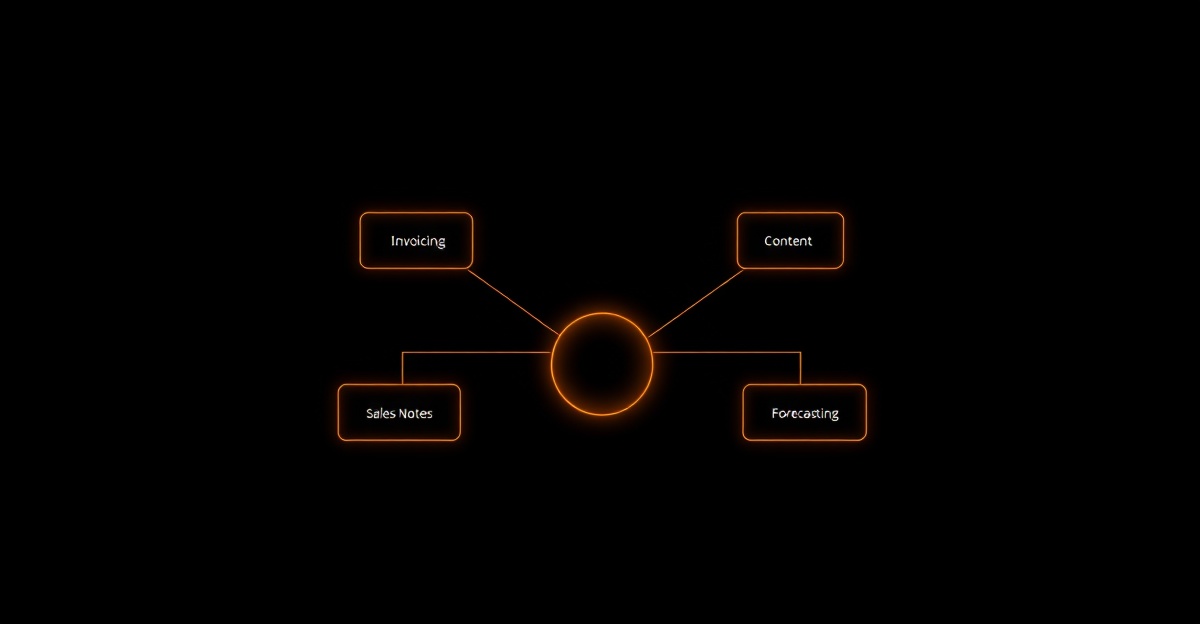
- Five interventions compound at SMB scale: AP automation, support triage, sales-call synthesis, content drafting, basic demand forecasting. The pattern: high transaction volume or recurring time spent.
- Six interventions are routinely oversold: custom training, full RAG on small corpora, voice agents replacing humans, AI video at scale, dynamic pricing without signal, bespoke dashboards.
- $5K–$25K is the realistic engagement range. Above that, the ROI thesis needs to be unusually clear.
- SMBs need implementation, not strategy. A $20M business does not have an unanswered strategic question about AI; it has six obvious places nobody has set up properly.
- Start with $20/month and 90 days of experimentation before hiring anyone. If you have not exhausted what ChatGPT or Claude can do on their own, a consultant is premature.
The AI consulting market has a structural problem with small businesses. The economics of running a consulting practice push consultants up-market, toward larger engagements with longer billing cycles. The interventions that are easy to sell at SMB scale are usually the ones that do not pay back. The ones that do pay back are too small to support a consultant's overhead, which means most small businesses get pitched something they should not buy.
I have run AI work inside Fortune 500 programs and across mid-market fractional engagements. The interesting overlap is that the unsexy interventions that worked at the $5B platform scale are the same ones that work at the $5M business, just smaller in absolute terms. The companies that fail are the ones that get sold the analyst's view of what an AI strategy should look like, rather than the operator's view of what an AI footprint actually does.
This page is what I would say to a small-business owner before they sign anything. If the consultant they are talking to disagrees with most of what is below, they should ask harder questions before they sign.
Five Interventions That Compound at SMB Scale
These all share a structural property: either the use case has high transaction volume or it consumes recurring time the owner cannot get back. That is the pattern that makes AI pay back at small-business economics.
Invoice and accounts-payable automation
The boring foundation. A bookkeeper or owner-operator who spends six hours a week categorizing invoices, matching POs, and chasing approvals can typically compress that to 90 minutes using an AP automation tool with AI categorization built in (the QuickBooks/Xero/Bill.com tier, depending on accounting platform). The payback is usually visible inside two closing cycles. The implementation work is small enough that a consultant adds value only on tool selection and workflow design, not on running the change long-term.
Support ticket triage and classification
Any business with more than 40 support tickets a week sees real return on AI-driven triage. The pattern: incoming tickets get classified, routed, and where possible given a draft response inside seconds. Help Scout, Intercom, Freshdesk, and Zendesk all have this built into their AI tiers in 2026. The intervention reduces first-response time, frees the support lead to do the genuinely hard tickets, and is usually inside the cost of one additional support hire.
Sales-call note synthesis
For any business with an outside or inside sales motion, recording and synthesizing calls saves hours of post-call admin and surfaces patterns the sales team would otherwise lose. The HubSpot/Pipedrive/Gong-tier tools have call summarization in the AI subscription. The summarized notes update the CRM record automatically. Lost deals stay lost, but the team's hit rate on similar deals improves because the lessons are written down somewhere.
Content drafting for owner-operated brands
The lowest-glamour, highest-leverage intervention for any owner who writes blog posts, newsletters, or product copy themselves. A frontier LLM with a brand voice guide and three or four reference pieces can take a first draft from 90 minutes to 15. The owner edits, and the edit is where the brand voice survives, but the blank-page problem is gone. Small Business Trends reporting on owner-operator content workflows consistently puts content drafting at the top of the ROI ladder for solo and near-solo brands.
Basic demand forecasting on existing data
Any business that already tracks sales by week and by SKU can get materially better at inventory ordering, staff scheduling, or promotion timing by feeding the existing data into a forecasting tool. The bar is low: a frontier LLM plus a spreadsheet plus a 30-minute weekly review beats most owner-operator gut decisions, especially in seasonal businesses. The mistake is buying a dedicated forecasting platform when an existing tool plus AI assistance would have done the job.
"Most $20M businesses don't have an unanswered strategic question about AI. They have six obvious places it would help and nobody who has the time to set them up properly. That gap is an implementation problem, not a strategy problem."
Six Interventions Routinely Oversold to Small Businesses
These are the ones I watch for in pitch decks aimed at SMBs. Each can work in narrow conditions; almost none of those conditions apply to a typical $5M–$50M business.
Custom model training
Fine-tuning a model on a small business's data sounds powerful and almost never pays back at SMB scale. The data volume is rarely enough to outperform a frontier model with a well-written prompt, the cost of maintaining a custom model is higher than the cost of switching vendors, and the marginal quality gain over a strong off-the-shelf solution is usually invisible to the customer. Skip it unless the business is genuinely in a category where its proprietary data is the moat.
Full RAG over small document corpora
Retrieval-augmented generation makes sense at scale: tens of thousands of documents, multiple business units, real volume of natural-language queries. At small-business scale (a few hundred documents, one or two people who would ever query them), a well-organized shared drive plus a frontier LLM that the user can paste relevant excerpts into outperforms a built RAG system at a fraction of the setup cost. The RAG pitch usually understates the maintenance burden.
Voice agents replacing humans
AI voice agents for inbound calls have become impressively good in 2026. They are still bad at most of the calls small businesses actually receive. The mode where they pay back, high volume of structurally similar calls like appointment booking or basic status queries, is real but small. The mode where they cost reputation, voice agents handling complex or emotional calls, is much larger.
AI-generated video at scale
Generating brand video with AI is technically feasible. The output, at the tier of quality available to a small business, is recognizable as AI-generated to most viewers, which subtracts brand equity rather than adding it. The exception is internal training content where the audience tolerance is higher. Marketing-facing AI video at SMB budgets is almost always premature in 2026.
Dynamic pricing without sufficient demand signal
Dynamic pricing works when there is a continuous stream of demand data with enough variability to find the pricing curve. Most small businesses do not have that signal at the SKU level. Harvard Business Review's recent work on dynamic pricing documents the cases where it works and the much larger set where customer-trust costs dominate the optimization gains. SMB pricing usually wins more from a careful manual review every six months than from a continuously updated AI model.
Bespoke AI dashboards
A bespoke AI dashboard is the pitch that survives the longest in SMB conversations because it looks impressive in a demo. In practice, the operator looks at the dashboard for two weeks, then stops. The reporting questions a small business has are almost always answerable by a $20-per-month frontier LLM plus the existing reporting tools, and the answers are richer because the LLM can be asked follow-up questions, which a static dashboard cannot.
Engagement Economics for Small Businesses
The realistic SMB engagement is $5K–$25K for a defined piece of work. Common shapes:
- Audit and roadmap, $5K–$10K. Two weeks of work, owner interviews, current-state assessment, prioritized list of five to seven interventions with cost and time estimates per intervention. Deliverable is a written document, not a deck.
- Vendor selection, $5K–$15K. A defined "we are choosing between three options for X" engagement. Output is a recommendation with reasoning, plus the implementation runbook. Best done by a consultant who has implemented at least two of the candidate options.
- Implementation supervision, $10K–$25K. Hands-on support for the team rolling out two or three of the compounding interventions. The consultant designs the workflows, trains the team, and stays through the first 30 days of operation.
- Monthly advisory retainer, $2K–$8K. Two hours per month plus call-down access for ongoing questions. Best when the owner has good instincts and just wants a sparring partner.
Anything above $25K at SMB scale needs an unusually clear ROI thesis, the kind that can be defended in writing against the next two quarters of cash flow. Most $50K+ proposals to small businesses are enterprise scope being sold to companies that cannot absorb the implementation.
How to Hire an SMB-Right-Sized AI Consultant
The filters that matter at this scale are different from the ones that matter at enterprise scale.
Ask for an engagement they turned down recently. A consultant who has never turned down an engagement is either too new or selling indiscriminately. The right SMB consultant declines work that will not pay back, and can describe specifically why they declined.
Ask which of the six oversold categories above they would refuse to sell. Anyone who thinks all six are viable in most SMB contexts is selling rather than diagnosing.
Ask about their implementation muscle. A small business needs someone who will sit with the bookkeeper through three closing cycles, not someone who will write a 40-page strategy document and disappear. Implementation hours per engagement is a better filter than strategy credentials.
Ask for two reference clients in the same revenue band. An AI consultant whose case studies are all $200M+ companies is going to scale their advice in ways that do not fit a $15M business. Same revenue band, similar industry, ideally both still in business.
Where to Go Next
- AI strategy consulting hub — the broader engagement model framing.
- What does an AI strategy consultant actually do? — the cornerstone spoke on the day-to-day work of the role.
- Top AI consulting firms — the firm landscape and where SMBs fit (and do not).
- Applied AI use cases — proof-of-work, including some implementations that started at small-business scale.
- Fractional Chief AI Officer — when the consulting engagement should graduate to an ongoing seat.
- Technology executive — the full-time path for SMBs ready to make their first executive hire.
Frequently Asked Questions
Is AI worth it for a small business?
Yes, but only in narrow categories. For a $5M–$50M business, AI pays back reliably on invoice and accounts-payable automation, support ticket triage, sales-call note synthesis, content drafting for owner-operated brands, and basic demand forecasting on whatever the company already tracks. It does not pay back reliably on most of what gets pitched to small businesses: custom model training, full RAG implementations on small document corpora, dynamic pricing without sufficient signal, or bespoke dashboards. The economics work when the use case has high transaction volume or recurring time spent, and they fail when neither is true.
How much does an AI consultant cost for a small business?
At SMB scale the realistic range is $5K–$25K for a defined engagement: an audit and roadmap, a vendor selection process for one or two tools, or an implementation supervision package. Monthly retainers of $2K–$8K work for ongoing advisory access. Anything above $25K for a small business needs an unusually clear ROI thesis, the kind where a single $15K invoice can be defended in writing against the next two quarters of cash flow. Most consultants who quote SMBs $50K+ are selling enterprise scope to companies that cannot absorb it.
What AI tools are best for small businesses in 2026?
The tools that pay back fastest for small businesses tend to be embedded inside software the company already runs: invoice and bookkeeping platforms with AI categorization (QuickBooks, Xero), CRMs with call-summarization built in (HubSpot, Pipedrive), helpdesk platforms with ticket-classification AI (Help Scout, Intercom), and content tools sized for SMB workflows (ChatGPT Team or Claude Pro for a single operator; Jasper or similar if the workflow needs templates). The best SMB AI stack is usually a series of small upgrades inside tools the team already uses, not a separate AI platform.
Should a small business hire an AI consultant or just use ChatGPT?
Most small businesses should start with a $20-per-month subscription to a frontier model and a 90-day experiment before bringing in a consultant. If the team has not exhausted what ChatGPT or Claude can do on its own, paying a consultant to design a more complex setup is premature. The right time to bring in a consultant is when there is a specific operational pain (a backlog that AI could clear, a process that has resisted automation, or a vendor decision the owner does not have time to research properly) and the cost of inaction is higher than the consulting fee.
How long does it take to see results from AI in a small business?
On the well-fit use cases, results show up in 4–12 weeks. AP automation that cuts a bookkeeper's invoice-processing time by 60% usually demonstrates inside two weekly closing cycles. Support ticket triage that routes 40% of incoming tickets automatically pays back inside a month. Content drafting that compresses a content-marketing team's first-draft time by 70% shows up immediately. The use cases that take 12+ months to pay back at SMB scale are usually the ones that should have been killed at scoping: custom model training, RAG over small document corpora, voice agents replacing human reception.
What's the biggest mistake small businesses make with AI?
Buying strategy when they need implementation. A typical $20M business does not have an unanswered strategic question about AI; it has six obvious places AI could help that nobody has the time or capacity to set up properly. Hiring a strategy consultant produces a deck. Hiring an implementation-focused consultant produces working systems. The other dominant mistake is buying a custom solution when an off-the-shelf one would have solved 80% of the problem for 5% of the cost. SMBs almost never need bespoke AI.
is it worth paying for ai driven marketing strategy consulting for a small team
For most $5M-$50M businesses, no. The page argues SMBs need implementation, not strategy. A $20M business does not have an unanswered strategic question about AI. It has six obvious places nobody has set up properly. Before hiring anyone, spend $20/month and 90 days experimenting with ChatGPT or Claude. If you have not exhausted what those tools do on their own, a consultant is premature. When you do engage one, $5K-$25K is the realistic range. The payback comes from unglamorous work like AP automation, support triage, sales-call synthesis, and content drafting, not strategy decks.
Need Expert Technology Guidance?
20+ years leading technology transformations. Get a technology executive's perspective on your biggest challenges.
