

Key Takeaways
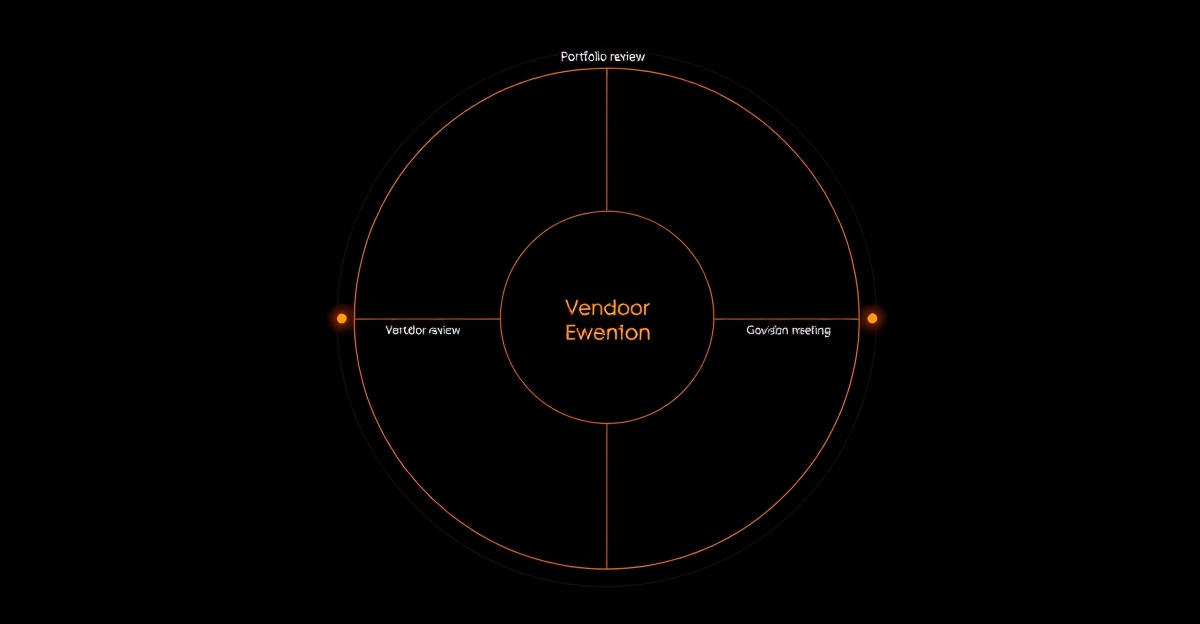
- The day-to-day is decisional, not technical. Portfolio reviews, vendor evaluation, governance editing, and saying no. Almost no model-building.
- Most engagements open with a portfolio audit, because honest accounting of what was spent and what came back is the slide no one inside the company can write.
- Engagement shapes are well-defined. $5K–$15K advisor retainer, $15K–$40K fractional, $75K–$250K 90-day sprint, $350K–$700K full-time CAIO base.
- Designing the replacement is part of the work. The consultant who never hands the role off is failing the engagement, even if the company is content.
- The cutoff for consulting is when an internal AI leader can own the portfolio and defend kill decisions without a sparring partner.
This is the page I send when a CEO asks me, in roughly these words, "what would you actually be doing if we hired you." The honest answer is more boring than the pitch deck version, and that is the point. Most of the work that determines whether AI spend produces revenue happens in recurring meetings that have terrible cinematography.
I have been the AI strategy person inside a $5B platform program, and I have been the AI strategy person on retainer at a $120M consumer brand. The shape of the calendar is similar enough that I can describe the work without much hedging.
The Four Decisions the Role Owns
Stripped of the consulting vocabulary, the work comes down to four decisions that someone has to own with the authority to make them stick. Everything else on the calendar exists to sharpen those four.
Which initiatives to fund, and which to kill
Most growth-stage companies have more AI ideas than they can afford to run seriously. The consultant runs a disciplined portfolio review: every initiative gets classified as a moonshot the company can afford to lose entirely, core operating leverage with a clear margin case, or table-stakes compliance work. Each category is funded against a different bar. Initiatives that cannot earn their slot get cut. Cutting is the part that needs executive authority, which is why steering committees almost never do it on their own.
Buy versus build, capability by capability
The fastest mistake in 2026 is rebuilding something that has a $99-per-seat SaaS equivalent already shipping. The slower and usually more expensive mistake is buying a platform for something that should be a competitive moat. The right answer is decided per capability, with a reasoning pattern the rest of the org can reuse the next time a similar question comes up. The consultant writes the reasoning pattern, then defends it against the procurement instinct to standardize on whichever vendor closed the kickoff dinner.
Org design and the actual talent mix
"We need AI engineers" is almost always the wrong specification. The right one names the roles: applied ML engineers, MLOps infrastructure leads, prompt engineers, evaluation owners, vendor managers, AI product managers, and the decision-maker accountable per use case. The consultant maps which of those are in-house versus contract versus vendor-embedded, then writes the hiring plan that matches the portfolio. This is the deliverable that survives the engagement longest, because the org structure outlasts the specific initiatives running through it.
Governance and the measurement cadence
Evaluation baselines written before the first model ships. Kill criteria recorded somewhere the team cannot quietly edit later. Unit economics per use case reported on a fixed cadence to the board. None of this is glamorous, and it is not where most AI spend goes. But without it, the funding decision in the first section runs on vibes instead of evidence. NIST's AI Risk Management Framework is the closest thing to a shared reference; most companies adopt a subset of it and customize the rest.
"The work is recurring, decisional, and largely uninteresting from outside. That is also what makes it valuable. The companies that hire well for this role are buying the part of the job that does not look like progress until twelve months in."
What the Job Is Not
Some clarifications I find myself making on almost every first call.
It is not model engineering. The consultant might whiteboard a system architecture or write evaluation criteria in a planning doc, but the implementation belongs to the engineering team. A strategy consultant whose calendar fills up with building stops doing strategy, and the portfolio decisions stop getting made.
It is not the deck. The deliverable from a serious engagement is a written recommendation with the reasoning and the dissent surfaced, not a 60-slide presentation. Clients keep the document and reuse it for board reporting. If the artifact only works inside a one-hour meeting, the engagement has not produced anything durable.
It is not vendor selection alone. Vendor decisions matter, but they are downstream of the portfolio decisions. A consultant who spends most of an engagement evaluating vendors has typically been hired to backfill a procurement function rather than to make strategy decisions.
It is not workshop facilitation. Workshops have their place: kickoffs, principles drafting, sometimes vendor selection. They are not a strategy. A retainer that consists entirely of facilitated workshops is a coaching engagement, which is fine but should be priced and described accordingly.
The Engagement Spectrum
Four shapes cover almost everything I see in the mid-market. Picking the right one matters more than picking the right person at the wrong shape.
Advisor retainer — $5K–$15K per month
Quarterly deep reviews of the AI portfolio plus call-down access between. Appropriate when the company already has a competent internal AI leader who needs a sparring partner, when a board wants AI governance competence without adding a director, or when a pre-Series-B startup needs a sanity check on the next 18 months of bets. The lowest commitment, the lowest cost, and the highest value per dollar when the timing fits.
Fractional AI strategy executive — $15K–$40K per month
One to two days per week of senior executive time, sitting inside the company's executive forum, owning the portfolio decisions for 18 to 36 months. The engagement I run most often. It fits mid-market ($50M–$500M revenue) and well-funded growth-stage companies past product-market fit. The outcome is a portfolio with a single accountable owner, a measurement cadence the board can read, and a permanent operating model handed off at the end.
Defined 90-day engagement — $75K–$250K
A scoped piece of work with a fixed deliverable: a portfolio audit, an org design, a vendor selection process, or a buy-versus-build decision on a specific capability. Useful when the company knows the question they need answered and wants the deliverable on a defined timeline rather than an ongoing relationship. The output is a written recommendation, not a deck.
Full-time Chief AI Officer — $350K–$700K base
For Fortune 500 and AI-native companies where AI is a core product pillar, the role is permanent and often board-level. Total comp reaches $1.5M+ when equity is meaningful. Hiring cycle runs six to nine months. Add another six to twelve months before the role produces measurable outcomes. Below roughly $500M revenue, the fractional version captures most of the decision value at 10–20% of the burn. That economics gap is why the fractional model has displaced the full-time CAIO role across most of the mid-market.
Why Most Engagements Start with a Portfolio Audit
Almost every engagement I take opens the same way. The first 30 days are a portfolio audit: every AI initiative the company is running, what was spent on it last year, what was spent on it this quarter, what the original ROI thesis was, what the actual outcome has been, and what has changed in the assumptions.
The audit produces a single page that nobody inside the company has been able to write honestly. Not because the data is missing, but because writing it requires saying things out loud that current sponsors do not want said. A consultant can write that page because the consultant has no internal political position to protect.
The audit is also where almost all of the early kill decisions come from. Companies that have not had an external review in 18 months almost always have at least two initiatives that should be stopped, are visibly underperforming, and continue to receive budget because no one with the authority to stop them has been forced to look at them in sequence with everything else. The audit puts them in sequence, and the kill decisions become much easier to defend.
Harvard Business Review has documented the same pattern from the governance side. Companies with structured AI portfolio reviews kill bad initiatives faster than those that review case-by-case as initiatives surface. The audit is the cadence the role institutionalizes.
When the Consulting Engagement Should End
A working AI strategy consultant designs their own replacement from day one. The 18-to-36-month engagement window is not arbitrary. It is the window in which a competent operator can stand up portfolio governance, run two or three initiatives end to end, and hand the operating model to a permanent successor.
The signals that say it is time to hand off: the internal AI leader has demonstrated the ability to make and defend kill decisions on initiatives with senior sponsors, the portfolio review cadence runs without the consultant being in the room, and the board is reading AI ROI reporting that they trust without needing a consultant's signature on the cover. When those three are present, the value of the consulting engagement collapses to advisor-retainer levels, and the engagement should renegotiate down to that shape or end.
Consultants who fail to design their own replacement are common. The engagement becomes a quiet permanent dependency, the company loses the ability to develop its own AI leadership talent, and the cost compounds. This is the most common failure mode of long fractional engagements, and the one I watch for hardest in my own work.
Where to Go Next
- AI strategy consulting hub — the practitioner-versus-MBB/Big-4 comparison and the engagement model overview.
- AI consultant salary — the compensation data behind the engagement shapes above.
- Top AI consulting firms — the firm landscape, from McKinsey to the solo-operator tier.
- AI strategy executive: role and playbook — the organizational-design companion piece, written from the same first-person seat.
- Applied AI use cases — proof-of-work: implementations across PR automation, agents, and training analytics.
- AI leadership services — direct path to scoping an engagement.
- Technology executive — the full-time variant of the seat the consultant work supports.
- Fractional CTO, CIO, Chief AI Officer — the part-time version when the work needs a seat, not a project.
Frequently Asked Questions
What does an AI strategy consultant do day to day?
The work breaks into four recurring buckets: portfolio reviews (sitting in the cadence that funds and kills initiatives), vendor and platform evaluation (deciding what to buy versus build), governance editing (the principles document, the evaluation baselines, the kill criteria), and what I call the no-saying meetings, the conversations where an initiative with a powerful sponsor is stopped because the unit economics did not survive. Almost none of the day is spent building models or writing code.
How much do AI strategy consultants make?
It depends on the engagement model. An advisor retainer is $5K–$15K per month. A fractional AI strategy executive bills $15K–$40K per month for one to two days a week, or $75K–$250K for a defined 90-day engagement. A full-time Chief AI Officer at Fortune 500 scale earns $350K–$700K base, with total compensation typically landing $700K–$1.2M and reaching $1.5M+ at top-tier tech firms where AI is a core product pillar. Senior partners at MBB and Big 4 firms billed to AI strategy engagements run $800–$1,500 per hour, though their actual client contact time is typically 10–20% of the billed work.
What's the difference between an AI consultant and an AI engineer?
An AI engineer ships the system: data pipelines, model training, evaluation harnesses, deployment infrastructure. An AI strategy consultant decides which systems should exist, what they need to deliver to earn their budget, and when to stop investing in them. Both are necessary; they are not interchangeable, and putting an engineer in the strategy seat is one of the more common mid-market mistakes. They tend to over-index on what they personally know how to build.
How long does an AI consulting engagement last?
Advisor retainers run open-ended, often for years. Fractional AI strategy engagements typically run 18 to 36 months: stand up portfolio governance, run the first two or three initiatives end to end, hand the operating model to a permanent successor. Defined 90-day engagements are exactly that. Anything longer than 36 months in a fractional seat usually means the consultant has not designed their own replacement, which is a failure mode for the engagement, not a sign of value.
Do AI consultants build models or write code?
Practitioner consultants at the strategy layer almost never write production code on an engagement. They might sketch architectures on a whiteboard or write evaluation criteria in a planning doc, but the implementation work belongs to the engineering team or to a separate hands-on consultant. The line is real: a strategy consultant whose calendar is full of building stops doing strategy, and the portfolio decisions stop happening.
When is it time to replace the AI consultant with a full-time hire?
Three signals together: the portfolio has a clear and stable operating cadence the company can run without the consultant, an internal candidate has demonstrated the ability to make and defend kill decisions on initiatives with senior sponsors, and the company's AI spend has stabilized at a level where a full-time CAIO is financially defensible (usually $500M+ revenue with $5M+ annual AI investment). Below that, the fractional engagement is the better economics indefinitely.
what does good ai strategy consulting actually look like
Good AI strategy consulting is decisional, not technical. The work centers on four recurring decisions: which initiatives to fund or kill (through a disciplined portfolio review), buy versus build per capability, org design with the actual talent mix specified by role, plus governance with measurement cadence (evaluation baselines, kill criteria, unit economics reported to the board). It is not model engineering, not a 60-slide deck, not vendor selection alone, and not workshop facilitation. The durable deliverable is a written recommendation with reasoning and dissent surfaced, plus an org structure that outlasts specific initiatives. A serious engagement also designs its own handoff to an internal AI leader.
Need Expert Technology Guidance?
20+ years leading technology transformations. Get a technology executive's perspective on your biggest challenges.
