
Training for Swimrun: The Essentials
Swimrun training combines three core elements: open-water swimming, trail running, and the swimrun-specific "brick" session that alternates between the two in race gear. Unlike triathlon training, there is no cycling component — but you add partner training, gear familiarisation, and transition practice that don't exist in single-discipline sports.
The plans below are structured as 12-week programs for athletes with an existing fitness base (you can run 5km and swim 400m continuously). If you're coming from triathlon, see the condensed 8-week crossover plan.
Key Swimrun Workouts
The Brick Session (Most Important)
Swimrun's signature workout: alternating swim and run segments in one session, wearing race gear throughout. This trains your body to switch between disciplines without rest and builds comfort in wet shoes and a running wetsuit.
- Beginner brick: 200m swim → 1km run × 3 rounds (pool + treadmill)
- Intermediate brick: 400m swim → 2km run × 4 rounds (open water + trail)
- Advanced brick: 600m swim → 3km run × 5 rounds (open water + trail, with partner)
Open-Water Swimming with Shoes
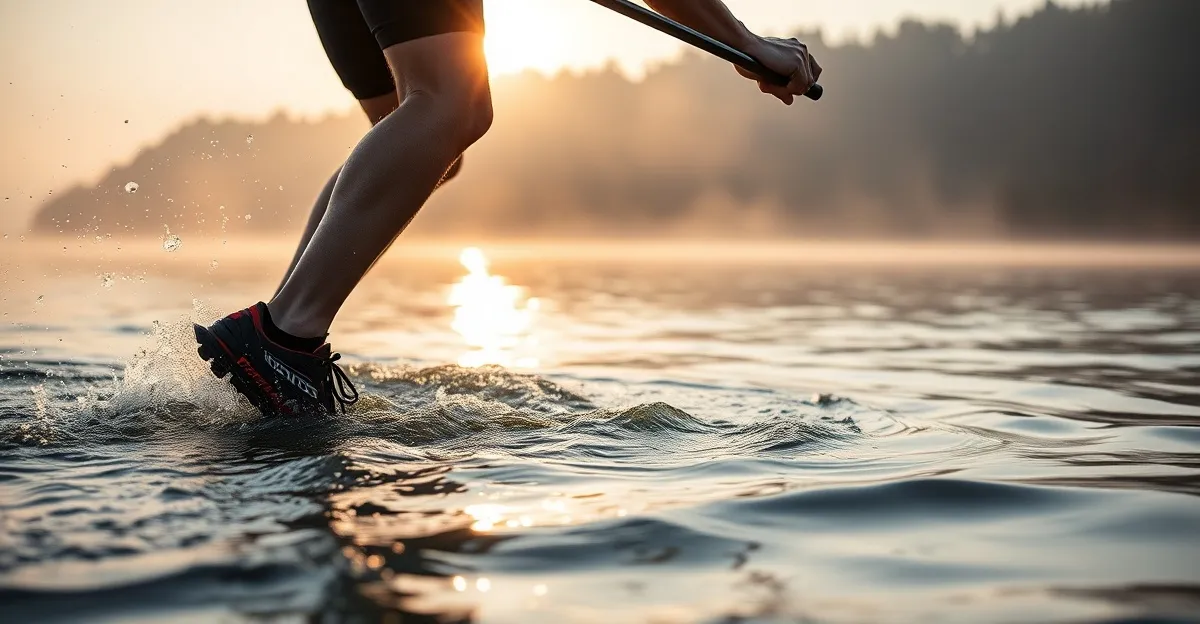
Swimming in trail shoes is the most foreign sensation in swimrun. Schedule at least one open-water session per week with shoes, hand paddles, and pull buoy. Focus on maintaining body position — the shoes pull your legs down, so a strong core and high elbow catch become even more important.
Trail Running in a Wetsuit
Run in your race wetsuit at least once per week. Start with 3km and build to 8-10km. Learn how your body manages heat in neoprene, where chafing occurs (apply anti-chafe cream at those points on race day), and how the wetsuit affects your stride on uneven terrain.
Partner Training
Train with your partner at least weekly for the final 6-8 weeks. Cover tethered running (practice on narrow trails), synchronised water entries and exits, pacing negotiations, and communication during long efforts. A 3-hour training session together is worth more than a week of solo training for race preparation.
12-Week Plan Overview by Distance
Sprint Swimrun (5-10km) — 4-6 hours/week
| Phase | Weeks | Focus | Key Sessions/Week |
|---|---|---|---|
| Base | 1-4 | Build swim and run volume | 2 swims, 3 runs, 1 brick (pool) |
| Build | 5-8 | Add open water, trail, gear | 1 pool swim, 1 OW swim, 2 trail runs, 1 brick (gear) |
| Specific | 9-11 | Partner training, race simulation | 1 OW swim, 2 trail runs, 1 partner brick, 1 race sim |
| Taper | 12 | Recovery, gear check, course preview | Light sessions only, gear prep |
Medium Swimrun (15-30km) — 6-8 hours/week
Same structure as sprint but with higher volume: longer swim intervals (up to 800m), longer run segments (up to 5km per brick segment), and a race simulation at 60-70% of target distance in week 10. Partner training starts in week 5 instead of week 9.
Long/Ultra Swimrun (30-75km) — 8-12+ hours/week
Requires 16-20 weeks for athletes without a long-distance endurance base. Key additions: back-to-back long days (5-6 hour Saturdays + 2-3 hour Sundays), cold water acclimatisation sessions, nutrition practice during 4+ hour bricks, and multiple race simulations with partner. See the guide to swimrun distances for what to expect at ultra distance.
Winter and Off-Season Training
Swimrun is a summer sport (May-October in the Northern Hemisphere), but winter is when you build the aerobic engine that powers your season. Key winter adaptations:
- Pool swimming with shoes: Use your race shoes in the pool for brick sessions. Most pools allow this — ask staff first.
- Indoor brick sessions: Pool swim → treadmill run in wetsuit. Effective if open water isn't available.
- Trail running: Winter trails build the ankle stability and agility that flat roads don't develop.
- Strength work: Focus on shoulders (paddle fatigue), core (body position in water), and single-leg stability (trail running demands).
- Base building: Use the Training Zones Calculator to set your aerobic training zones and build a strong endurance base through winter.
Race Nutrition Strategy
Swimrun nutrition is unique because everything must be carried in your wetsuit pockets. There are no aid stations in many races (or they're minimal and infrequent). Plan for:
- Calories: 200-300 cal/hour for races over 2 hours
- Format: Gels (compact, waterproof wrappers), chews, or liquid nutrition in soft flasks
- Storage: Wetsuit chest pockets or a race belt with waterproof pouches
- Timing: Eat during run sections (easier to digest), drink during both
- Salt: Open-water swimming in saltwater increases sodium loss — pack extra electrolytes for races in the sea
Common Training Mistakes
- Not training in gear: Every session in the final 6 weeks should include at least one piece of race equipment
- Skipping partner training: Solo fitness is only half the equation — team coordination wins or loses races
- Ignoring open water: Pool swimming alone does not prepare you for currents, cold water, sighting, and swimming in shoes on choppy days
- Over-emphasising speed: Swimrun rewards consistency and durability over pace — don't train like a 5K runner
- Neglecting trail running: Technical trail ability matters more than flat road speed on most swimrun courses
Frequently Asked Questions
How many hours per week for swimrun training?
Sprint distance: 4-6 hours/week. Medium distance: 6-8 hours/week. Long/ultra distance: 8-12+ hours/week. These are total training hours including swimming, running, brick sessions, and partner training.
What is a swimrun brick session?
A brick session alternates swimming and running segments in one workout — mimicking race conditions. Example: 400m swim → 2km run → 400m swim → 2km run → 400m swim → 2km run, all in race gear. Brick sessions are the single most important swimrun-specific workout.
Can you train for swimrun in winter?
Yes. Pool swimming with shoes replaces open water. Treadmill or indoor track running in your wetsuit replicates gear conditions. Focus on building swim and run volume through winter, then add open-water and trail specificity in spring.
How long before a swimrun race should training start?
12 weeks for athletes with an existing running or swimming base. 16-20 weeks if starting from scratch. Triathletes or experienced endurance athletes can condense to 8 weeks of swimrun-specific preparation.
Do I need to train with my partner?
For your first race, train together at least once per week for the final 6 weeks. Cover: pacing, tethered movement, water entry/exit, communication. Many teams train independently for volume but together for quality brick sessions and race simulations.
Ready to Train Smarter?
Get personalized training zones, race predictions, and performance insights with our free calculators.
