

Why retatrutide, and why now
If you have read my GLP-1 log, you know the pattern. On semaglutide I raised the dose four times between July and August 2026, and hunger came back around day 6 every time. On tirzepatide, three doses in a row ended up 5 to 6 days apart because the food noise returned before the week was over. More drug did not move the wall. The next thing to test was a different molecule.
Retatrutide is that molecule. It acts on GIP and GLP-1 like tirzepatide, and adds a third target, the glucagon receptor. In the trials it produced the largest weight loss yet reported for this class of drug. The full trial picture, the side-effect rates, and why "GLP-3" is a misleading nickname are in my evidence review on hybridathlete.guide.
When ARD's Sportschau investigative desk used my GLP-1 log as its case study (the Sportschau episode of 2 September 2026, the companion video "Immer mehr Athleten greifen zu GLP-1-Medikamenten", and ARD-Mittagsmagazin the next day, all listed on my IMDb page), I said what I still believe: a GLP-1 drug does not make you faster or stronger, you still have to put the training in. A triple agonist does not change that. All it can change is how many days a week eating less is easy.
Researching it was harder than taking it

This took the longest, and it is the part I would warn people about most. Search "retatrutide" and the first pages are mostly sellers, affiliate "review" sites, and pages that look like clinical resources but end in a buy button. Many look official. Some have medical-sounding domain names. A lot of them repeat the same phase 2 numbers with no citation, or with a citation that does not say what they claim.
My rule became simple: if I could not trace a claim back to a peer-reviewed paper, a registered trial on ClinicalTrials.gov, or Lilly's own disclosures, I treated it as marketing. That cut the useful material down to a handful of papers and press releases. Forums were good for one thing: learning which questions to ask. They were useless for answers.
Buying it
Retatrutide is not sold as a medicine anywhere. What you can get is a "research peptide": a freeze-dried powder in a vial, labelled "for research use only, not for human consumption". There is no pharmacy, no prescription, and no batch you can check against a regulator's record. I am not naming where I bought it, deliberately. My choice came down to five things:
- Delivery speed
- How quickly and clearly they answered my messages
- Price
- How polished and professional the website looked
- Whatever online reviews I could find, and how many
Looking back, I want to be honest about what those criteria are. They measure customer service, not chemistry. Fast shipping, a slick site and a quick reply do not tell you whether the vial holds what the label says, in the stated amount, without contaminants. Reviews for unregulated products are easy to fake, and real ones cannot speak to purity either.
What I would do in an ideal world: send part of the first shipment to an independent analytical lab for an identity and purity test, and only build confidence from a clean result. Then retest regularly, because one good batch says nothing about the next. Even that lowers only one risk, a bad product. It does not make an unapproved drug approved, and it does not replace a doctor.
The hardest part: powder to liquid
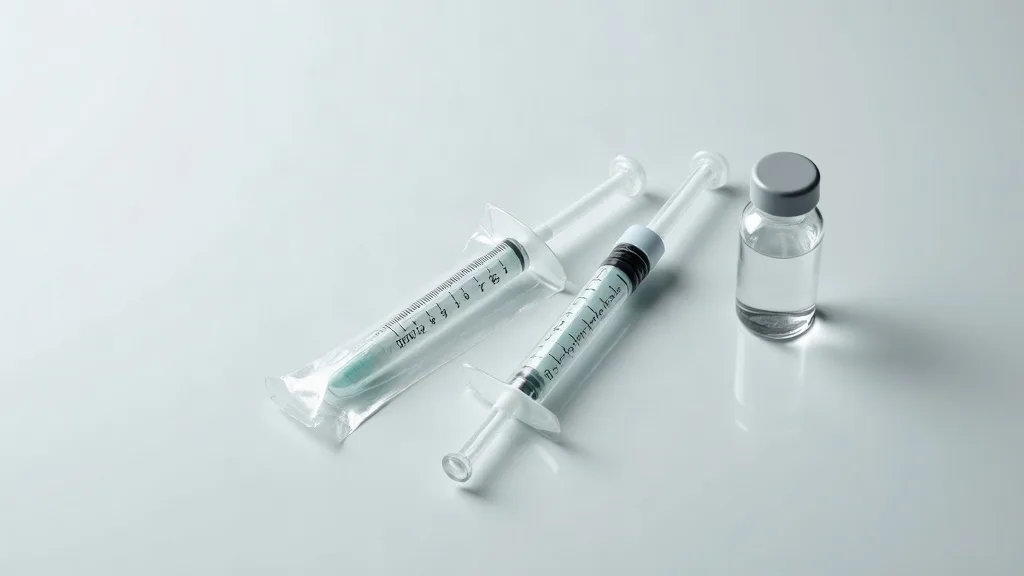
I expected the hard part to be the decision. It was not. It was practical. Research peptides arrive as a powder, and before you can use them you have to turn that powder into a solution and then work out how much of it to draw up. Nothing in the box explains it, the guidance online contradicts itself, and every later measurement depends on getting that one step right.
It got worse when I realised the syringes I had were too small for what I needed. I had to stop, rethink the whole setup and get different equipment before going any further.
I am not publishing ratios, amounts or technique. A reader copying a stranger's numbers onto a vial of unknown purity is taking a risk I do not want to be part of. If you are at this step, this is exactly where a clinician or pharmacist belongs.
Week one, from my own log
- Day 1 (20 October): first injection.
- Day 2: no cravings, clearly less hunger. No side effects: no nausea, no stomach trouble, nothing that changed a session.
- Day 4: still quiet. Waist down from 84.0 cm to 80.5 cm.
- Day 5 (25 October): the food noise came back. That was a high-training-load week, so I cannot separate the drug wearing off from simply being hungrier. I took the second injection that afternoon rather than waiting for day 7.
- Day 6 (26 October): 87.3 kg, down from 92.2 kg on day 1, waist 80.0 cm. Still no side effects.
Two caveats. Five kilos in six days is mostly water and glycogen, not fat, as in the first week of any deficit. And five days of appetite cover is the same wall I hit on semaglutide and tirzepatide, not the clean weekly curve from the trials. One athlete's log is an anecdote, not data. I will update this page as the experiment goes on.
Update, 31 October: doses two and three
Dose two went in on Sunday 25 October at 16:00, five days after the first instead of seven. I pulled it forward because I was very hungry, in a week with a high training load. No side effects.
Dose three, the same amount, followed on Saturday 31 October at about 05:00, roughly five and a half days later. The food noise had come back around day 5 again, the same breakthrough I had on semaglutide and tirzepatide. So far the third receptor has not moved the wall. That dose emptied my first vial. The next one is a second, larger vial from the same order.
The scale said 87.4 kg fasted on 31 October, against 92.2 kg on 20 October. I would not read that as fat loss. Part of an early drop like this is water and glycogen, and I had a stomach bug on 29 and 30 October, which makes every reading from this week noisy.
What I would tell another athlete
- Start with a doctor and an approved drug. Semaglutide and tirzepatide are approved, well studied and can be prescribed.
- The trials ran on pharmaceutical-grade drug with clinicians watching. A research peptide gives you neither.
- If you compete in tested sport, check the current WADA Prohibited List yourself.
- Track performance, not just weight: strength, resting heart rate, training quality, and lean mass if you can measure it.
- Write down what you cannot verify. For anything bought outside a pharmacy, that is most of it.
Disclaimer
I am documenting a personal, self-directed research project and writing it up for transparency. It is not medical advice and not a recommendation to use retatrutide or any unapproved substance. Retatrutide is not approved for human use by any regulator. A "research use only" label does not authorize human use, and the rules on buying, holding or using these compounds depend on where you live. I do not sell, link to, or take money from any peptide vendor.
Frequently Asked Questions
What are the side effects of retatrutide in the first week?
In my first week I had none: no nausea, no stomach trouble, nothing that changed a training session. That is one person. In the trials, gastrointestinal side effects (nausea, diarrhea, constipation, vomiting) were the most common and rose with dose, and dysesthesia (abnormal skin sensations) and a higher resting heart rate were also reported.
How long does retatrutide suppress appetite?
For me, five days. Cravings dropped from day 2, and the food noise came back on day 5, the same point where semaglutide and tirzepatide stopped holding for me. It was also a high-training-load week, so I cannot separate the drug wearing off from simply being hungrier. It happened again before my third dose on 31 October.
Is retatrutide legal?
Retatrutide is not approved by the FDA, the EMA or any other regulator as of October 2026. Outside clinical trials it is sold as a "research use only" peptide, and that label does not authorize human use. Whether buying, holding or using it is lawful depends on your country. I document my use as a self-directed research project, which describes what I do, not its legal status.
What is GLP-3?
GLP-3 is a nickname for retatrutide, not a hormone. It refers to the drug acting on three receptors (GIP, GLP-1 and glucagon), one more than tirzepatide.
Ready to Train Smarter?
Get personalized training zones, race predictions, and performance insights with our free calculators.
