
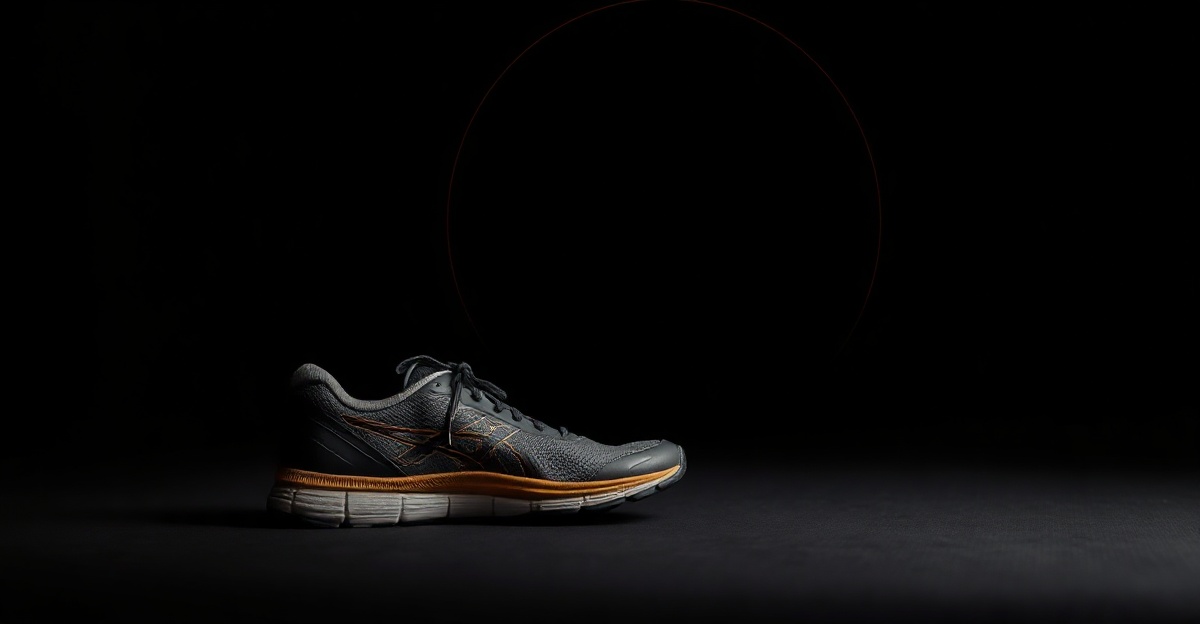

Posterior tibial tendon dysfunction has cost me more training weeks than any other recurring injury. It is why I rotate three pairs of shoes through every block, why I refuse to run more than three consecutive sessions on the same surface, and why my training log carries a column for medial-ankle ache. This article is the operating system I have built around it: what I look for, what I do when I see it, and what I have stopped doing because it made the pattern worse.
What PTTD Actually Is
The tibialis posterior is the deep calf muscle on the inside of the lower leg. Its tendon wraps behind the medial malleolus (the bony bump on the inside of the ankle), runs under the foot, and fans into the navicular and the bases of the middle three metatarsals. Its job during running is to support the medial arch, invert the foot during the stance phase, and lock the midfoot rigid as you push off.
When the tendon is loaded faster than it can adapt (long runs in the same shoe on the same surface, week after week, with insufficient rest), the collagen architecture starts to degrade. Early on, that shows as tendinopathy: dull medial-ankle ache, arch fatigue, occasional swelling on the inside of the ankle. Untreated, the tendon stretches or tears, the arch flattens, and the deformity becomes increasingly rigid. PTTD is the most common cause of acquired adult flatfoot in the orthopaedic literature.
Most recreational athletes who develop PTTD stay in Stage I of the Johnson and Strom classification: tendinopathy with a normal foot shape, pain with activity, single-leg calf raise still possible. Stage I is highly responsive to conservative management. The work, and the discipline, is in keeping it there.
My Pattern
PTTD has been my recurring injury since I started running serious volume. It does not pick a side. Sometimes left, sometimes right, sometimes both inside the same block. It does not pick a season either. It has appeared during marathon builds, HYROX builds, and triathlon builds. What it does have is a repeatable trigger profile.
The triggers, in order of how often they show up:
- Monotonous training surfaces. Long stretches on the same surface (too much treadmill in a row, or too much road in a row) concentrate load through the medial ankle in the same way every time. Flares show up two to three weeks into a stretch like that, almost without fail.
- Insufficient shoe rotation. If I drift into wearing one pair of shoes for ten consecutive sessions because the others are at the bottom of the cupboard or "feel less fresh," the medial-ankle ache arrives reliably.
- Inadequate recovery between high-volume or high-intensity run blocks. Back-to-back hard weeks with no easy week between them is the third reliable trigger. The tendon needs the recovery week as much as the cardiovascular system does, and arguably more.
Once I started recording PTTD flares in the same log as training sessions, the pattern stopped being mysterious. Every flare in my records traces back to at least one of those. Usually two. Almost never zero.
Warning Signs: Catch It Early
PTTD never announces itself with a sharp injury moment. It accumulates, then becomes visible. The early warning signs are easy to dismiss for the first session or two, which is the entire problem. The discipline is taking them seriously when they first show up, not on the third session in a row when the dull ache has become a real pain.
- Pain or aching on the inside of the ankle or under the arch. Dull, present at the end of a run, lingers into the evening, settles by morning. This is the canonical early sign.
- Swelling on the medial ankle. Visible puffiness behind and below the medial malleolus, often without warmth or redness. Compare both ankles in a mirror.
- Weakness on push-off or single-leg calf raise. The single-leg heel rise on the affected side feels weaker than the other side, the heel does not invert (turn inward) cleanly as you rise, or the raise cannot be completed at all. This is the most diagnostic single test.
- Arch flattening on the affected side. Standing barefoot in front of a mirror, the medial arch on the affected foot looks visibly lower than the other side. This is later than the other signs and warrants clinical assessment, not just self-management.
The rule I run on: if any one of the first three is present after a run, the next 48 hours are easy or rest. If two are present, the next week is run-free, swim and bike only.
The Management Protocol
Five interventions, in order of how much they have moved the needle for me personally. This is the protocol I run on, not a clinical consensus. Surface variety and shoe rotation in particular are common running-coach wisdom rather than well-supported sports-medicine literature for PTTD specifically. They have worked for me, repeatedly. The strength and load-management items at the bottom have the stronger evidence base.
1. Surface variety
Rotate treadmill, road, trail, and track. Avoid more than three consecutive sessions on the same surface. The single most protective intervention I have found, and the most ignored in my own training when I drift. Treadmill running feels easy (the belt does some of the work) but the lack of surface variation concentrates load through the same kinematic path every stride. Trail introduces inversion and eversion challenges that actually load the tibialis posterior in protective ways. Track work is fine in small doses, but the constant left-turning bias on the same lane reproduces the same trigger as too much treadmill.
Practical version: a typical week mixes treadmill, road, and at least one trail or track session. If three sessions in a row land on the same surface, the fourth is somewhere else, even if it costs a small detour to get there.
2. Three-pair shoe rotation
Minimum three pairs in active rotation. Mixed stack heights, mixed drops, mixed stability profiles. Not all the same shoe in different colours. Not all the same brand. The variety itself is the intervention. Different shoes load the medial ankle in different ways, and the variation prevents the same micro-injuries from stacking session over session.
My current rotation is one stability trainer for high-volume easy days, one neutral trainer with moderate cushioning for mixed sessions, and one lower-stack option (currently a daily trainer repurposed for shorter sessions) for surface variety. If one pair accumulates the majority of the mileage for two consecutive weeks, that is itself a warning sign. The rotation is failing, and the medial ankle is about to complain.
3. Volume management
The rule is the rule: watch for early signs (medial-ankle ache, arch fatigue) and back off immediately. Not at the end of the block. Not after the next planned long run. Immediately. The four-to-eight-week cost of a Stage I flare run badly is a season's worth of training; the one-week cost of taking a flare seriously when it first appears is sometimes nothing more than swapping a long run for a swim.
The other half of volume management is honest week-by-week progression. The 10% rule is folklore, not biology, but the principle holds: large week-on-week jumps in run volume are how injuries get cued up. PTTD specifically responds badly to junk miles. Quality over quantity is not a slogan for this injury, it is operating policy.
4. Tibialis posterior strengthening
Five to ten minutes a day, built into the warm-up or wind-down. Three movements:
- Single-leg calf raises: slow, controlled, attention on keeping the heel inverted (pointing inward, not outward) through the lift. Three sets of 15 per side, daily. The same movement that tests for PTTD is the movement that builds the tendon's capacity to handle load.
- Toe curls: scrunching a towel with the toes, ten reps per side. Trains the small intrinsic foot muscles that share load with the tibialis posterior in supporting the arch.
- Resistance-band inversion: sitting on the floor with a band looped around the forefoot, pulling the foot inward against the band. Three sets of 12 per side, two to three times a week.
Add single-leg balance work (barefoot, 60 seconds per side, eyes open or closed depending on tolerance) to challenge the proprioceptive system. Add tibialis-anterior strengthening (heel walks) to balance the calf complex. None of this is dramatic in any single session, but over months it builds tendon capacity that the running volume can safely sit on top of.
5. Extra rest and compression after long runs
The day after the long run is when the tendon is most vulnerable. Two practical habits: compression socks worn through the rest of the day after a long run, and an extra easy day (not the next planned hard session) before the next run-loaded effort. Pool, bike, or full rest. Not running, not loaded leg work. The compression sock thing is small but consistent. It has saved more flares than any other Tuesday decision I have made.
What I Stopped Doing
Equally important: the things that demonstrably made it worse and are no longer in my training.
- Running through the early ache. "It will settle once I am warmed up" is not a treatment plan. It is how a four-week recovery becomes a ten-week one.
- Wearing maximum-stack shoes for every easy run. The cushioning feels protective and is sometimes the opposite. It dulls the proprioceptive feedback that tells me the tendon is unhappy, and it lets me run further at the same perceived effort. That is the wrong direction.
- Skipping the strength work during peak training weeks. The 8 minutes of tib-post strengthening get cut "because the run was long enough already." That is precisely the week the strength work is most protective.
- Treating it as a flare to fix rather than a vulnerability to manage. PTTD does not go away. It dies down. Every block needs to be designed with it in mind, not the next-but-one block.
PTTD for a Hybrid Athlete — Marathon, Ironman, HYROX
PTTD is mostly written about as a road-runner's problem. For a hybrid athlete who races marathons, half-marathons, triathlons, swimrun, and HYROX, the failure modes look slightly different in each discipline, and the management protocol has to flex accordingly.
Marathon and half-marathon training
This is where I have lost the most weeks to PTTD historically. Marathon training pushes total weekly mileage to a place where the medial ankle has nowhere to hide if anything in the protocol slips: shoe rotation, surface variety, recovery between hard sessions, easy-day pace discipline. The flares I have logged trace back to almost every marathon build I have done. The fix is upstream of the build: enter the volume increase with the strength base already built, the shoe rotation already established, and the surface mix already on the calendar. Reactive PTTD management during a marathon build rarely works. Pre-emptive PTTD management works most of the time.
Ironman training
Counterintuitively, Ironman training has been kinder to my PTTD than marathon training. The reason is volume distribution: a 15-hour Ironman week is roughly 7 hours of bike, 4 hours of swim, and only 3–4 hours of run. The lower run volume relative to the total training load means the tibialis posterior loads less per week, even though fitness is higher. The bike and swim are functionally rest for the medial ankle. The vulnerability is the Ironman marathon itself — running 42 km after 180 km on the bike with depleted legs is PTTD-provocation territory. Pre-race shoe choice and post-race recovery handling matter more than mid-race tactics.
HYROX training
HYROX is the discipline where PTTD risk is highest and shortest-fuse. The event itself is 8 km of running broken by 8 workout stations, but the training for it stacks high-impact running with sandbag lunges, walking lunges, burpee broad jumps, and sled work. The lunges and broad jumps load the tibialis posterior asymmetrically and at depth. The 1 km running segments at race pace fall in a pace and intensity band where my form gets sloppy if I am tired. Three rules I run on during HYROX blocks specifically:
- No lunges and no running on the same day. The two movements stack stress on the same anatomical structures. Splitting them across consecutive days lets the tendon recover.
- Sled push in flat shoes only. Cushioned trainers under heavy horizontal force destabilize the foot and make the tibialis posterior overcompensate. Wrestling shoes, weightlifting shoes, or barefoot-style trainers handle it better.
- Easy-day discipline applies to the run, not the strength. A HYROX easy day is still strength work and stations; the run is the easy part. Treating the run as filler ("just an easy 5 km") between strength sessions is exactly how the tendon gets overloaded.
Swimrun and trail
Swimrun and trail running are net positive for PTTD vulnerability. Soft, varied surfaces, frequent direction changes, and the intermittent water entries break up the loading pattern enough that the tendon rarely complains. The exception is rocky technical trail descents, where ankle eversion under load can flare the tendon in a single session. The longer technical descents are managed with shorter stride and slower pace, not avoided altogether.
Returning to running from the femur fracture
The femur fracture cluster on this site documents a forced 4–6 month running layoff. When the running comes back, PTTD vulnerability is elevated specifically because tendon capacity has detrained alongside the rest of the system. The return-to-running progression has to carry the PTTD playbook with it from session one: surface variety from the first walk-jog interval, shoe rotation reinstated before weekly mileage climbs, tibialis-posterior strengthening built back into the warm-up before mileage rebuild begins. Recovering from one injury is not licence to ignore another.
When to See a Clinician
Self-management is appropriate for Stage I flares that respond to the protocol above. Three triggers should send you to a sports medicine physician, podiatrist, or musculoskeletal physiotherapist instead of another iteration of self-care:
- The single-leg calf raise on the affected side is impossible. Cannot do one repetition. Not weaker than the other side — actually unable to complete the movement. This is a Stage II warning and warrants clinical assessment within days, not weeks.
- Visible flattening of the arch on the affected side. Standing barefoot, the medial arch is visibly lower than the unaffected side. Imaging may be needed; the rehab plan is different from a Stage I flare.
- Pain that does not settle with two weeks of rest from running. Two weeks of swim and bike with full rest from impact, and the medial ankle ache is still present at rest or with daily activity. That is not Stage I and is not appropriate for self-management.
The conservative treatment toolbox a clinician can add to your self-care is meaningful: a properly assessed orthotic, a short-stage walking boot to offload during severe flares, targeted physiotherapy interventions you cannot replicate at home, and — rarely, in advanced stages — a discussion of surgical options. PTTD that catches a clinician's eye early gets a better outcome than PTTD that catches one late.
Why This Page Exists
The other content cluster on this site is a femur fracture recovery log — an acute injury with a clear surgical timeline. PTTD is the opposite: a vulnerability that travels with the athlete forever, that rewards discipline and punishes complacency. I have managed it badly in past training blocks and well in others, and the pattern of what works has been stable enough across years that it is worth writing down properly.
If you are in the middle of a flare right now, the most useful thing you can do in the next 48 hours is pull back on running volume, swap to swimming or biking for the next two sessions, ice the medial ankle, get into compression socks, and review the last three weeks of training for whichever of the three triggers above is the most obvious. Most flares I have logged trace back to a single training decision two to three weeks earlier. The intervention that ends the flare is rarely a treatment; it is recognizing the trigger and removing it.
Last updated 2026-05-13.
Frequently Asked Questions
What is posterior tibial tendon dysfunction (PTTD)?
Posterior tibial tendon dysfunction is a progressive overuse injury of the tibialis posterior — the deep calf muscle whose tendon runs behind and under the medial ankle bone and inserts into the bones of the medial arch. Its job is to support the arch and invert the foot during the stance phase of gait. When the tendon is overloaded or insufficiently recovered, it becomes inflamed (tendinopathy), then weakens, then stretches. In late stages it can cause acquired adult flatfoot deformity. PTTD is the most common cause of flatfoot in adults.
How do I know if I have PTTD versus shin splints or plantar fasciitis?
PTTD pain is medial — on the inside of the ankle, behind and below the bony bump on the inner side. Shin splints (medial tibial stress syndrome) sits higher, along the lower third of the inside of the shin. Plantar fasciitis is in the heel pad and arch, worst on the first steps of the day. PTTD has its own pattern: dull medial-ankle ache after runs, arch fatigue, weakness when you try a single-leg calf raise on the affected side. A clinician can confirm with palpation and the single-leg heel-rise test. Imaging is reserved for severe or atypical cases.
What stage of PTTD do I have?
The Johnson and Strom four-stage classification is the standard reference. Stage I: tenosynovitis or tendinopathy, normal foot shape, pain with activity, can still heel-rise on one leg. Stage II: tendon elongation or tear, flexible flatfoot deformity, single-leg heel-rise weak or impossible. Stage III: rigid flatfoot deformity, secondary arthritis. Stage IV: ankle valgus deformity. Conservative management is highly effective in Stage I; Stage II responds to bracing and rehab; Stages III and IV typically require surgery. Most recreational athletes are dealing with Stage I — the recurring tendinopathy version.
Can you keep running with PTTD?
In Stage I, often yes — with the right modifications. Surface variety, shoe rotation, volume reduction during flares, dedicated strengthening, and a willingness to back off the moment early warning signs appear. Running through a clear flare without those modifications progresses the condition. In Stage II and beyond, running is typically off the table until conservative treatment restores tendon function. The honest version: PTTD does not respond to "running through it." It responds to disciplined load management.
What shoes are best for PTTD?
No single shoe is "the PTTD shoe." Rotation across stack heights, drop, and stability profiles is more protective than any single pick. My rule of thumb: at least three pairs in active rotation, with mixed offerings — one stability trainer for high-volume easy days, one neutral trainer with moderate cushioning for mixed sessions, one lower-stack or trail option for surface variety. Maximum stack soft shoes feel comfortable but reduce proprioception at the medial ankle and can mask early warning signs. Custom orthotics help some runners and not others; the case for them is stronger in Stage II than Stage I.
Do I need orthotics for PTTD?
In Stage I, orthotics are optional and individual — some runners get clear benefit, others find them no better than a well-chosen stability shoe. In Stage II, a medial-heel-wedged orthotic or a UCBL (University of California Biomechanics Laboratory) brace is often part of the conservative treatment plan. Custom over the counter does not always translate to better outcomes; a proper podiatry assessment is the path that produces a useful orthotic, not a marketing claim.
How long does PTTD take to recover?
A Stage I flare with disciplined management typically settles in 4–8 weeks. Stage II conservative treatment runs 3–6 months. The recurrence pattern is the harder problem — most recreational athletes with PTTD have it for life as a vulnerability, not a one-off injury. The goal is not "recovery" in the sense of "make it never come back." The goal is keeping each flare short, infrequent, and not progression-inducing. That looks like surface variety and shoe rotation being habits, not interventions.
What exercises strengthen the posterior tibial tendon?
Three movements form the backbone of posterior tibial strengthening: single-leg calf raises (slow, controlled, with attention to keeping the heel inverted — pointing inward — through the lift), toe curls (using the toes to scrunch a towel), and resistance-band inversion (foot pulling inward against the band). Add single-leg balance work to challenge the proprioceptive system, and tibialis-anterior strengthening (heel walks) to balance the calf. Five to ten minutes a day, integrated into the warm-up or wind-down, builds tendon capacity over months — not weeks.
Ready to Train Smarter?
Get personalized training zones, race predictions, and performance insights with our free calculators.
