
IRONMAN Frankfurt 2026 at a glance
IRONMAN European Championship Frankfurt is the most prestigious IRONMAN race in Europe. Held annually on the first Sunday of July (June 28 in 2026), it carries the official European Championship designation, the largest Kona slot allocation on the continent, and a finish line at Römerberg — Frankfurt's medieval city hall square — that ranks among the most atmospheric in the sport. This is the race European age groupers pick when they want to qualify for Kona.
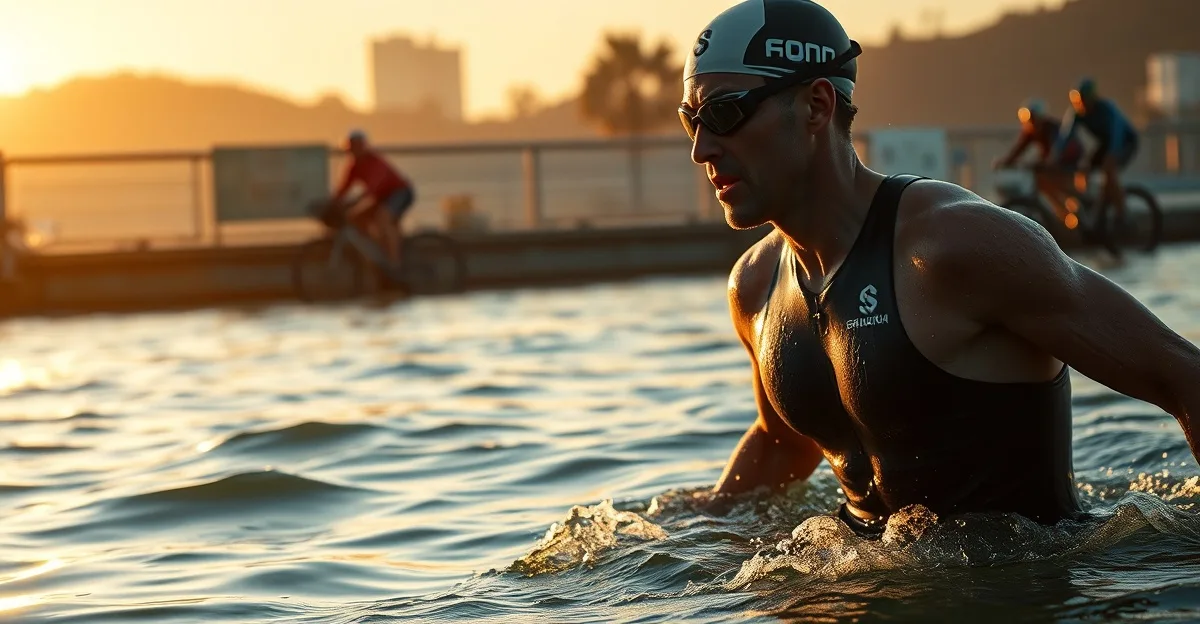
The course is fast without being flat. The swim is in Langener Waldsee, a clean forest lake 20km south of the city. The bike heads out into the Taunus hills north of Frankfurt for two laps totalling ~1,800m of climbing, with the famous "Der Hammer" climb in Bad Vilbel. The run is a four-lap loop along the Main river through the city centre, finishing at Römerberg. Jan Frodeno set the course record here at 7:46:10 in 2016, the year he also won Kona.
Key facts
| Detail | Information |
|---|---|
| Race date | Sunday, June 28, 2026 |
| Location | Frankfurt am Main, Hesse, Germany |
| Distance | 3.8 km swim · 180 km bike · 42.2 km run |
| Total elevation | Swim flat · ~1,800m bike · ~150m run |
| Cutoff time | 17 hours |
| Field size | ~2,600 athletes |
| Status | Official IRONMAN European Championship (since 2002) |
| Water temperature (avg) | 18-22°C — wetsuit legal in nearly every edition |
| Expected 2026 entry fee | ~715-795 EUR individual |
| Kona slots | ~40-50+ age-group slots — most in Europe |
| Course record | 7:46:10 (Jan Frodeno, 2016) |
The swim — Langener Waldsee
Frankfurt's swim is held at Langener Waldsee, a clean forest lake in the town of Langen about 20km south of the city centre. Athletes are shuttled from race transition in central Frankfurt to the lake for the swim start, which is one of the few logistical quirks of this race. The swim is a two-lap rolling start course in clear, still lake water.
The lake is typically 18-22°C in late June — cold enough for a wetsuit in nearly every edition, occasionally on the borderline. No current, no chop, clear visibility. For swim-weak triathletes it's a friendly venue. The rolling start with self-seeded pace groups means the water spreads out within the first 400m and there's less washing-machine chaos than at mass-start IRONMANs.
Expected swim times by level:
- Pro: 45-52 minutes
- Strong age grouper: 55-65 minutes
- Mid-pack: 65-80 minutes
- Back-of-pack / swim-weak: 85-100 minutes (cutoff is 2:20)
The bike — two laps through the Taunus
The Frankfurt bike course is one of Germany's most iconic triathlon bike routes. After leaving T1 at Langener Waldsee, athletes ride to the start of a 90km loop that heads north into the Taunus foothills. The loop is ridden twice for the full 180km, with a return to Frankfurt and T2 at Mainkai in the city centre.
The headline feature is "Der Hammer" — also called Heartbreak Hill — a short but brutally steep climb in the town of Bad Vilbel, lined with tens of thousands of spectators on race day. Gradients touch 20% on the steepest section. It's the Solarer Berg of Frankfurt: the loudest, most chaotic moment of the bike leg, and the reason many athletes remember the Frankfurt course more vividly than the smoother rides elsewhere on the IRONMAN calendar.
Total elevation is approximately 1,800m over 180km, which makes Frankfurt a genuine hilly bike course — harder than Roth or Hamburg, noticeably easier than Nice or Lanzarote. The climbs are short enough to punch over if you're strong, but stack up across two laps. Pace the first lap conservatively; athletes who attack early regularly walk portions of the marathon.
Expected bike splits (intermediate male age grouper, 35-44): 5:30-6:20. Pros are closer to 4:15-4:25.
The run — four laps along the Main and finish at Römerberg
The Frankfurt marathon is a four-lap out-and-back along the Main river through the city centre. Each lap is approximately 10.5km and runs on both sides of the river, crossing via two bridges. The course is flat — elevation is negligible — and passes through the city centre four times, which means constant crowd support for the full marathon.
The finish is the reason many athletes pick Frankfurt over other IRONMANs. You run into Römerberg, Frankfurt's medieval city hall square, lined by the timber-framed buildings of the Altstadt. The finish chute runs past the 15th-century Römer building with crowds packed shoulder-to-shoulder along the cobbles. At night, under lights, with the finisher's anthem playing, it's one of the most atmospheric finish lines in the sport.
The multi-lap format has a practical benefit too: you pass the finish area on every lap, which gives you a psychological checkpoint and lets supporters see you multiple times without having to hunt for a spot along a linear course.
Expected marathon splits (intermediate male age grouper, 35-44): 4:00-4:50.
Registration & how to qualify for Kona
IRONMAN Frankfurt 2026 registration opened in summer 2025, shortly after the 2025 race. Unlike Challenge Roth, Frankfurt does not sell out in minutes — entries typically stay open for several months into the season. You can usually still register 6-9 months ahead of race day, though it's wise to book earlier to secure accommodation.
As the official European Championship, Frankfurt has the largest Kona slot allocation in Europe — historically 40-50+ age-group qualifying slots. The exact 2026 breakdown is announced at the pre-race athlete briefing, once IRONMAN confirms participation numbers in each age group.
Realistic qualifying targets for the competitive categories:
- M30-34 / M35-39: sub-9:30 usually needed (top 5 in age group)
- M40-44: sub-9:40 typically qualifies
- M45-49: sub-9:50
- W30-34 / W35-39: sub-10:30 (smaller fields, top 1-2)
- W40-44: sub-10:45
- These are approximations — actual cutoffs vary year to year with field strength and weather
Kona slots must be claimed in person at the slot allocation ceremony the day after the race. If you qualify but don't show up, the slot rolls down to the next finisher.
Getting to Frankfurt
By air
- Frankfurt Airport (FRA) — Germany's busiest airport and one of the best-connected in Europe. 15 minutes by S-Bahn or taxi to the city centre. The ideal arrival airport for international athletes
- Frankfurt-Hahn (HHN) — low-cost carrier airport, 90 minutes by bus. Not recommended for athletes with bikes
- Düsseldorf (DUS) or Stuttgart (STR) — both ~1h 30m by ICE if FRA is sold out
By train
- Frankfurt Hauptbahnhof is a major ICE hub with direct trains from Paris, Brussels, Amsterdam, Zurich, Vienna, and across Germany
- Deutsche Bahn bike transport on ICE trains costs €10 with reservation
- From the Hauptbahnhof it's 10 minutes by tram or taxi to race HQ at Mainkai
By car
- Frankfurt sits at the junction of the A3, A5, and A66 autobahns — accessible from every direction in Germany
- City-centre parking is expensive and limited. Use park-and-ride garages at the edge of the city on race weekend
- For the swim start at Langener Waldsee, official shuttle buses run from central Frankfurt on race morning
Where to stay
- Frankfurt city centre — most convenient for race HQ, T2, and the Römerberg finish. Book 6+ months ahead, especially around the Hauptbahnhof and Altstadt. Hotels range from budget (Motel One, ibis) to premium (Jumeirah, Frankfurter Hof)
- Langen / Offenbach — closer to the Langener Waldsee swim start, cheaper, quieter. Practical if you don't mind using the shuttle for T2 logistics
- Sachsenhausen (across the river from the Altstadt) — charming neighbourhood with mid-range hotels and good restaurants, 10 minutes' walk to race HQ
- Avoid booking near Hauptwache if you value sleep — it's lively late
- Official IRONMAN partner hotels are listed at ironman.com/im-frankfurt with negotiated rates
Training specific to Frankfurt
Frankfurt rewards three things: hill-strength on the bike, efficient run economy, and heat tolerance. The course is harder than Roth on the bike and identical on the run, so the bike leg is where most of your preparation should focus.
- Hilly long rides with repeats — 4-6 hour rides on rolling terrain with a handful of 3-8 minute climbs. Replicate the Taunus profile as much as possible. Flat TT rides alone won't prepare you
- Steep short-effort work — "Der Hammer" is 20% in places. Include short 1-2 minute efforts above threshold in your bike training
- Heat training in the 4 weeks before race day — late June in Frankfurt can hit 32°C. Use a sauna protocol or train in the warmest part of the day
- Run brick sessions on fatigued legs — the flat marathon is only flat if your legs aren't wrecked from the bike. Practice running off a hard ride
- Open water swim practice — Langener Waldsee is friendly but still open water. Do at least 6 open water sessions in the 8 weeks before race day
- Nutrition dress rehearsal on race-distance bike rides — 180km is a long time to discover your stomach doesn't tolerate maltodextrin
Frankfurt vs other European IRONMANs
If you're choosing between European full-distance races, here's how Frankfurt compares:
| IRONMAN Frankfurt | Challenge Roth | IRONMAN Nice | |
|---|---|---|---|
| Brand | IRONMAN (European Championship) | Challenge Family | IRONMAN |
| Field size | ~2,600 | ~3,500 + 650 relays | ~2,500 |
| Bike elevation | ~1,800m (hilly) | ~1,300m (rolling) | ~2,400m (mountainous) |
| Run profile | Flat city laps | Flat canal laps | Flat promenade laps |
| Atmosphere | Der Hammer + Römerberg finish | Solarer Berg + stadium finish | Promenade des Anglais |
| Cutoff | 17 hours | 15 hours | 17 hours |
| Cost | ~715-795 EUR | ~695 EUR | ~800-900 EUR |
| Registration | Open for months | Sells out in minutes | Open for months |
| Kona slots | 40-50+ (most in Europe) | None | 30-40 |
Short version: if Kona is your goal, pick Frankfurt. If you want the best single-day experience in long-distance triathlon, pick Roth. If you want the hardest bike course in Europe, pick Nice or Lanzarote. Frankfurt is the honest middle — serious course, serious field, serious Kona opportunity, without the brutal mountains of the Côte d'Azur.
More information
- Official IRONMAN Frankfurt website
- Challenge Roth 2026 — the alternative European full-distance
- Full Ironman training guide (distances, phases, methodology)
- Triathlon as a sport — distances, formats, finish times
Frequently Asked Questions
When is IRONMAN Frankfurt 2026?
IRONMAN European Championship Frankfurt 2026 takes place on Sunday, June 28, 2026. Race week activities (expo, athlete briefings, practice swim at Langener Waldsee) begin the Thursday before at Mainkai in central Frankfurt.
Why is Frankfurt called the IRONMAN European Championship?
IRONMAN Frankfurt has held the official European Championship designation since 2002, making it the most prestigious IRONMAN race in Europe. It carries the largest Kona slot allocation of any European IRONMAN — typically 40-50+ slots distributed across age groups — which is why it attracts the strongest age-group field on the continent.
How many Kona slots does IRONMAN Frankfurt offer?
As the European Championship, Frankfurt receives more Kona slots than any other European IRONMAN — historically 40-50+ slots across age groups, depending on participation in each category. The exact 2026 allocation is published at the athlete briefing. Expect a top-5-in-age-group qualifying standard in competitive male 30-44 categories, and top-1 or top-2 in most female categories.
How hard is the Frankfurt bike course?
Frankfurt's bike course has ~1,800m of climbing over two laps of a rolling 90km loop through the Taunus hills. The signature climb is 'Der Hammer' (also called Heartbreak Hill) — a short, steep ramp with wall-to-wall spectators in the town of Bad Vilbel. It's harder than Roth but easier than Nice or Lanzarote. A strong hilly bike course that rewards steady pacing and punishes athletes who go too hard on the first lap.
Where does IRONMAN Frankfurt finish?
The run finishes at Römerberg, Frankfurt's historic city hall square in the old town. The finish line chute runs past the 15th-century Römer building with crowds packed into the cobbled square — widely regarded as one of the most atmospheric finish lines in European triathlon. The four-lap marathon course also passes the finish area multiple times, which gives athletes a morale boost on each lap.
How much does IRONMAN Frankfurt cost?
2026 individual entry is approximately 715-795 EUR depending on when you register. IRONMAN Active membership is required on top. Factor in accommodation in Frankfurt (expensive, especially mid-June), bike transport, and race-week meals — budget 2,000-3,000 EUR all-in for an international athlete. Kona-qualification travel is a separate additional cost if you make it.
Is Langener Waldsee a good swim venue?
Yes — Langener Waldsee is a clean, quiet forest lake about 20km south of Frankfurt near Langen. The water is typically 18-22°C in late June, which means wetsuits are almost always legal. It's a two-lap rolling start course with clear water and minimal current. One of the more pleasant IRONMAN swim venues in Europe for swim-weak triathletes.
Ready to Train Smarter?
Get personalized training zones, race predictions, and performance insights with our free calculators.
