How GLP-1 Changes Your Gut
To understand why race fueling gets complicated on GLP-1, you need to know what the medication does to your digestive system. Semaglutide (the active ingredient in Ozempic and Wegovy) is a GLP-1 receptor agonist — it mimics a hormone your body naturally produces after eating. Among its effects, two matter enormously for endurance athletes on race day.
Delayed gastric emptying. GLP-1 slows the rate at which food leaves your stomach and enters the small intestine for absorption. Studies show this delay can be 20-40% compared to baseline (Jalleh et al., 2023). For an athlete relying on rapid carbohydrate delivery during a marathon, this means gels and sports drinks sit in the stomach longer before they become available as fuel.
Suppressed glucagon secretion. GLP-1 blunts the release of glucagon, the hormone that tells your liver to release stored glycogen. During prolonged exercise, glucagon normally helps maintain blood sugar by mobilizing liver glycogen. With this pathway partially suppressed, exogenous carbohydrate intake becomes even more important — but the delivery is slower.
The practical result: you need fuel more than ever, but your body absorbs it more slowly. This is the central fueling paradox of racing on GLP-1.
What I Learned the Hard Way
I will be straightforward: I have not had a dramatic fueling failure on GLP-1 because I approached race nutrition cautiously from the start. But the theoretical concern is real, and understanding why matters more than a war story.
The worry was this: GLP-1 medications slow gastric emptying. That is the mechanism behind the nausea, the early satiety, the "I ate three bites and feel full" experience. For someone sitting at a desk, slower gastric emptying is a feature — it keeps you feeling full longer. For an athlete trying to absorb 80-100 grams of carbohydrate per hour while racing at threshold intensity, slower gastric emptying is a potential disaster. Gels sitting in your stomach instead of reaching your bloodstream means less fuel available when you need it, plus the nausea and bloating that comes from an overfull stomach during high-intensity exercise.
My reality on 2.5mg tirzepatide: none of that happened. In training, I have consistently hit 100+ grams of carbohydrate per hour on the bike with no GI issues. Gels go down fine. Drink mix absorbs normally. No bloating, no nausea, no sense that fuel is sitting rather than processing.
My hypothesis is that the low dose matters. At 2.5mg tirzepatide — the starting dose, well below the 5-15mg range used for aggressive weight loss — the gastric emptying delay may not be significant enough to meaningfully impact exercise nutrition. There is also some evidence that tirzepatide affects gastric emptying less aggressively than semaglutide at equivalent therapeutic levels, though direct comparison data during exercise is limited.
The caveat is important: at higher doses (5mg+ tirzepatide, or semaglutide at 1mg+), the gastric emptying effect is stronger, and the fueling picture could look very different. If you are on a higher dose and experiencing GI symptoms during training, take them seriously. They are the early warning sign of the race-day disaster you want to avoid.
The universal lesson, whether you are on GLP-1 or not: test your fueling in training before race day. This applies to every endurance athlete, but it is especially critical if you are on a medication that alters gastric function. Do not show up at the start line with an untested nutrition plan.
My Adjusted Fueling Protocol
Based on the gastric emptying research and my own cautious testing, I built my race nutrition protocol around three core principles. These adjustments took several training cycles to validate and should be treated as a starting framework, not a prescription.
1. Start earlier
With slower gastric emptying, fuel taken at kilometer 5 may not be available until kilometer 12-15. I now begin fueling 15-20 minutes earlier in any effort over 90 minutes. For a marathon, this means first fuel at the 20-25 minute mark rather than the 40-45 minute mark.
2. Smaller, more frequent doses
Instead of one gel every 30-40 minutes, I shifted to half-gel doses every 15-20 minutes. Smaller volumes clear the stomach faster, reducing the backlog of unabsorbed carbohydrate that causes nausea.
3. Liquid-first fuel mix
Liquids empty from the stomach significantly faster than gels or solids. I restructured my fueling around sports drink and liquid carbohydrate sources, using gels only as a supplement rather than the primary fuel source.
My current fueling targets by session type
These are the carbohydrate targets I use in training on 2.5mg tirzepatide. They are consistent with standard high-performance endurance fueling guidelines. On GLP-1 at this dose, I have had no issues hitting these numbers.
| Session Type | Carbs/hr Target | Timing Notes |
|---|---|---|
| Easy ride (<2hr) | 40-60g | Start after 45 minutes |
| Long ride (3-6hr) | 80-100+g | Start at 30 minutes, intake every 20 minutes |
| Easy run (<90min) | 0-30g | Water may be sufficient |
| Long run (>90min) | 40-60g | Start at 45 minutes |
| Race (marathon) | 60-80g | Start early, practice everything in training |
| Race (Ironman bike) | 80-100+g | Front-load intake, maintain consistent frequency |
These are my current targets. On GLP-1 at 2.5mg, I have had no issues hitting 100+ grams per hour on the bike. If you are on a higher dose or experiencing GI side effects, start at the lower end of these ranges and build up gradually over multiple training sessions.
Marathon Fueling on GLP-1
A marathon is the simplest endurance race to fuel: you only need to manage carbohydrate intake and hydration. But on GLP-1, even this straightforward task requires careful planning. Here is the protocol I developed after multiple race and training iterations.
Pre-race meal
The pre-race meal is where appetite suppression hits hardest. Many mornings I simply could not eat the volume I used to. My solution was to eat earlier (3.5-4 hours before the gun) and stick to easily digestible, low-fiber carbs.
I have not changed my pre-race nutrition on GLP-1. The key adjustment is injection timing. I would not inject within 48 hours of a race start. With my Friday injection schedule, a Saturday or Sunday race means the last injection is 1-2 days before, which places the race in the later part of the weekly cycle when the gastric emptying effect is at its weakest. That timing is deliberate.
During the race
I do not have a race-validated kilometer-by-kilometer fueling plan on GLP-1 yet. My first races on tirzepatide will be IM 70.3 Da Nang (May 10, 2026) and Challenge Roth (July 6, 2026). I will publish detailed fueling logs with timing, amounts, and GI notes after each race.
For now, my training data shows that standard high-carb fueling strategies work at 2.5mg tirzepatide. The adjusted protocol above — start earlier, smaller and more frequent doses, liquid-first — is what I am training with and what I plan to race with. Until I have actual race data, treat this as a well-tested training protocol, not a proven race plan.
Long-Course Triathlon Fueling on GLP-1
Triathlon fueling is harder than marathon fueling because you eat across three disciplines, two transitions, and 8-17 hours. The bike leg is the primary fueling window — but on GLP-1, the delayed gastric emptying on the bike can create problems on the run if you overload.
Swim-to-bike transition
The swim suppresses appetite further (cold water, horizontal position, adrenaline). By T1, I often feel zero hunger. Having a liquid calorie source mounted on the bike — ready to sip within the first 10 minutes of riding — is essential to avoid falling behind on fueling.
Bike fueling
The bike offers the most comfortable fueling window. On GLP-1, I favor bottle-based nutrition (drink mix, liquid calories) over solid food. The upright position and steady-state effort are the most GI-friendly part of race day.
The unique challenge of Ironman and 70.3 is fueling across swim, bike, and run with two transitions in between. The bike leg is where the vast majority of calories go in — 80-100+ grams of carbohydrate per hour for 2.5 to 6 hours depending on the distance. This is also where GLP-1's gastric emptying effect matters most, because you are consuming large volumes of fuel over an extended period.
My approach for long-course triathlon on tirzepatide: front-load calories on the bike, use more liquid nutrition (drink mix absorbs faster than gels or solids when gastric emptying is a concern), and test everything in training bricks — specifically bike-to-run sessions that simulate the transition from heavy eating on the bike to running on a stomach that may still be processing fuel.
I will have concrete race data after IM 70.3 Da Nang in May and Challenge Roth in July. Until then, the training brick data is encouraging: at 2.5mg tirzepatide, the bike-to-run transition has not presented any GI problems that I would attribute to the medication rather than to normal fueling challenges.
Run fueling
The run is where GLP-1 fueling most often goes wrong. By this point, hours of delayed gastric emptying may have created a backlog of unabsorbed carbohydrate. The upright, high-impact motion of running makes nausea worse. My approach: dial back to the minimum effective dose — liquid only, sipped in small amounts at every aid station.
Products and Fuel Sources
Not all nutrition products are created equal when your gastric emptying is slowed. After testing in training on GLP-1, I have a clear general principle rather than a specific product ranking.
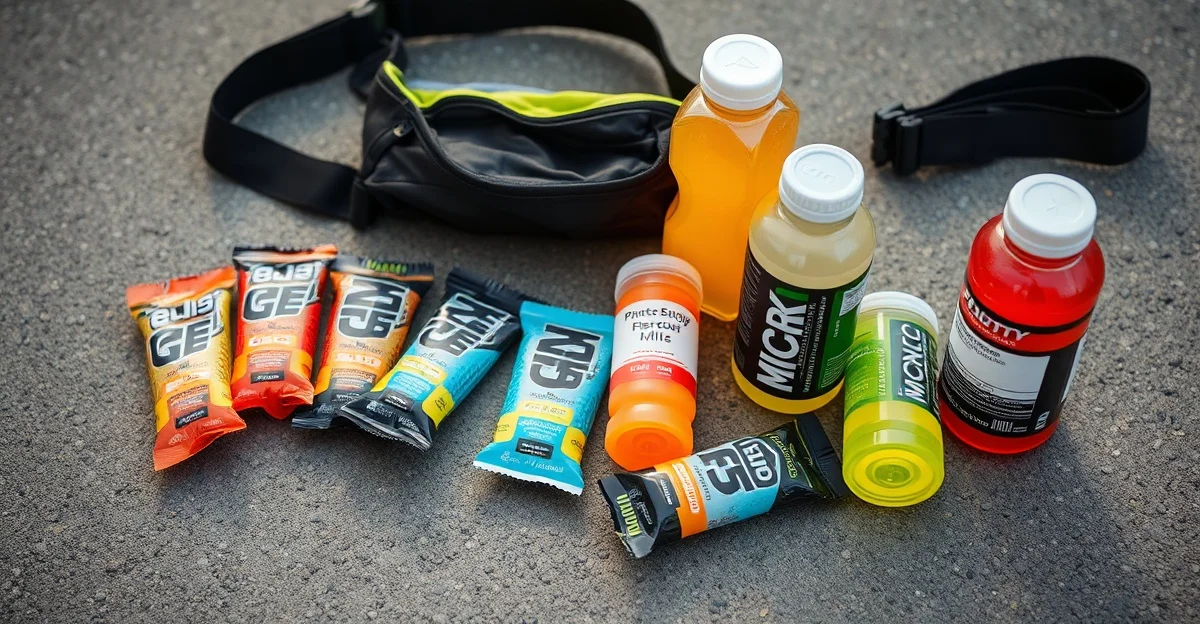
I use a mix of gels, drink mix, and solid food on the bike. The specific products matter less than the total carbohydrate intake and the fact that you have tested everything in training.
On GLP-1, I have found that liquid calories — drink mix in particular — absorb more predictably than solid food. This aligns with the gastric emptying science: liquids clear the stomach faster than semi-solids or solids. If you are on GLP-1 and experiencing any GI discomfort during training, shifting your fuel mix toward more liquid sources and fewer solids is a reasonable first adjustment.
I am deliberately not publishing a specific product list here. Product preferences are highly individual, change frequently, and can create a false sense that the brand matters more than the protocol. What matters: hit your carbohydrate targets, use sources your gut tolerates, favor liquid over solid if gastric emptying is a concern, and test everything before race day.
Testing Your Nutrition
The margin for error on race day is smaller on GLP-1. You cannot wing it. Every product, dose, and timing decision should be validated in training before it appears in your race plan.
How to test
- Simulate race intensity. Test nutrition during tempo runs or race-pace long runs, not easy jogs. GI tolerance drops at higher intensities.
- Match injection timing. If you inject on Fridays and race on Sundays, test nutrition on Sundays to match the same gastric emptying window.
- Start conservative. Begin with 40-50g carbs per hour and increase by 10g per session over multiple weeks. Do not jump to 90g/hour on the first attempt.
- Track everything. Log what you ate, when, how it felt at the time, and how your pace/heart rate responded. GI symptoms often have a 20-30 minute delay from intake.
- Re-test after dose changes. Every time your GLP-1 dose increases, your gastric emptying changes. Re-validate your nutrition protocol from a lower carb-per-hour starting point.
For the full protocol and journey context, return to the GLP-1 pillar page. For how GLP-1 affected my actual race performances, see my race results with data.
Frequently Asked Questions
How long should I wait after my Ozempic or Wegovy injection before racing?
Gastric emptying is most significantly slowed in the 24-48 hours after injection, with effects tapering over the week. Many athletes time their injection 4-5 days before a key race to minimize GI impact while maintaining therapeutic benefit. I share my exact injection-to-race timing in the article above. Discuss timing adjustments with your prescribing physician.
Can I still carb-load the night before a marathon on GLP-1?
Carb loading is still possible but needs adjustment. The suppressed appetite and slower gastric emptying mean you may struggle to eat the same volume. I shifted to spreading carb loading across 2-3 days rather than one large meal, focused on easily digestible carbs (white rice, pasta, bread), and ate my last large meal by 5-6 PM the evening before. You may need to eat by appetite cues rather than volume targets.
Which gels work best on GLP-1?
In my experience, isotonic gels (like Maurten) and liquid fuel (like Maurten drink mix or Tailwind) worked significantly better than thick gels (like GU) or solid foods. The key factor is gastric emptying speed — liquids clear the stomach faster than semi-solids. I cover specific products and my testing protocol in the article above.
How many carbs per hour should I target on GLP-1?
Most endurance athletes target 60-90g of carbs per hour in long events. On GLP-1, I found that the same absolute intake was harder to absorb, so I started at the lower end (50-60g/hour) and worked up through training. The critical change was shifting to more frequent, smaller doses rather than fewer large gel intakes. Your tolerance will depend on your dose and individual response.
Should I skip my Ozempic or Mounjaro dose before a race?
This is a decision to make with your doctor, not the internet. Some athletes skip the pre-race dose entirely; others reduce it. I share what I did and why, but skipping doses affects the therapeutic benefit and can cause rebound hunger. There is no one-size-fits-all answer — it depends on your dose level, race distance, and how significantly your GI function is affected.
Ready to Train Smarter?
Get personalized training zones, race predictions, and performance insights with our free calculators.