

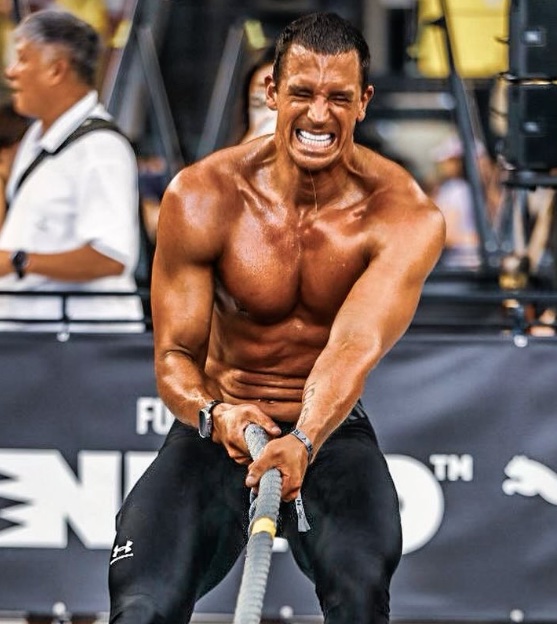
What is HYROX?
HYROX is a standardized fitness race. Every race combines 8 kilometers of running, split into eight 1-kilometer segments, with eight functional workout stations performed in a fixed order. The sequence is identical at every HYROX event worldwide: same exercises, same distances, same weights within each division. A finish time in London is directly comparable to one in Chicago or Singapore.
HYROX is often described as the World Series of Fitness Racing. It was founded in 2017 in Hamburg, Germany, and has grown to 60+ cities annually with hundreds of thousands of participants. Unlike CrossFit's daily-varied workouts, HYROX gives athletes a predictable, repeatable format to train toward and race against.
The HYROX Format in Detail
Every HYROX race follows the same sequence. Athletes run 1km, complete a station, run another 1km, complete the next station, and continue until all eight stations are done. The final segment is a 1km run to the finish. Total running: 8km. Total stations: 8. Total time: typically 60–120 minutes depending on fitness and division.
The eight stations, in order:
- 1,000m SkiErg: full-body machine exercise emphasizing upper-body pulling power
- 50m Sled Push: weighted sled pushed across the floor (152kg men Open, 102kg women Open)
- 50m Sled Pull: weighted sled pulled toward the athlete with a rope (103kg men Open, 78kg women Open)
- 80m Burpee Broad Jumps: burpee, then a broad jump forward, repeated for 80 meters
- 1,000m Row: standard Concept2 rowing
- 200m Farmers Carry: two kettlebells carried (2×24kg men, 2×16kg women)
- 100m Sandbag Lunges: walking lunges carrying a sandbag (30kg men, 20kg women)
- 75/100 Wall Balls: medicine ball thrown to a target (9kg men 100 reps, 6kg women 75 reps)
This sequence is fixed. It does not change between events, seasons, or years. What changes is the weights by division and the venue.
Divisions and Categories
HYROX splits participants into divisions that share the course and the sequence but use different weights or team structures.
- Open: individual, standard weights. The most popular division. Most first-timers enter here.
- Pro: individual, heavier weights. Sled push at 202kg for men (140kg women), sandbag 40kg/30kg, wall ball 9kg for both.
- Doubles: pairs, alternating stations however they choose. Standard Open weights. A strategic division where teamwork and pacing matter as much as fitness.
- Relay: teams of four, each athlete covering one quarter of the race. The fastest way for a group to experience HYROX together.
- Age Groups: within Open and Pro, athletes compete in five-year age bands (Under 25, 25–29, 30–34, … 70+). Weights are the same; rankings are separate.
- Adaptive: divisions for athletes with physical or cognitive disabilities, with modified movements and distances.
- Mixed Doubles: male-female pairs using women's Open weights.
The History of HYROX
HYROX was founded in 2017 in Hamburg, Germany, by Christian Toetzke (a former sports marketing executive who ran the Ironman franchise in Germany) and Moritz Fürste (a two-time Olympic gold medalist in field hockey). The idea was deliberately different from both CrossFit and obstacle-course racing: a fitness competition with a single, standardized format that any gym-trained athlete could enter.
The first HYROX race was held in Hamburg's Barclaycard Arena in October 2017 with 650 athletes. The format was already identical to what it is today, eight stations, the same sequence, the same running structure. That commitment to standardization, from the first event onward, is the core of what makes HYROX distinctive.
Growth has been steep. By 2022, HYROX had expanded to North America. By 2024, to Asia-Pacific and the Middle East. The 26/27 season alone runs 60+ events across 200+ race days worldwide, with hundreds of thousands of athletes. The World Championship has moved between major cities annually (Manchester 2023, Nice 2024, Chicago 2026) and is qualification-based: each region's top athletes earn their spots through season-long performance.
How HYROX Compares to Other Fitness Sports
HYROX sits in a distinct category from the fitness sports it is often compared to.
HYROX vs CrossFit
CrossFit is a training methodology with a competitive pathway (Open → Quarterfinals → Games). HYROX is a race with a fixed format. CrossFit workouts vary daily; HYROX is identical every time. CrossFit requires technical skills like Olympic lifts and gymnastics; HYROX movements are all fundamental. Many athletes do both. See the full HYROX vs CrossFit comparison.
HYROX vs Obstacle Course Racing (Spartan, Tough Mudder)
OCR events happen outdoors with terrain, mud, and obstacles that change between venues. HYROX happens indoors with standardized equipment and a repeatable course. OCR rewards adaptability and course-specific tactics; HYROX rewards pure fitness and pacing consistency.
HYROX vs Marathon / Half-Marathon
A marathon is pure running. HYROX is running plus strength endurance. Marathon training emphasizes aerobic capacity almost exclusively; HYROX training combines running volume with functional strength work, roughly 60% running, 40% station-specific.
HYROX vs Triathlon
Triathlon involves three separate sports (swim, bike, run). HYROX involves one core activity (running) interspersed with strength stations. HYROX finish times are much closer together, most competitive triathletes are 3-4 hours minimum; most competitive HYROX athletes are 60-90 minutes.
How to Train for HYROX
A first HYROX typically requires 8-16 weeks of structured training. The core components:
- Running volume: 25-40km per week, with at least one long run (10-15km) and one interval session focused on sustaining pace after station work.
- Station-specific work: rehearse SkiErg, rowing, sled push/pull, and wall balls weekly. Most mistakes at first races come from under-practiced movements.
- Simulation workouts: every 2-3 weeks, do a partial or full race simulation to practice the transitions between running and stations. The hardest skill in HYROX is running fast after sled work.
- Strength base: general strength training 2-3 times per week, focused on posterior chain (deadlifts, rows) and legs (squats, lunges).
A useful starting point is the HYROX Calculator to estimate target splits and station times for your goal finish.
What Is a Good HYROX Time?
Benchmarks shift by division and age, but rough 2026 standards for Open division:
- Elite men: under 60 minutes. Top 10 globally sit around 54-58 minutes.
- Elite women: under 65 minutes. Top 10 globally sit around 60-64 minutes.
- Competitive amateur men: 70-80 minutes.
- Competitive amateur women: 75-85 minutes.
- First-time finisher: 90-120 minutes.
For age-adjusted benchmarks and percentiles, see HYROX Standards by Age.
How to Enter a HYROX Race
Enter through the official HYROX website. Select your city, date, and division. Early registration tends to sell out 3-6 months in advance at the best prices; late entries exist but cost more. You do not need a qualifying time for Open, Doubles, or Relay, these are open to anyone.
Race day logistics: arrive 60-90 minutes before your start time, warm up with light running and station rehearsal, and collect your chip. Races run in waves throughout the day. The arena atmosphere is explicitly spectator-friendly, bring friends and family; they'll see the whole race from the stands.
Why HYROX Grew So Fast
Three things compounded:
Accessibility. Every movement is learnable in one session. No Olympic lifts, no gymnastics, no technical barriers. A runner or gym-goer can do a first HYROX within 12-16 weeks of structured training.
Standardization. The fixed format makes results directly comparable across cities and years. Athletes can set a PR in Hamburg and try to beat it in Miami. This creates a progression that daily-varied formats cannot.
Event experience. HYROX chose arenas over outdoor venues from the start. Music, lighting, crowd energy, and spectator sightlines make race day feel like a major sporting event, closer to a Formula 1 weekend than a parkrun. That atmosphere is what athletes describe most often when asked why they come back.
Frequently Asked Questions
What does HYROX stand for?
HYROX is not an acronym. It is a coined brand name. The founders combined "hybrid" and "roxing" (a placeholder for the functional-fitness element) into a standalone term. Today HYROX refers exclusively to the fitness race series founded in Hamburg in 2017.
How long is a HYROX race?
A standard HYROX race covers 8km of running split into eight 1km segments, each followed by one functional workout station. Total finish time typically ranges from 60 minutes (competitive) to 120 minutes (beginner). The elite record is under 55 minutes for men and under 60 for women.
Do I need to be fit to do HYROX?
HYROX is accessible to a wider range of fitness levels than CrossFit or triathlon because the movements are simple and the weights in the Open division are moderate. Most first-time participants train for 8-16 weeks with a mix of running and functional strength work. The Open division starts with sled weights around 102kg for women and 152kg for men, which any regular gym-goer can handle.
What equipment do I need to train for HYROX?
Any gym with a SkiErg (or rower as substitute), a sled for pushing and pulling, a rowing machine, a set of farmers-carry handles or kettlebells, sandbags, and wall balls can support HYROX training. Many commercial gyms now include a dedicated HYROX zone. At home, a rower, sled, sandbag, and wall-ball-compatible wall covers most of it.
What are the HYROX divisions?
The main divisions are Open (standard weights, individual), Pro (heavier weights, individual), Doubles (pairs alternating), Relay (teams of 4), and age-group categories (within each division, typically 5-year bands from Under 25 to 70+). There is also Adaptive for athletes with disabilities. Every division uses the same 8km course and 8 stations; only the weights and number of athletes change.
Where are HYROX races held?
HYROX is held in large indoor arenas across Europe, North America, Asia-Pacific, the Middle East, and increasingly South America. Major 2026 cities include London, Berlin, Barcelona, Paris, Manchester, Chicago, Los Angeles, Dubai, Singapore, and São Paulo. The World Championship rotates between cities annually; the 2026 edition is in Chicago.
How much does it cost to enter a HYROX race?
Race entry costs €65-150 depending on the city, division, and how early you register. Major cities and peak seasons sell out months in advance at lower prices; late registration is more expensive. Doubles and Relay entries are per-team. There is no membership fee. You pay per event and can train at any gym.
Calculate Your HYROX Splits
Use our pace calculator to plan your running and station times based on your goal finish time.
