
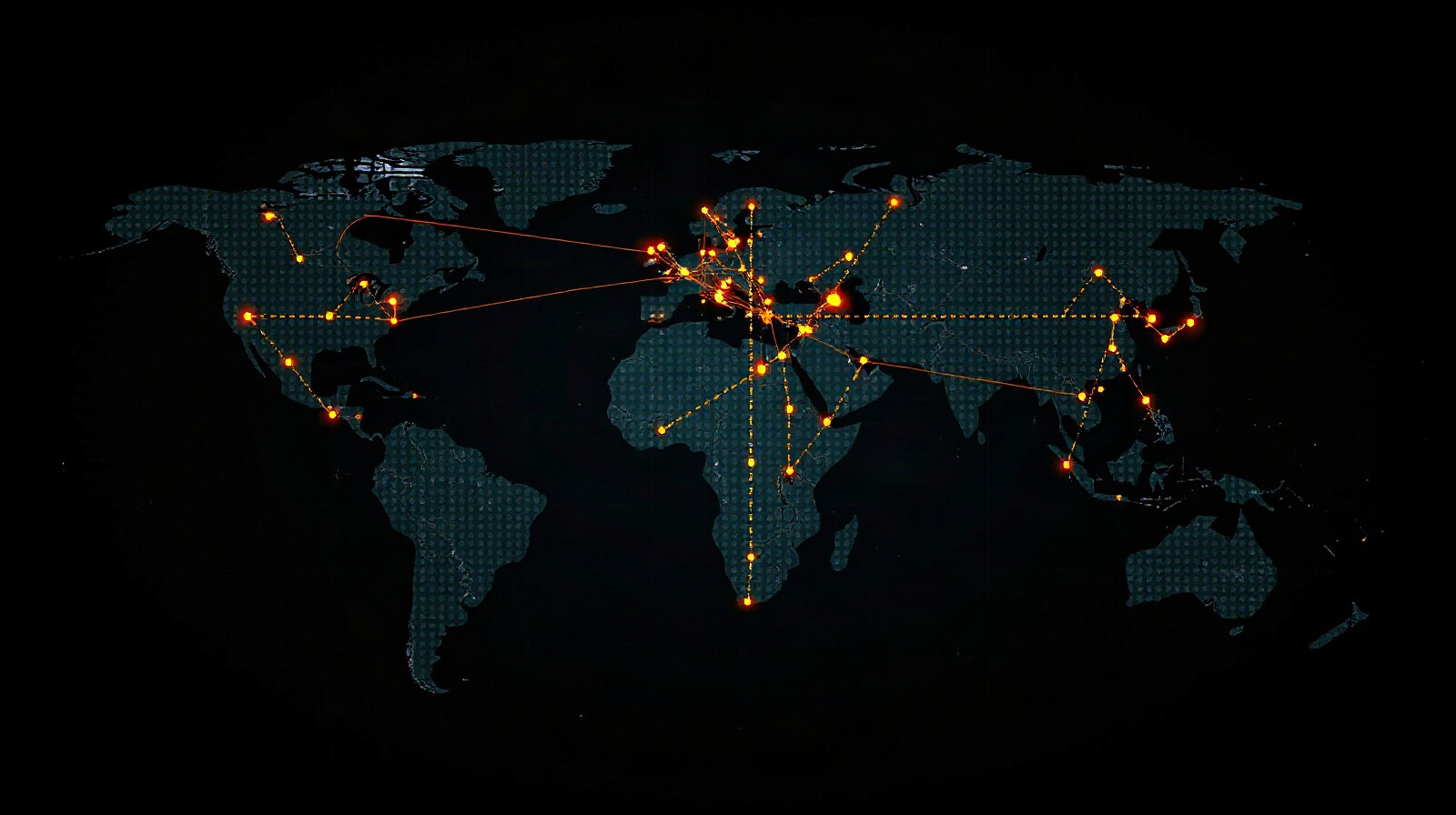

This is a reference list, not a ranking of my own. I have not lived in all ten of these places and I am not going to pretend otherwise. What follows is the set of destinations that the nomad community, visa trackers and cost-of-living indices keep putting at the top, read through the same five criteria I use for my own base decision: client time-zone overlap, training infrastructure, honestly counted cost, visa duration for a US passport, and flight connectivity.
The interesting part is not the list. It is that the criteria which make a city popular with the broader remote-work crowd are mostly cost and community, and the criteria that decide whether a city works as a base for me are mostly the other three. Several of these places top every index and would still fail my first filter.
1. Lisbon, Portugal
Europe's default answer, and the one most 2026 rankings put first. The D8 residence visa is written for remote workers with foreign income, the coworking density in Lisbon is among the highest in Europe, and the community is large enough that plugging in takes days rather than months. On my criteria it scores well on visa duration and connectivity, and badly on time zone: a US client base means the afternoon is gone and the morning block survives, which is the better of the two bad outcomes.
2. Barcelona and Valencia, Spain
Spain's own digital nomad visa put it alongside Portugal, and the coastal cities carry something Lisbon does not: genuinely good endurance infrastructure. Sea swimming, municipal pools, cycling culture, and a climate that leaves outdoor running viable for most of the year. Same time-zone penalty as Portugal, similar visa position, better training answer.
3. Mexico City, Mexico
The strongest entry on the list if your work is US-facing. Central time removes the overlap problem entirely, and the airport situation, with two airports serving dozens of US cities plus European hubs, means one leg to almost anywhere I need to be. Cost is moderate rather than cheap once you price a neighbourhood you can train out of. The altitude is a real training variable, not a footnote.
4. Medellin, Colombia
Colombia's digital nomad visa gave a legal footing to a city that was already one of the community's favourites. Fibre internet, a climate that barely moves across the year, low cost, and an unusually social nomad scene. Time zone sits an hour off US Eastern, which is close to ideal. Flight connectivity is the weak leg: fine to the Americas, a connection to everywhere else.
5. Buenos Aires, Argentina
An hour ahead of US Eastern, which is the best offset on this list for anyone running East Coast client work. Large city, serious food, strong running culture, and costs that have been volatile enough that any figure I quoted would be wrong by the time you read it. Long-haul connectivity to anywhere outside the Americas is expensive in both money and hours.
6. Chiang Mai, Thailand
The original, and still near the top of every list a decade later. Thailand's five-year multiple-entry DTV, with stays of up to 180 days per entry, solved the visa problem that used to define the place. Cost is genuinely low and the community is the most established anywhere. Time zone is the killer for US work: the overlap lands in the middle of the night, which is the structural failure I describe in What a Time Zone Actually Costs. Heat and air quality also compress outdoor training into a narrow window.
7. Bali, Indonesia
Canggu and Ubud remain a complete nomad ecosystem, and Indonesia's E33G remote-worker permit gave it a proper one-year legal route rather than the tourist-visa improvisation it ran on for years. There is a real income threshold and a genuine tax-residency question attached, so it is a base decision rather than a casual one. Same time-zone problem as Thailand, plus one connection to almost any long-haul destination.
8. Dubai, UAE
The infrastructure answer. Dubai's Virtual Working Programme is a one-year renewable residence permit for people employed outside the country, there is no personal income tax, and the airport reaches essentially everywhere without a connection, which on my criteria is worth a great deal of rent. Facilities are excellent and expensive. The summer makes outdoor endurance training impossible for months, which for me is disqualifying in a way it is not for most of the people on these lists.
9. Tbilisi, Georgia
Georgia appears on every list for one reason: it is widely cited as letting citizens of many countries, including US passport holders, stay for a full year without applying for anything. That removes the ninety-day countdown that turns a base into a rotation. Costs are among the lowest in this set. Connectivity is regional rather than global, and the time zone is worse for US work than Europe's.
10. Cape Town, South Africa
South Africa's Remote Work Visitor Visa covers stays beyond three months and up to three years, which is the longest runway on this list. Cape Town has the deepest training infrastructure of any city here: open water, mountains, a serious endurance and cycling scene, and a coworking sector that has grown fast. The time zone aligns with European business hours and not at all with US ones, and every long-haul route is genuinely long.
What the list actually shows
Read as a group, these ten split cleanly. The Latin American four solve the time zone and mostly lose on connectivity. The European two solve visa and connectivity and cost you the afternoon. The Asian two win on cost and community and fail the first filter outright for US-facing work. Dubai and Cape Town win on infrastructure in opposite directions, one built and one natural, and neither on offset.
Which is the useful conclusion: popularity is scored almost entirely on cost and community, and neither of those is the constraint that decides a base. None of the ten beats the baseline for what I actually run, which is why New York stays home and everywhere else is a deliberate trade for a defined stretch. What that travel does to a training block is its own problem.
← Back to Travel
Ready to Train Smarter?
Get personalized training zones, race predictions, and performance insights with our free calculators.
