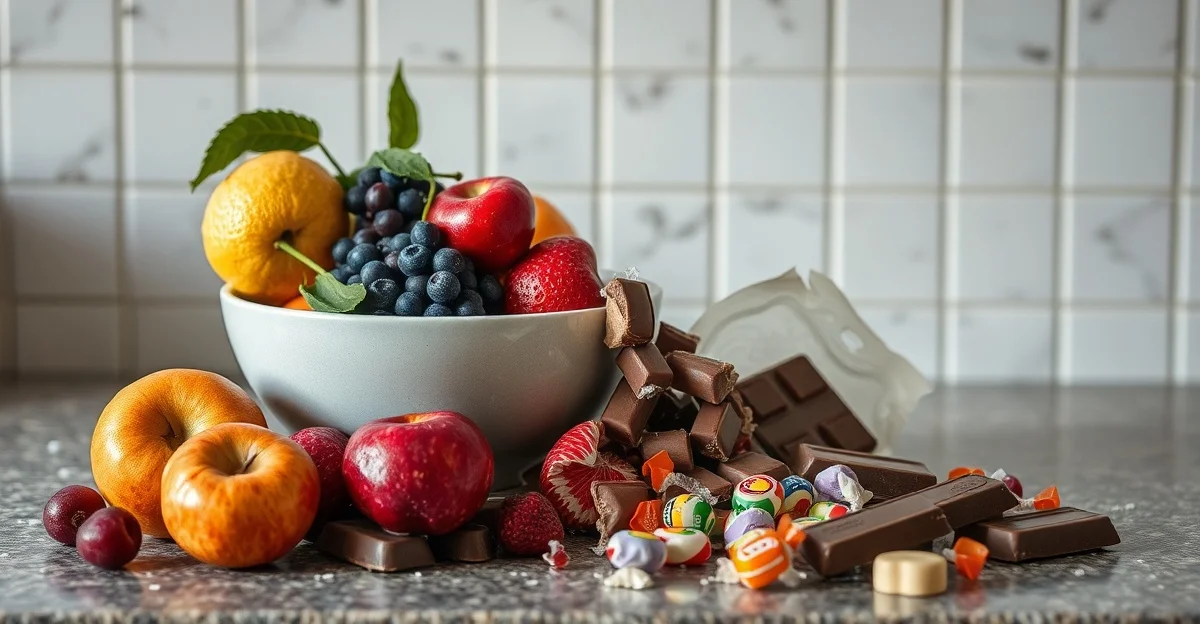

The Science: How GLP-1 Reduces Cravings
The most surprising thing about starting GLP-1 medication was not the weight loss or the nausea. It was the silence. The constant background hum of thinking about food — what I would eat next, whether there was chocolate in the kitchen, the pull toward something sweet after dinner — went quiet. Not gradually. Within days.
Understanding why requires looking beyond the gut. GLP-1 receptor agonists like semaglutide (the molecule in Ozempic and Wegovy) and tirzepatide (Mounjaro and Zepbound) do not just slow gastric emptying and signal fullness. They cross the blood-brain barrier and bind to GLP-1 receptors in regions of the brain responsible for reward processing, particularly the nucleus accumbens and the ventral tegmental area — the same dopamine-driven circuits that respond to alcohol, nicotine, and gambling.
Sugar and highly processed foods hijack these reward circuits. They produce a dopamine spike that the brain learns to anticipate and crave. This is not a willpower problem. It is neurobiology. When semaglutide or tirzepatide dampens the dopamine response in these circuits, the anticipatory craving weakens. You can look at a slice of cake and feel... neutral. Not repulsed. Not deprived. Just uninterested.
Research by Friedrichsen et al. (2021) used functional MRI to show that semaglutide reduced activation in the brain's reward centers when subjects were shown images of highly palatable food. The effect was strongest for high-sugar and high-fat foods — the exact categories people report craving less. Blundell et al. (2023) confirmed this in controlled eating studies, finding that semaglutide shifted food preferences away from high-fat, high-sugar options toward less energy-dense foods.
Tirzepatide adds a second mechanism through its GIP receptor activity. GIP (glucose-dependent insulinotropic polypeptide) receptors are also expressed in the brain, and early research suggests the dual agonism may affect reward signaling through partially distinct pathways. This could explain why some patients report that Mounjaro affects cravings for fatty foods more strongly than Ozempic does, though direct comparison data remains limited.
The key distinction: GLP-1 medications do not make you dislike food. They reduce the compulsive, reward-driven pull toward specific foods. For sugar cravings specifically, this means the neurological "wanting" decreases even though the hedonic "liking" — the ability to enjoy something sweet when you choose to eat it — largely remains intact.
My Experience With Sugar Cravings on GLP-1
I need to be honest about this, because the sugar problem did not start with endurance training. It started in childhood. For as long as I can remember, sugar had a hold on me that went beyond normal enjoyment. As a kid, it was not occasional treats — it was compulsive consumption. If there was chocolate in the house, I would eat all of it. Not because I was hungry. Because something in my brain demanded it, and the demand did not stop until the supply was gone.
That pattern never went away. It just got more sophisticated. In my twenties and thirties, building a career in tech — eventually as a CTO — the stress-eating cycle became deeply ingrained. High-pressure day, long hours, difficult decision: the reward circuit fired, and it wanted sugar. Stress, sugar, guilt, restriction, binge. Over and over. I knew the pattern. I could describe it perfectly. I could not stop it.
Then I started training seriously for Ironman-distance triathlons, and the problem got worse in an unexpected way. Training 15-20 hours per week creates legitimate hunger. The body genuinely needs fuel — a lot of it. But my sugar sensitivity meant that the line between legitimate fueling and compulsive eating was blurred beyond recognition. A post-long-ride recovery meal would turn into a sugar binge because the appetite signals were already disordered. I could not tell the difference between "my glycogen stores are depleted and I need carbohydrates" and "my reward circuits are hijacking my hunger and demanding chocolate." Both felt the same. Both were urgent.
This is not a willpower problem. I have done Ironman races. I have held CTO positions at companies where the pressure was relentless. I do not lack discipline. What I had was a neurological response to sugar that was stronger than conscious control could reliably override, especially when combined with the genuine energy demands of high-volume endurance training.
I started tirzepatide (Mounjaro) at 2.5mg per week in early 2026. The dose was deliberately low — I will explain why in a moment.
Within the first five days after my initial injection, the cravings went quiet. Not a gradual fade. A switch. The constant background hum of thinking about food — what was in the pantry, whether there was chocolate left, the pull toward something sweet after dinner — stopped. It was not that I felt repulsed by sugar. It was that the obsessive wanting was gone. I could look at a bar of chocolate and feel nothing. Not disgust. Not deprivation. Just... neutrality.
The term people use is "food noise," and I had not realized how loud mine was until it went silent. For someone who had spent decades with a constant internal monologue about food, the quiet was disorienting. Almost unsettling. Like losing a limb you did not know you had.
The weekly cycle
At 2.5mg tirzepatide, the effect is not uniform across the week. My injection cycle creates a predictable pattern:
- Days 1-5 post-injection: Cravings are largely eliminated. Food noise is quiet. I can eat meals when I need to, enjoy them, and then move on without the mental replay of what to eat next. Evening snacking — the old battleground — simply does not happen.
- Days 6-7 (before next injection): Hunger returns, and with it some of the old patterns. The food noise picks up. The pull toward sugar reappears, though not at full pre-medication intensity. This is the window where conscious choices matter most.
The most significant change is not in the quiet days — it is in the loud ones. Even on days 6-7, the binges do not happen with the same intensity they used to. It is as if the five quiet days gave my brain enough of a reset to weaken the automatic binge response. The craving comes back, but the compulsion to act on it has lost some of its force.
Update: what happens when you reduce the dose (April 2026)
After 6 weeks at 30 units (2.5mg), I dropped to 20 units (~1.67mg) to see if I could keep the craving suppression on less medication. Two weeks in: no, not really.
Days 1-5 after injection are still fine. The food noise stays quiet enough. But by day 6, the old patterns hit harder than they did at 30 units. The end-of-week window was already the toughest part of the cycle, and at 20 units it got worse. I had binging episodes in that window that I had not had since before starting GLP-1.
It did not help that the week of April 8, I delayed my injection by two days. That turned the usual 1-2 day low-coverage window into nearly 4 days, and the cravings were brutal. Lower dose plus late injection is a bad combination. At 30 units I had some slack. At 20, there is almost none.
If you are thinking about reducing your dose: the drop-off in craving control between 20 and 30 units felt bigger than the numbers suggest. It is not proportional. I am talking to my doctor about whether to go back to 30 or try something in between.
Why the low dose was deliberate
This is the part that matters for athletes. I chose 2.5mg tirzepatide — the lowest available dose — on purpose. Athletes need to eat. If you are training 15-20 hours per week, full appetite suppression is dangerous. You cannot recover from a five-hour bike ride if you cannot bring yourself to eat dinner.
At 2.5mg, the balance works. The dose is enough to quiet the cravings and food noise — the compulsive sugar seeking, the stress eating, the evening binges. But it is not enough to eliminate my ability to fuel training. During training sessions, I can still consume 100+ grams of carbohydrates per hour on the bike with no GI issues. The gels go down fine. The drink mix absorbs normally. The on-training fueling is unimpaired.
The distinction is critical: GLP-1 at this dose helps with off-training eating — the evening sugar binges, the stress-driven snacking, the compulsive consumption that had nothing to do with athletic performance. It does not impair on-training fueling — the gels, the drink mix, the recovery meals that are functionally necessary. That separation is exactly what I needed for decades and could never achieve through willpower alone.
The Athlete's Dilemma: When Reduced Cravings Are a Problem
Here is the uncomfortable truth that most GLP-1 content ignores: for endurance athletes, reduced sugar cravings can be as much of a problem as they are a benefit.
The general public takes Ozempic or Mounjaro because they eat too much sugar. Endurance athletes, during training and racing, need sugar. Pure, fast-absorbing, simple carbohydrates. Gels are sugar. Sports drinks are sugar. The 60-90g of carbohydrate per hour that modern sports nutrition recommends for marathon and Ironman racing is, by any dietary definition, a lot of sugar.
When a GLP-1 medication dampens your brain's interest in sugar, it does not distinguish between the sugar in a late-night chocolate bar and the sugar in a gel at kilometer 30 of a marathon. Both trigger the same reward circuits. Both become less compelling.
This creates a real risk:
- Underfueling during training: When your body says "I don't want that gel," you might listen — and bonk 45 minutes later. Appetite suppression plus high training volume is a recipe for chronic energy deficiency.
- Insufficient daily carbohydrate intake: Even outside of training, athletes on GLP-1 medications often report difficulty eating enough total carbohydrates. When you are running 80km per week, glycogen replenishment is not optional.
- Psychological disconnect from fueling: Endurance athletes develop an intuitive relationship with hunger and fueling cues. GLP-1 disrupts those cues. You cannot rely on "eat when hungry" when the medication has turned your hunger signals down to a whisper.
- Relative Energy Deficiency in Sport (RED-S): In the worst case, sustained underfueling from excessive appetite suppression can contribute to RED-S — a syndrome that affects bone health, hormonal function, immune response, and long-term performance.
The distinction matters: recreational sugar cravings (the evening chocolate, the mid-afternoon candy) are genuinely reduced in a helpful way. Functional sport nutrition (gels during a race, carbohydrate loading before a marathon) requires a deliberate override of the medication's effects. You have to eat by the clock and by the plan, not by appetite.
Brand-by-Brand: Craving Reduction Compared
Not all GLP-1 medications affect cravings in the same way. The differences come down to molecule, dose, and mechanism. Here is what the evidence and real-world experience suggest.
Ozempic (semaglutide 0.25mg, 0.5mg, 1mg)
Ozempic is FDA-approved for type 2 diabetes, not weight management, but it is widely prescribed off-label for weight loss. At its maximum dose of 1mg, semaglutide produces meaningful craving reduction in most users. The appetite and craving effects are dose-dependent — noticeable at 0.5mg and strong at 1mg. Many Ozempic users report that sugar cravings diminish within the first 2-4 weeks at any dose. Because Ozempic doses are lower than Wegovy, the craving reduction is present but not as aggressive.
Wegovy (semaglutide 2.4mg)
Wegovy is the same molecule as Ozempic — semaglutide — but at a higher dose (2.4mg vs 1mg maximum). The craving and appetite effects are correspondingly stronger. In STEP clinical trials, Wegovy users reported significant reductions in hunger, food cravings, and preoccupation with food. For athletes, the challenge is that Wegovy's appetite suppression at 2.4mg can make it very difficult to eat enough for training. If craving reduction is the primary goal, the lower Ozempic doses may offer a better balance for active people.
Mounjaro (tirzepatide 2.5mg to 15mg)
Mounjaro is tirzepatide, a dual GLP-1/GIP receptor agonist. The dual mechanism appears to produce somewhat different craving effects compared to semaglutide. In the SURMOUNT trials, tirzepatide produced greater weight loss than semaglutide at comparable doses, suggesting a stronger overall appetite effect. Anecdotally, some Mounjaro users report that cravings for fatty and savory foods decrease more noticeably than on Ozempic, while the sugar craving reduction is comparable. The GIP component may play a role in this, though the mechanism is not fully characterized.
Zepbound (tirzepatide for weight management)
Zepbound is the same molecule as Mounjaro — tirzepatide — marketed specifically for weight management rather than diabetes. The craving effects are identical to Mounjaro at equivalent doses. Zepbound is titrated up to 15mg, and at higher doses the appetite and craving suppression is very strong. For athletes considering tirzepatide, the brand (Mounjaro vs Zepbound) is irrelevant to the craving profile — it is the same drug. The choice between them is a matter of indication, insurance coverage, and prescribing.
Comparison summary
| Medication | Molecule | Max Dose | Sugar Craving Reduction | Food Noise Reduction | Appetite Suppression Intensity |
|---|---|---|---|---|---|
| Ozempic | Semaglutide | 1mg (2mg in some markets) | Moderate to strong | Moderate to strong | Moderate |
| Wegovy | Semaglutide | 2.4mg | Strong | Strong | Strong to very strong |
| Mounjaro | Tirzepatide | 15mg | Strong | Strong | Strong (may affect fat cravings more) |
| Zepbound | Tirzepatide | 15mg | Strong | Strong | Strong (same as Mounjaro) |
Food Noise: What It Is and How GLP-1 Quiets It
"Food noise" is the colloquial term for the persistent, intrusive mental preoccupation with food that many people experience throughout the day. It is not hunger. It is the constant background chatter: What should I eat for lunch? Is there anything good in the fridge? I wonder if that bakery is still open. I should not eat that, but I want it. Maybe just one.
For people who have lived with food noise their entire lives, they often do not realize it is abnormal until it stops. The reduction of food noise is one of the most commonly reported and most dramatic effects of GLP-1 medications like Ozempic, Wegovy, Mounjaro, and Zepbound. Patients describe it as a switch being flipped — suddenly, food is just food. It is fuel. It is not the center of every thought.
The mechanism likely involves the same dopamine pathway modulation that reduces cravings. When the brain's reward anticipation for food decreases, the mental rehearsal of eating (the "noise") decreases with it. Neuroimaging studies confirm that semaglutide reduces activation in the brain's cue-reactivity networks — the circuits that light up when you see, smell, or think about appealing food.
How endurance athletes experience food noise differently
Athletes have a complicated relationship with food noise because not all of it is pathological. Some of that mental preoccupation with food is functional:
- Planning fueling for tomorrow's long run — this is productive food thought, not noise. When GLP-1 quiets it, you risk showing up to a 3-hour session without having eaten enough the night before.
- Thinking about recovery nutrition post-workout — the window matters for glycogen replenishment. If food noise reduction means you forget to eat within 30-60 minutes of a hard session, recovery suffers.
- Craving carbohydrates during a taper — before a race, increased carbohydrate cravings can be a useful signal that your body is preparing for the effort. Muting that signal with GLP-1 may interfere with carb loading.
The distinction between "noise" and "signal" matters. Recreational food thoughts (mindless snacking, sugar after dinner, the constant pull toward the pantry) are noise. Performance-related food thoughts (am I fueled for tomorrow, do I need to eat more, should I have a second serving of rice) are signal. GLP-1 reduces both. Athletes need to replace the lost signal with structure.
When food noise reduction goes too far
At higher doses of semaglutide (Wegovy 2.4mg) or tirzepatide (Mounjaro/Zepbound 10mg+), some athletes report that food becomes almost an afterthought. This sounds liberating until you realize you trained for two hours in the morning, skipped your recovery meal because you "forgot," and now have a caloric deficit that your body cannot recover from before tomorrow's session.
If you find yourself regularly forgetting to eat, going 5-6 hours without food during the day, or finishing training days 1,000+ calories under your target, the food noise reduction has crossed from helpful to harmful. This is when structured eating plans, alarms, and meal prep become non-negotiable.
Practical Tips: Managing Cravings and Fueling on GLP-1
The fundamental skill for athletes on GLP-1 is separating two completely different relationships with food: craving management and sport fueling. They require opposite strategies.
Let GLP-1 handle recreational cravings
For the sugar cravings that have nothing to do with performance — evening snacking, stress eating, the pastry with your coffee — let the medication do its job. This is where Ozempic, Mounjaro, and their variants excel. Do not fight the craving reduction or try to "prove" you can still enjoy treats. The whole point is that those cravings lose their grip. Accept it.
Override the medication for sport fueling
For training and race nutrition, treat eating as a prescription. You do not take your gels because you crave them. You take them because your training plan says "60g carbs per hour." Specific strategies:
- Eat by the clock, not by hunger: Set reminders for meals and snacks. On training days, eat at scheduled times regardless of appetite. A typical structure might be: breakfast at 7:00, pre-training snack at 9:30, post-training recovery meal immediately after, lunch at 12:30, afternoon snack at 15:30, dinner at 19:00.
- Front-load calories around training: When appetite is lowest (often in the evening on semaglutide), you are done training. Shift your biggest meals to the morning and around workouts, when the caloric need is highest and you may still have some appetite from the exercise stimulus.
- Liquid calories are your friend: When solid food feels impossible, calorie-dense drinks (smoothies, mass gainers, recovery shakes) bypass some of the early satiety that GLP-1 creates. A 600-calorie recovery smoothie is easier to get down than a 600-calorie meal of chicken and rice.
- Separate "craving foods" from "fuel foods" mentally: You no longer crave ice cream after dinner — good, that was not serving your training anyway. But you still need to eat 100g of carbohydrates at dinner after a long ride — that is fuel, not a craving, and it is non-negotiable.
- Practice race nutrition in training: Because your gut's tolerance for sugar during exercise may change on GLP-1, test every gel, drink, and food item in training before race day. What worked before the medication may not work now, and what did not work before might be fine at a different timing or format.
What worked for me specifically
These are not universal prescriptions. They are the specific adjustments that made a difference in my experience on 2.5mg tirzepatide, training for Ironman-distance events.
- Evening injection timing: I inject in the evening so the strongest appetite suppression window occurs overnight, when I am asleep. By morning, the effect is present but manageable enough to eat breakfast and fuel my first training session.
- Plan days 6-7 consciously: Because the medication effect wanes toward the end of the weekly cycle, I know that hunger and some cravings will return on those days. Instead of fighting it or being caught off-guard, I plan for it. I keep my environment clean — no trigger foods in the house — and I schedule my more demanding training sessions earlier in the week when appetite management is easier.
- Treat the food noise reduction as the main benefit: The weight loss and the appetite suppression get all the attention. For me, the most valuable effect of GLP-1 is the reduction in food noise. Not thinking about food constantly freed up mental energy I did not realize I was spending. That cognitive bandwidth is worth more than the scale number.
- Do not confuse craving silence with fueling adequacy: On days 1-5, I feel fine. Not hungry, not craving anything. But "feeling fine" while training 15+ hours per week does not mean I am eating enough. I check my training log against my eating log periodically, especially during heavy training blocks, to make sure the numbers add up.
- This is a tool, not a cure: GLP-1 makes the right choices easier. It does not make them automatic. On days 6-7, when the food noise returns, I still have to make decisions. The difference is that after five days of quiet, those decisions are easier to make well. The medication breaks the cycle long enough for new patterns to start forming.
Track your intake on high-volume weeks
During heavy training blocks (15+ hours per week, marathon build peaks, Ironman preparation), track your caloric intake for at least 3-4 days per week. Not forever — just enough to verify that you are hitting your targets. The reduced food noise means you are less likely to naturally compensate for high training loads. The numbers do not lie, even when your appetite says everything is fine.
When Cravings Come Back
The question everyone asks and few GLP-1 articles answer honestly: what happens when you stop?
During dose changes
Reducing your dose — whether intentionally (tapering for a race) or because of a supply disruption — can temporarily increase cravings. The effect is not immediate. Semaglutide has a half-life of approximately one week, so it takes 2-3 weeks after a dose reduction for blood levels to reach a new steady state. During that transition, some people experience a rebound in food noise and sugar cravings that can feel more intense than baseline because you have forgotten what they felt like.
If you stop completely
Data from the STEP 1 trial extension showed that participants who stopped semaglutide regained approximately two-thirds of their lost weight within one year. Appetite and cravings returned to pre-treatment levels in most participants. This is not a moral failing — it reflects the fact that GLP-1 medications modify neurochemistry while you take them, but do not permanently rewire the brain's reward system.
Some nuance, though: behavioral changes can persist. If you spent 12 months on semaglutide and during that time established new eating patterns — smaller portions, fewer evening snacks, less processed food — some of those habits may stick through inertia even after the medication's chemical support is gone. The craving urge returns, but the habit of not acting on it may partly survive.
What this means for athletes
If you are using GLP-1 to reach a race weight target and plan to stop afterward, be realistic: the cravings and appetite will return. Plan for it. Have a maintenance strategy that does not depend on continued medication. And if you find that you need the medication long-term to maintain your weight, that is a legitimate outcome — not a failure. The decision to continue, taper, or stop should be made with your physician based on your overall health picture, not just the number on the scale.
The Bottom Line
GLP-1 medications like Ozempic, Wegovy, Mounjaro, and Zepbound are remarkably effective at reducing sugar cravings and food noise. The science is clear: they act on the brain's reward centers, not just the gut. For the general population, this is transformative. For endurance athletes, it is a double-edged sword.
The craving reduction helps with the recreational eating that does not serve your training — the evening sugar, the stress snacking, the constant food thoughts. It hurts when it also suppresses your drive to fuel properly during and around training. The solution is not to avoid GLP-1 medications, but to replace appetite-driven eating with structure-driven eating for the athletic side of your nutrition.
If you are an athlete considering semaglutide or tirzepatide, understand that the craving changes will affect your entire relationship with food, not just the parts you want to change. Plan for that. Build systems to ensure adequate fueling. And work with a physician who understands that for athletes, eating less is not always the goal.
For my complete protocol including weight data and body composition changes, see my full GLP-1 journey. For the practical fueling strategies I used to maintain 100+g carbs/hr during training on GLP-1, see my race day fueling guide. And for how I preserved muscle mass while losing weight, see the muscle preservation protocol.
Frequently Asked Questions
Does Ozempic stop sugar cravings?
Many people on Ozempic (semaglutide) report a significant reduction in sugar cravings, often within the first 2-4 weeks. Semaglutide acts on GLP-1 receptors in the brain's reward centers, dampening the dopamine response to highly palatable foods like sweets and processed carbohydrates. The effect varies between individuals — some experience near-complete elimination of sugar cravings, while others notice a moderate reduction. This is not the same as willpower; it is a neurochemical shift in how your brain responds to sugar.
How long does it take for Mounjaro to reduce food cravings?
Most people on Mounjaro (tirzepatide) notice a reduction in food cravings within the first 2-4 weeks, with the effect strengthening as the dose is titrated up over subsequent months. Tirzepatide acts on both GLP-1 and GIP receptors, which may produce a somewhat different craving-reduction profile than semaglutide alone. Some users report that Mounjaro reduces cravings for high-fat foods more noticeably than semaglutide, though head-to-head craving data is limited. The appetite effects tend to stabilize after 8-12 weeks at a given dose.
Can semaglutide help with emotional eating?
There is emerging evidence that semaglutide affects the brain's reward system in ways that may reduce emotional and compulsive eating patterns, not just hunger-driven eating. Patients in clinical trials have reported less preoccupation with food between meals, reduced urges to eat for comfort, and less interest in snacking when stressed or bored. However, semaglutide is not a treatment for eating disorders, and emotional eating often has psychological roots that medication alone cannot address. If emotional eating is your primary concern, combining GLP-1 treatment with behavioral support is likely more effective than medication alone.
Does Wegovy reduce appetite more than Ozempic?
Wegovy and Ozempic contain the same molecule — semaglutide — but at different doses. Wegovy is dosed at up to 2.4mg weekly for weight management, while Ozempic maxes out at 1mg (or 2mg in some markets) for diabetes. Higher doses of semaglutide produce stronger appetite suppression and craving reduction. So yes, Wegovy at its target dose typically reduces appetite more than Ozempic, simply because you are getting more of the same drug. The craving-reduction mechanisms are identical; the magnitude scales with dose.
Will sugar cravings come back if I stop taking GLP-1?
For most people, yes. Studies on semaglutide discontinuation show that appetite and food cravings tend to return within weeks to months after stopping the medication, and roughly two-thirds of lost weight is regained within a year. However, the degree of craving rebound varies — some people report that their relationship with food has permanently shifted, while others return to baseline. Behavioral changes made during treatment (like reduced sugar consumption) may persist if they have become habitual, but the neurochemical dampening of reward pathways reverts when the drug clears your system.
How does tirzepatide (Mounjaro) affect food cravings differently than semaglutide?
Tirzepatide (Mounjaro, Zepbound) is a dual GLP-1/GIP receptor agonist, while semaglutide (Ozempic, Wegovy) targets GLP-1 receptors only. The additional GIP activity may influence cravings through a partially different neurological pathway. In clinical comparisons, tirzepatide produced greater weight loss than semaglutide, which suggests a potentially stronger effect on appetite and reward signaling. Anecdotally, some patients report that tirzepatide more strongly reduces cravings for fatty and savory foods in addition to sweets, though direct comparative craving data is still limited.
Can I still eat enough carbs for endurance training on Ozempic?
This is the central challenge for endurance athletes on any GLP-1 medication. At lower doses (0.25-0.5mg semaglutide), most athletes can consume adequate carbohydrates for training, though it requires more deliberate planning. At higher doses (1mg+ semaglutide or equivalent tirzepatide), many athletes struggle to hit their carbohydrate targets because the appetite suppression and delayed gastric emptying make eating feel difficult or uncomfortable. The strategy is to separate craving management from sport fueling — treat training nutrition as a non-negotiable prescription rather than something driven by appetite. Structured eating schedules and liquid carbohydrates become essential tools.
What is "food noise" and do GLP-1 medications like Zepbound reduce it?
Food noise refers to the persistent, intrusive thoughts about food that many people experience throughout the day — constantly thinking about what to eat next, replaying past meals, or fixating on specific foods. GLP-1 medications including Zepbound (tirzepatide) are widely reported to dramatically reduce or eliminate food noise. Patients describe it as a sudden quiet in their mind around food, where previously there was constant chatter. For athletes, this has a nuanced effect: recreational food noise decreases (you stop obsessing over snacks), but so does the mental engagement with sport nutrition that helps you fuel properly. The trick is replacing appetite-driven fueling with schedule-driven fueling.
Ready to Train Smarter?
Get personalized training zones, race predictions, and performance insights with our free calculators.