


Key Takeaways
- The mandate is both technology and org change. A transformation CTO who can only do one half produces technically successful projects while the company fails to transform.
- Distinct from a product CTO. Product CTOs ship features faster. Transformation CTOs replace what the features run on and rewire who decides what.
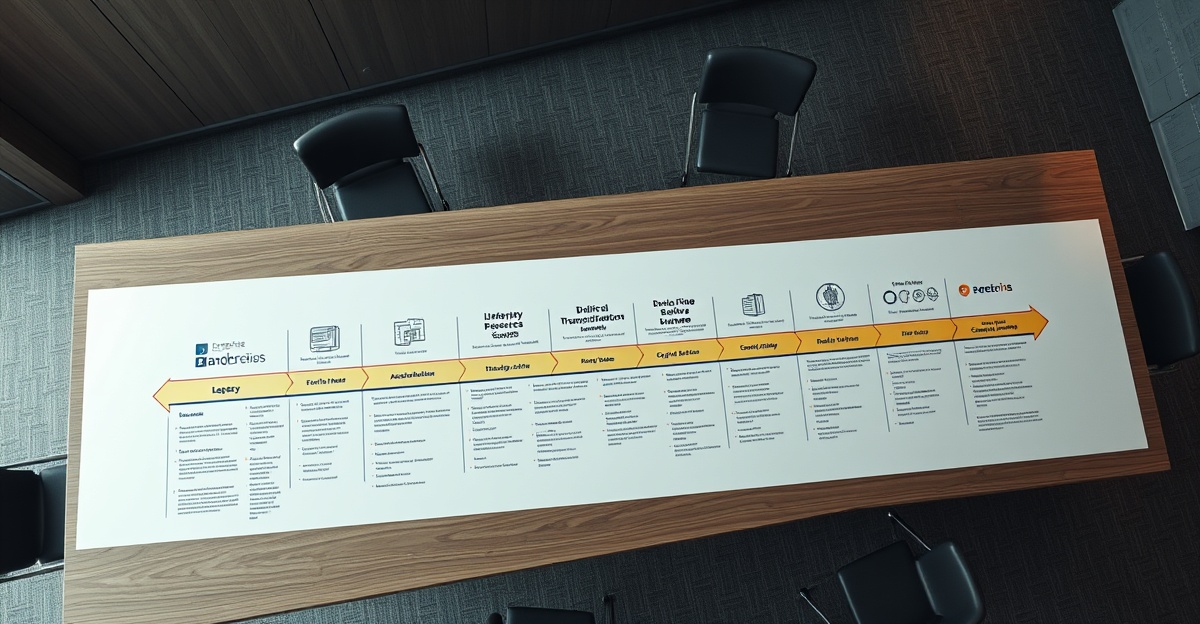
- Typical engagement is 2-4 years. Y1 assess + stabilize. Y2-3 migrate + redesign. Y3-4 cultural activation + handoff. Past year 4 usually signals the operating model never stabilized.
- Compensation ranges widely by buyer. $400K-$600K base at Fortune 500 (with total comp reaching $2M+ at milestones) with meaningful LTI at milestones. $150K-$400K at mid-market. $20K-$50K/month fractional for 2 days/week.
- Private equity is the most consistent buyer. The pattern shows up 12-18 months into most PE holding periods when the sponsor identifies modernization as a value-creation lever.
The title "digital transformation CTO" is one of those labels that means very different things in different rooms. At a Fortune 500 that still runs its core business on a 15-year-old ERP, it is the job of making the company operate like a digital-native one before a disrupter eats the margin. At a private-equity-backed mid-cap, it is the operating partner's answer to "we need tech value creation in the next three years." At a family-owned business hitting a modernization cliff, it is the first time the company has ever had someone senior enough to make unpopular decisions about technology.
In every version, the job is not to build a great product. It is to change how the company works. That distinction is the whole ballgame, and it is the reason why most digital transformations fail even when the technology work went fine.
I've run and observed this role from several angles over the last decade — inside Fortune 500 retail and consumer companies, advising PE-backed mid-caps, and now in fractional engagements. This is the guide I wish I'd had when I first sat in the seat.
What a Digital Transformation CTO Actually Does
The role compresses into three interlocking workstreams. Most leaders who fail in the role fail because they over-index on one and under-invest in the other two.
Technology replacement
Cloud migration from data-center workloads. Platform consolidation across the 15-40 overlapping systems the company has accumulated. Data modernization, usually including a move from scattered data marts to a lakehouse or warehouse architecture. Decommissioning of the worst legacy systems. API enablement so future-state applications can actually integrate. None of this is novel. The consulting ecosystem is full of partners who can execute the tech side competently. Outsourcing the tech side is a reasonable choice; outsourcing the other two workstreams is not.
Organizational redesign
Moving from project-mode to product-mode delivery. Building or replacing the engineering leadership team — usually 30-60% of senior technology leadership turns over during a transformation, not because of performance, but because the required profile of the role changes. Shifting decision rights from a central IT function to product-aligned teams. Building new capabilities the company has never had: product management, platform engineering, applied data science, security engineering. Killing the middle-management incentives that kept the legacy ways of working alive. This is where transformations actually fail.
Cultural activation
Training, internal communications, ritual changes, what gets celebrated at the all-hands, what gets tolerated behind closed doors. Transformations that succeed on technology and org design still fail if the culture keeps producing the old behaviors. Transformations that get the culture right often survive a lot of technical and organizational imperfection. The lever is smaller than the tech or org side, but the half-life is longer — a well-activated culture compounds for years after the official transformation program ends. The underlying mechanic isn't unique to companies: people rarely change behavior over a problem they can't see. Ocean science communicator Richard Vevers spent years making coral loss visible on film before expecting anyone to act on it, and cultural activation runs the same way — you make the new behavior visible and celebrated before the old incentives quietly reassert themselves.
How It Differs from Other CTO Shapes
vs. Product CTO
Product CTOs live and die by engineering throughput on the product the company already sells. Their calendar is 60% engineering leadership, 30% product partnership, 10% company-level strategy. A digital transformation CTO has a different calendar: 40% technology work, 40% org design, 20% company-politics. The product CTO career and the transformation CTO career overlap in early years and diverge sharply in the senior years. Most product CTOs have never run a transformation end-to-end, and most transformation CTOs would be bored running a mature product org.
vs. AI Strategy Executive
An AI strategy executive owns AI-specific portfolio decisions. A digital transformation CTO owns the broader technology and operating model change, which includes AI but isn't dominated by it. The two roles coexist in companies that are doing both at once — the transformation CTO is the peer of the CIO and reports to the CEO; the AI strategy executive sits inside the transformation effort or alongside it, depending on how central AI is to the company's competitive position.
vs. CIO
CIOs own IT operations and the business-technology interface. In companies with a clear separation, the CIO owns what exists today; the digital transformation CTO owns what the company is becoming. The handshake between the two roles is one of the most underappreciated variables in transformation success. A transformation CTO who treats the CIO as an obstacle will lose most political battles. A CIO who treats the transformation CTO as a threat will slow down every platform migration.
When to Hire a Digital Transformation CTO
Four situations reliably produce the need.
- Legacy enterprise facing digital-native disruption. A retailer being reshaped by e-commerce. A bank being reshaped by fintech. A consumer brand being reshaped by DTC-native competitors. The disruption is usually visible in margin compression before it becomes visible in revenue decline. By the time revenue is declining, the window for a productive transformation is already closing.
- Private-equity-backed portfolio company 12-18 months into the holding period. The operating partner has finished the financial and commercial diligence, identified tech modernization as a value-creation lever, and is hiring the person who will execute it. The engagement often has a defined outcome tied to exit value, which shapes compensation and scope.
- Post-merger technology consolidation. Two companies have come together with incompatible platform estates. The CEO needs a single leader who can rationalize the combined tech stack, redesign the combined engineering org, and retire the legacy on one or both sides. This is a high-political-pressure version of the general transformation, because every decision has historical constituencies attached.
- Family-owned or founder-led business whose IT function has never been modernized. The trigger is usually external — a major customer requires a modern API, a regulator requires modern audit controls, or a competitor starts winning deals the company should have won. The transformation is often the first time the company has had truly senior technology leadership.
"The transformations that succeed are the ones where the CEO actually wants the company to change. The ones that fail are the ones where the CEO wants the technology to change while the company stays the same."
The Playbook That Actually Works
The shape of a successful 2-4 year engagement, compressed:
Year 1: assess, stabilize, hire
Commission a comprehensive assessment covering platforms, org, capabilities, costs, and risks. Ship three or four quick-win improvements in the first six months so the executive team sees momentum. Start hiring the transformation leadership bench — usually 3-5 senior leaders across platform engineering, product management, data, security, and program management. Make the first unpopular decisions: one or two system decommissionings and one or two leadership replacements. Do not try to rewrite the operating model yet.
Year 2: migrate, redesign, decommission
Execute the core platform migrations. Redesign the engineering org for product-mode delivery. Retire the worst legacy systems. Build the measurement infrastructure — you cannot run a transformation on vibes, and year 2 is when the lack of metrics will catch up to you if you skipped this in year 1. Expect 20-30% leadership turnover across the org. This is the year where the politics are hardest; year 1 goodwill is spent and the culture hasn't caught up yet.
Year 3: operating model and second wave
Change the decision rights. Move budget authority, hiring authority, and platform decisions to where the work actually happens. Run the second wave of platform work, which is typically the harder half — the systems that were too complex or too politically charged to tackle in year 2. Complete the leadership team. Start the cultural activation work in earnest.
Year 4: activate culture, mature measurement
The transformation is substantially done at the technology and org level. Year 4 is about making the new ways of working stick. Training, internal comms, recognition changes, celebration rituals, exit interviews that surface the cultural resistance that's still alive. Mature the measurement system from project-level reporting to portfolio-level P&L.
Year 5: handoff
The transformation CTO hands off to a steady-state CTO whose job is running the digital-native company that now exists. Some transformation CTOs continue in the new role, but more often they move on to the next transformation. This is a feature, not a bug — the skills required to run a mature digital-native engineering org are different from the skills required to get the company there, and the leaders who are great at the first are not always great at the second.
Common Mistakes Companies Make
Treating transformation as a technology project
The technology side is hard but well-understood by the vendor ecosystem. The org and culture work is where transformations actually fail. A CEO who tells the board "we hired a great technology leader and the platform migration is on track" while nothing is changing about how decisions get made is describing a failure in progress.
Hiring a transformation CTO who has only led year-1 work
Year 1 transformation leaders are plentiful and relatively cheap. Leaders who have taken a transformation from legacy to digital-native all the way through to a working steady state are rare. The rare kind is who you actually need. The cheap kind will ship the assessment and the first migration and leave before the hard work begins.
Under-investing in the CIO partnership
A transformation CTO who treats the CIO as an obstacle will lose most political battles and burn through the credibility they need. The best transformation engagements have explicit CIO-CTO partnership agreements signed off by the CEO, with clear shared objectives and one forum where disagreements get resolved. The worst have parallel empires and constant escalation.
Underestimating leadership turnover
Most companies plan for 10-15% leadership turnover during a transformation. The actual number is usually 30-60% of senior technology leadership by year 3. Build the hiring machine early. Losing people on a predictable cadence is fine; being caught without succession plans for VP-level losses is not.
Summary
A digital transformation CTO is the leader who runs the multi-year arc of changing how a company uses technology and how it organizes around technology. The mandate is both technology and org change. The timeline is typically 2-4 years. The compensation reflects the scarcity of leaders who have actually done it end-to-end, and the cost of leaders who claim they have done it but have only led the first phase.
If you are on the buy side of this conversation — a CEO, a board member, an operating partner at a PE firm, an HR executive writing the job description — the most important filter is whether the candidate has actually completed a comparable transformation, not just started one. If you are on the sell side — a technology leader considering whether this is your next role — the most important question is whether the CEO wants the company to change or just wants the technology to change. The answer determines whether the role will be an extraordinary opportunity or a slow-moving failure with a long title.
I run fractional digital transformation CTO engagements with a small number of companies a year, typically in consumer, retail, and PE-backed mid-cap. If you want to talk about whether the shape fits, start with an expert call.
Frequently Asked Questions
What does a digital transformation CTO actually do?
A digital transformation CTO runs the multi-year effort of moving a company from legacy systems and operating model to digital-native ones. Concretely: commissioning and executing the platform assessment, deciding buy-vs-build per capability, leading the cloud migration, consolidating overlapping tools, redesigning the engineering org for product-mode delivery instead of project-mode, building or replacing the leadership team, and activating a culture that ships fast and measures impact. The job is roughly 40% technology, 40% org design, 20% politics.
How is a digital transformation CTO different from a product CTO?
A product CTO is judged on feature velocity, product reliability, and engineering throughput for a specific product or platform the company is already building. A digital transformation CTO is judged on the company's ability to operate like a digital-native business — which almost always involves replacing the platforms the product CTO was using, redesigning the org the product CTO was running, and changing the decision rights that shaped how the product CTO got anything done. The two roles overlap in skills but diverge sharply in mandate and time horizon.
When does a company need a digital transformation CTO?
Four situations that reliably produce the need. A legacy enterprise facing digital-native disruption in its core market (retail hit by e-commerce, banking by fintech, manufacturing by platform marketplaces). A company 12-18 months into a private-equity holding period, where the sponsor has identified tech modernization as a value-creation lever. Post-merger technology consolidation where two different platform estates need to become one. A family-owned or founder-led business whose IT function has never been modernized and whose buyers, competitors, or regulators are starting to require it.
What does a realistic digital transformation timeline look like?
Two to four years for the full arc, though business value should land in year one or the executive team will lose confidence. Year 1: assessment, quick-win stabilization, hiring the first transformation leaders, platform decisions. Year 2: core platform migrations, first org redesign, decommissioning the worst legacy systems. Year 3: operating model changes, second-wave platform work, cultural activation, leadership team completion. Year 4: handoff to steady-state operating model and often a new CTO who runs the digital-native company that emerged. Transformations that stretch past year 4 often signal that the operating model never actually stabilized — the engagement has become a permanent condition rather than a finite change.
How much does a digital transformation CTO cost?
Full-time at Fortune 500 scale: $400K-$600K base plus equity or long-term incentives, with total compensation reaching $2M+ when the transformation hits major value-creation milestones. Mid-market full-time: $150K-$400K base depending on scope and location. Fractional transformation CTO engagements: $20K-$50K per month for 2 days per week of senior transformation leadership, typically 12-24 month engagements. Private-equity-backed engagements often include success-fee structures tied to specific modernization milestones or exit value.
What separates a good digital transformation CTO from a bad one?
A good transformation CTO has actually run a comparable transformation to completion — not just led the early phases or consulted on strategy. The hardest part of the job is year 3-4 when the initial enthusiasm is gone, the quick wins are done, and the real org-change work has to happen. Leaders who have only done year-1 transformation work are plentiful and relatively cheap. Leaders who have taken a transformation from legacy to digital-native all the way through are rare and disproportionately expensive, because the second kind is what actually produces the outcome a buyer is paying for.
What's the biggest mistake companies make with digital transformation?
Treating it as a technology project instead of a company change. The technology side — cloud migration, platform consolidation, data modernization — is genuinely hard, but it's the part the vendor ecosystem and the consulting industry already know how to do. The org side — redesigning decision rights, rebuilding the leadership bench, killing the middle-management incentives that kept the legacy ways of working alive — is where transformations actually fail. A transformation CTO who leads only the tech side will ship technically successful projects while the company fails to transform.
Should a company promote its current CTO or hire someone new for digital transformation?
It depends on whether the current CTO has the specific experience and the executive authority to run the org-change half of the job. Promoting works when the current CTO has either done transformation work before or has strong political capital and the clear support of the CEO to make unpopular decisions. Hiring externally works when the current CTO is excellent at the product-CTO role but has never run a transformation — which is the much more common case. A hybrid model that I see work well: keep the existing CTO as Head of Product Technology and bring in a transformation CTO for the 2-4 year arc, then let the dust settle afterward.
Need Expert Technology Guidance?
20+ years leading technology transformations. Get a technology executive's perspective on your biggest challenges.
